

Probiotics might help alleviate menopausal symptoms and influence weight management, though their benefits are still debated.
Menopause can be a difficult period for many. Individuals often report hot flashes, night sweats, and other symptoms alongside physical shifts like gaining weight.
Symptoms during this transition differ widely. Some people have no symptoms, others experience mild discomfort, and some endure severe effects.
Menopausal symptoms can persist for several years, and you might believe menopause has ended once they lessen. Yet reaching the postmenopausal phase can bring added health concerns such as osteoporosis and cardiovascular disease.
Some studies indicate probiotics could help ease these symptoms or decrease their intensity. Here’s what to consider.
Hot flashes and night sweats
The hypothalamus in the brain controls your hormonal balance and body temperature.
A decline in estrogen production during menopause may alter hypothalamic function, triggering vasomotor symptoms.
Vasomotor symptoms arise when blood vessels suddenly change diameter, causing an increase in body temperature. These episodes are commonly called hot flashes and night sweats.
A small 2017 trial of 62 women suggests taking probiotics alongside supplements like red clover could lessen vasomotor symptoms.
Red clover is a legume containing isoflavones, compounds that act in a way similar to estrogen.
Although red clover is promoted as an extract to ease menopausal complaints, its effectiveness is not well established.
Sleep quality and mood improvement
It’s believed that the gut and brain communicate via the nervous, immune, and endocrine systems. The balance of beneficial bacteria in the gut may even influence mood.
Mood swings, hot flashes, and night sweats are menopausal symptoms that can disrupt sleep.
A 2020 review showed an association between probiotic strains and improvements in sleep quality and mood among people with anxiety and depression.
Vaginal infections
The vagina serves as a defense to keep harmful microbes from causing infection.
Before menopause, estrogen supports colonization by Lactobacilli, beneficial bacteria in the vagina. Lactobacilli help keep vaginal pH lower to decrease the likelihood of infections.
When estrogen falls during menopause and after, vaginal pH can rise, enabling growth of harmful microbes such as Enterobacter, Escherichia coli, Candida, and Gardnerella.
These organisms may heighten the risk of vaginal infections.
It’s proposed that probiotics alone or combined with antimicrobial drugs might help prevent vaginal infections and reduce associated signs like altered discharge and unusual odor.
Osteoporosis
Estrogen is key to maintaining bone strength, and lower estrogen levels can raise the risk of osteoporosis.
Factors such as age, sex assigned at birth, race, ethnicity, and general health also influence risk.
Worldwide, one in three women over 50 faces a risk of fractures related to osteoporosis.
Quitting or reducing tobacco use and taking calcium and vitamin D supplements may help slow bone loss.
A 2021 review reported that adding probiotics could improve bone mineral density in the lumbar spine of postmenopausal individuals.
Weight gain and weight loss
Weight gain is frequent during perimenopause and menopause due to the progressive decline in estrogen and ovarian function.
At this stage, it’s common to lose lean mass and see fat redistributed, often increasing abdominal fat.
Excess fat around the midsection can raise the chance of insulin resistance and unfavorable lipid profiles.
Insufficient physical activity and a diet high in fats, salt, and sugars can also lead to weight gain, increased abdominal fat, and elevated cardiovascular and metabolic disease risk.
Stress from menopause may prompt emotional eating, which can further contribute to weight gain.
Research indicates the bacterial makeup of the colon could play a role in metabolic disorders. People with overweight or obesity may be more susceptible to inflammation, insulin resistance, and fat accumulation.
Certain probiotic strains are believed to benefit gut barrier health by lowering inflammation and reducing the risk of obesity and related chronic conditions.
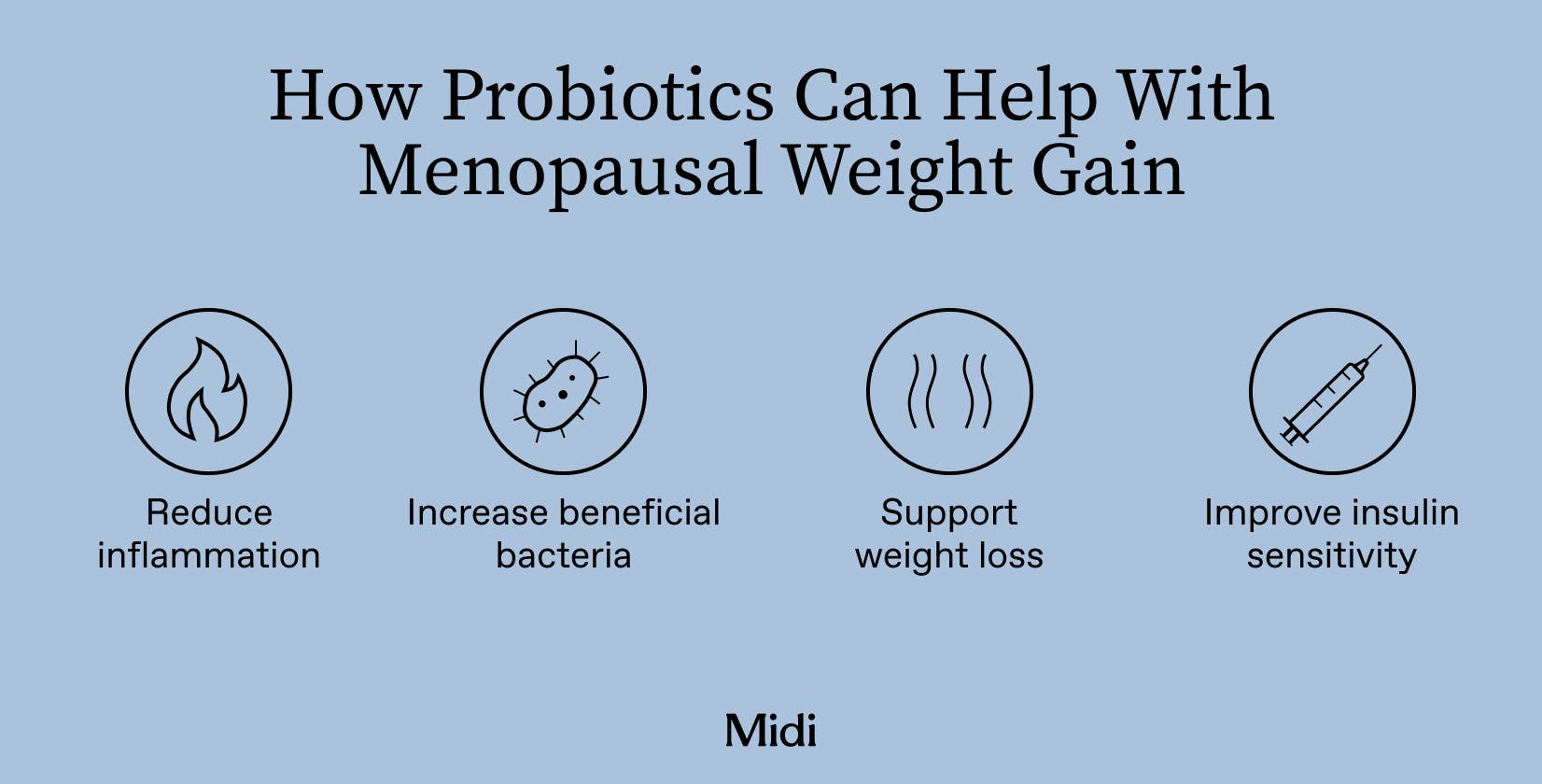
In particular, probiotics might encourage weight loss by boosting short-chain fatty acids, increasing helpful bacteria, cutting inflammation and fat storage, and improving insulin sensitivity.
A 2017 review indicates short-term probiotic use — under 12 weeks — may lead to modest decreases in body weight, BMI, and body fat percentage.
However, much of the research on probiotics and weight reduction has small sample sizes and mostly includes participants with overweight or obesity.
Further studies are necessary to clarify probiotics’ potential role in weight management.
Probiotic side effects to consider
You can intake probiotics through fermented foods like yogurt, kefir, sauerkraut, kimchi, and kombucha, or by taking probiotic supplements.
Foods that naturally contain probiotics are typically well tolerated in moderate amounts.
Probiotic supplements might be slightly more likely to cause side effects, but these are generally mild and usually resolve within days to weeks.
Beginning with a low dose and slowly increasing it may help lower the chance of side effects.
Possible temporary side effects include:
- gas
- bloating
- constipation
- increased thirst
- headache
If symptoms continue or get worse, stop taking probiotics and speak with a healthcare provider.
Probiotic product recommendations
Taking probiotics may ease menopause complaints by helping balance the unique mix of harmful and beneficial microbes in your body.
Bifidobacterium animalis is a bacterium naturally present in the colon. Adding this bacterium to your diet may reduce abdominal fat, a key factor linked to metabolic issues.
Lactobacillus gasseri is commonly found in the vagina. Animal studies have shown weight-related effects with Lactobacillus gasseri.
Synbiotics, blends of prebiotics and probiotics, may also aid weight loss and reduce inflammation.
Find out more about probiotic supplements that dietitians recommend.
If you opt for probiotic-rich foods like yogurt and kefir, check the packaging to confirm the presence of live cultures.
Under current FDA labeling rules, yogurt makers are not required to list the amount and condition of bacteria in their products, though this regulation is changing as of January 1, 2024.
The bottom line
Probiotics might help ease menopause symptoms and assist with weight regulation, but evidence remains mixed.
More research is needed to confirm and expand on the health benefits of probiotic use across the stages of menopause.
For instance, taking probiotics on their own is unlikely to cause weight loss during perimenopause, menopause, or postmenopause.























Leave a Reply
You must be logged in to post a comment.