
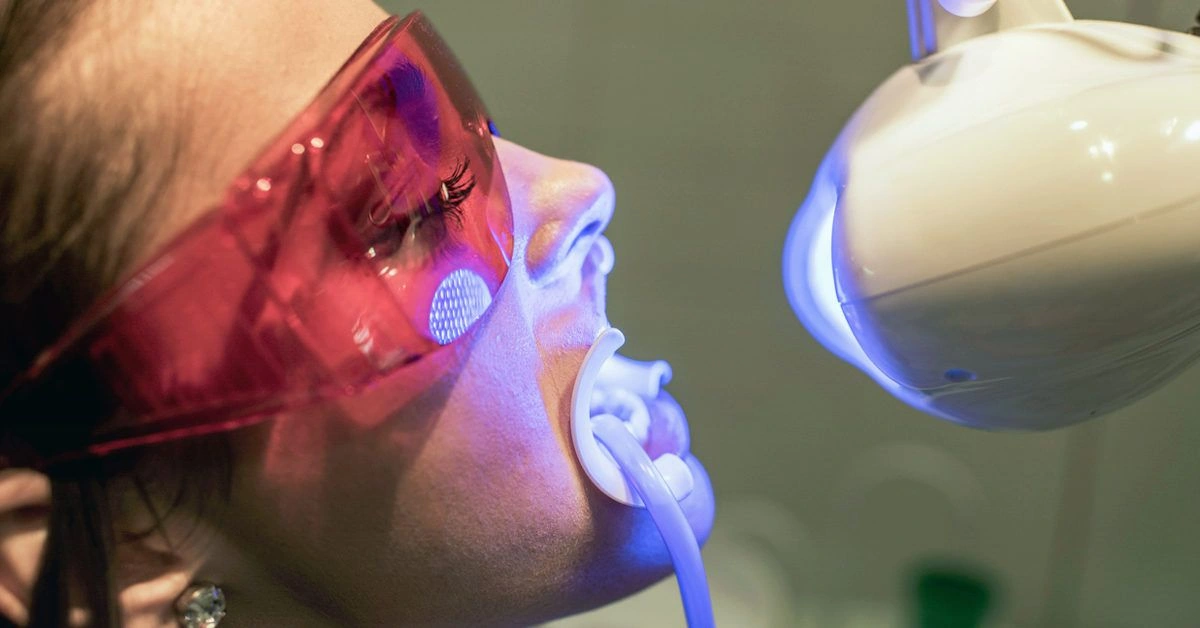
Lasers are routinely employed in dental care. They’re used for whitening teeth, treating cavities, addressing gum disease, and managing oral lesions.
The adoption of lasers for dental hard- and soft-tissue procedures became widespread in the 1990s.
This approach can bring a variety of advantages, from potential cost savings to reduced discomfort compared with traditional drills or non-laser instruments.
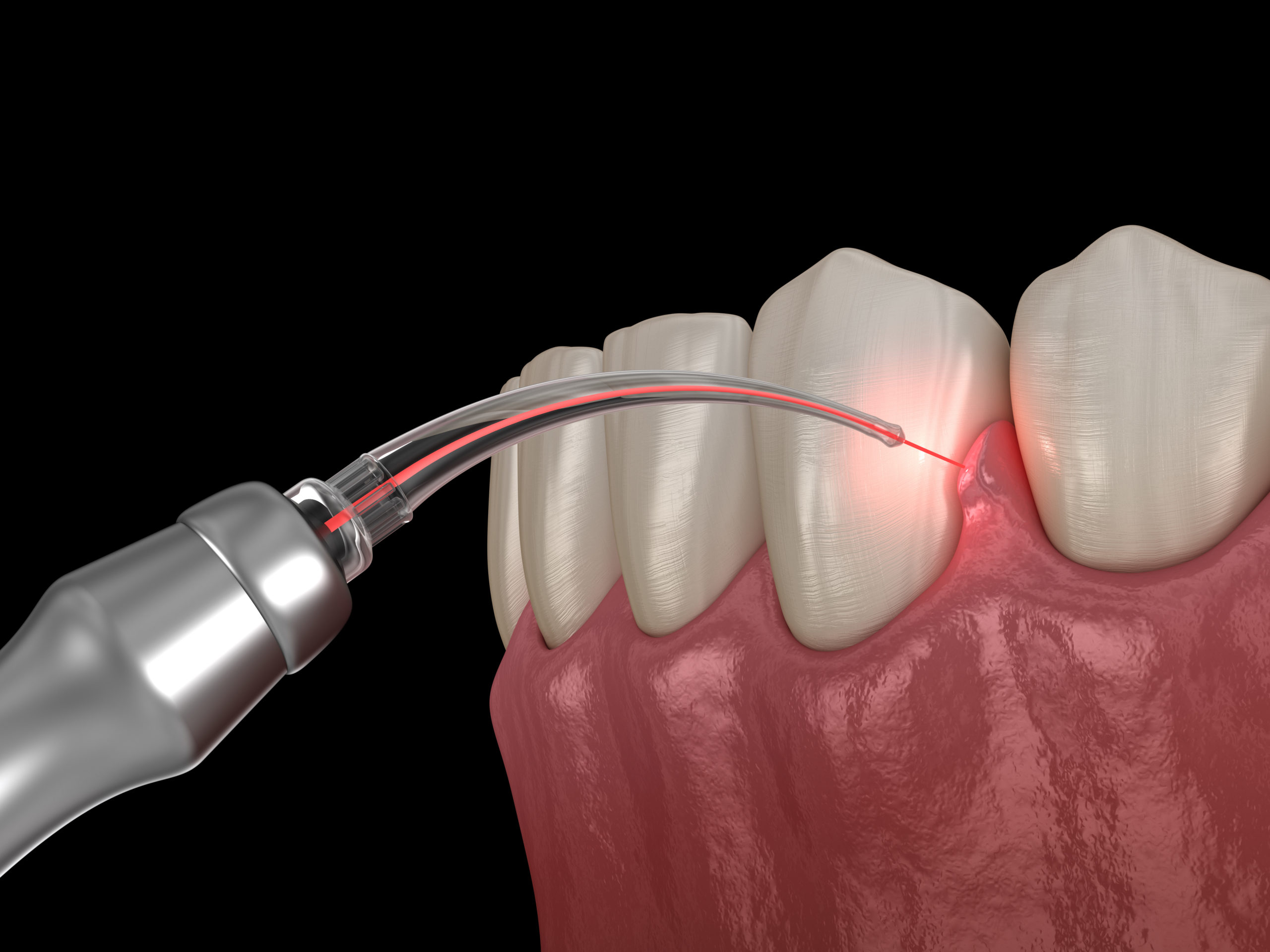
An acronym for “light amplification by the stimulated emission of radiation,” a laser generates concentrated light energy in a precise beam. When directed at tissue, it triggers a response that enables the tissue to be removed or reshaped.
Laser techniques are applied in many dental interventions, such as:
- addressing tooth sensitivity
- managing tooth decay
- treating periodontal disease
- enhancing tooth whitening
The Food and Drug Administration (FDA) has cleared laser use for several dental therapies.
Although the American Dental Association hasn’t formally endorsed specific laser devices, it provides guidance acknowledging that dental laser therapy is effective and advantageous in contemporary dentistry.
How are laser procedures carried out?
Laser dentistry generally falls into two categories: hard-tissue and soft-tissue procedures. “Hard tissue” refers to teeth, while “soft tissue” denotes the gums and adjacent mucosa.
Typical hard-tissue applications include:
- Cavity detection: Lasers can identify early decay by detecting changes associated with caries.
- Tooth preparation and fillings: In many cases, lasers eliminate the need for local anesthesia and conventional drills. They also disinfect the cavity, which may support the long-term health of the tooth.
- Addressing tooth sensitivity: Teeth sensitive to temperature can be treated with lasers that seal exposed tubules on the root surface.
Common soft-tissue uses include:
- Correcting a “gummy smile”: Lasers can contour excess gum tissue when too much gum covers the tooth surface.
- Crown lengthening: This reshapes gum tissue and sometimes bone to provide a healthier tooth form and facilitate restorative work.
- Treating tongue frenulum issues: A laser frenectomy can help people with a thick or tight frenulum (the fold under the tongue) — useful for infants, children, or others whose restricted frenulum affects nursing, speech, or oral function.
- Removing soft-tissue folds: Lasers can painlessly remove tissue folds caused by poorly fitting dentures without sutures.
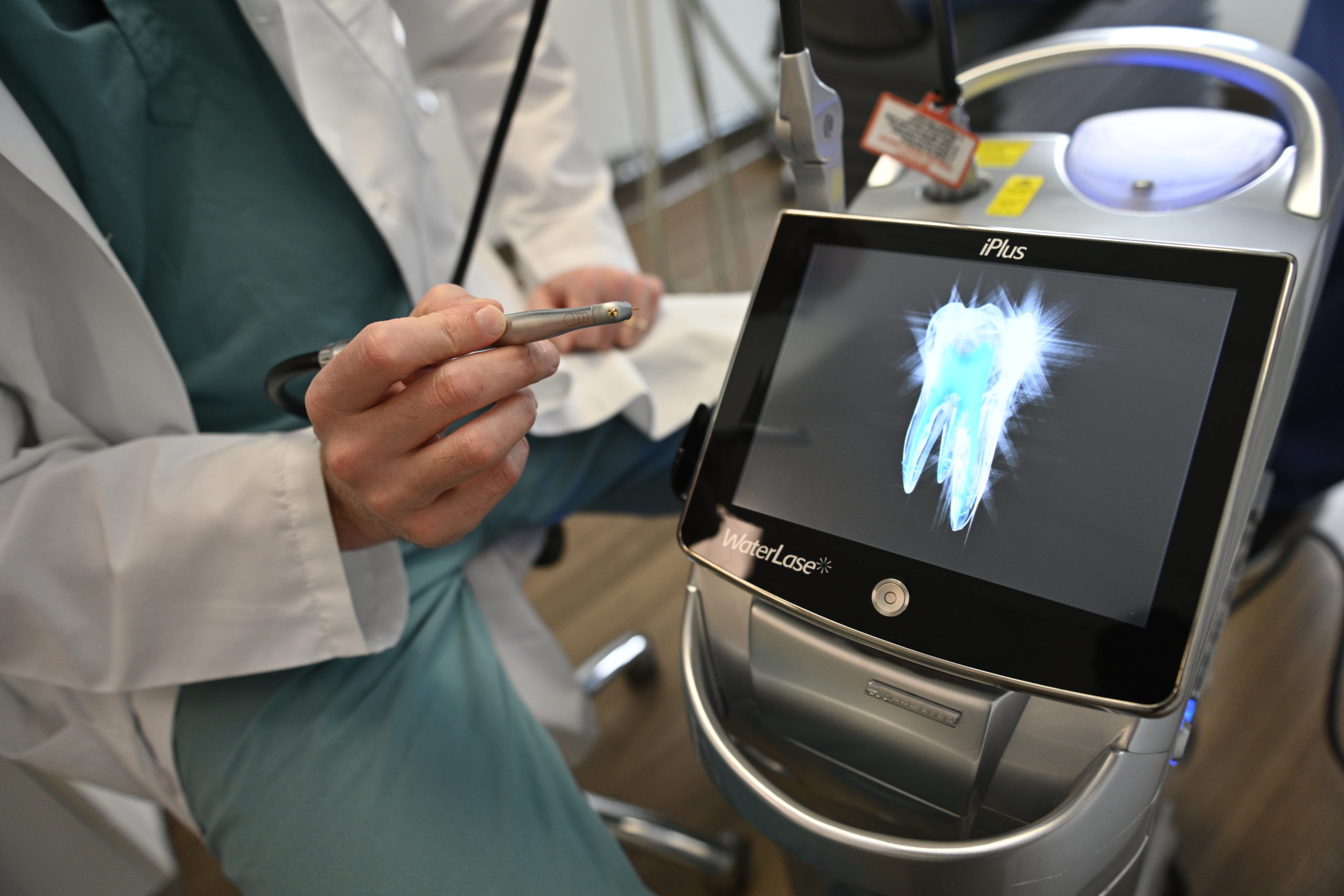
Other laser-assisted treatments include:
- Imaging tissues: Optical coherence tomography enables clinicians to noninvasively visualize structures inside a tooth or gum.
- Excision of benign growths: Lasers can remove benign tumors from the palate, gums, and inner lips and cheeks without pain or sutures.
- Managing obstructive sleep apnea: Lasers can modify throat tissue when sleep apnea stems from tissue overgrowth, improving airflow.
- Treating TMJ pain: Low-level lasers can help reduce inflammation and discomfort in the temporomandibular joint.
- Nerve and vessel regeneration: Certain lasers may support healing of damaged blood vessels, nerves, and scar tissue.
- Cold sore therapy: Lasers can shorten healing time and relieve pain from herpetic lesions.
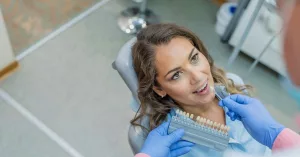
- Teeth bleaching: Lasers can accelerate the whitening process during in-office procedures.
Costs for laser care vary by the specific procedure and the type of laser employed. Because many laser treatments require fewer visits, they may be less costly than some non-laser alternatives.
Most dental insurance plans reimburse based on the procedure itself, not the technique used, so coverage for laser treatment is often comparable to coverage for drilling and conventional approaches. Always confirm coverage details with your insurer in advance.
What kinds of lasers are used?
Dental clinicians select either hard-tissue lasers or soft-tissue lasers depending on the intended treatment; some therapies require both.
Hard-tissue lasers can ablate tooth material. Their wavelengths are absorbed by water and minerals within teeth, making them suitable for preparing teeth for bonding, repairing worn restorations, and removing portions of tooth structure.
Pros and cons of laser dentistry
Advantages of dental lasers
- Soft-tissue lasers often reduce or eliminate the need for sutures.
- They minimize bleeding in treated soft tissues by promoting coagulation.
- Certain procedures may not require anesthesia.
- Lasers sterilize the treated area, lowering the risk of bacterial infection.
- Wounds can heal more rapidly, and tissue regeneration is sometimes possible.
- There may be less collateral damage to adjacent tissues compared with traditional tools.
Limitations of laser dentistry
- Lasers aren’t compatible with some existing restorations, such as metal amalgam fillings.
- Hard lasers carry a small risk of injuring the dental pulp.
- Some laser procedures still necessitate anesthesia.
- Conventional drills may still be required for completing a filling, adjusting occlusion, or polishing restorations.
- Certain treatments can’t be accomplished with lasers because of surrounding tissues or components of the tooth or gums.
- There’s a possibility of gum damage if not used properly.
What risks come with laser dentistry?
Overall risks associated with laser dentistry are modest. It’s crucial to see an experienced dental provider because incorrect wavelength or power settings can harm tissues.
Some clinicians express concern that marketing may sometimes overstate the need for laser therapy.
Your dentist will supply protective eyewear to shield your eyes from the laser.
Are dental lasers suitable for children?
Lasers can be used on pediatric patients, though their use is less frequent in children than in adults.
The American Academy of Pediatric Dentistry acknowledges lasers as an adjunctive tool that may benefit infants, children, teens, and patients with special healthcare needs, while noting that more pediatric-specific training is advisable.
How to locate a qualified laser dentist
Finding the right clinician
When searching for a dentist who offers laser care, choose someone who has completed dedicated coursework and hands-on training. Dental schools, professional associations, and the Academy of Laser Dentistry (ALD) are common education sources.
You can also ask your insurer for referrals and seek recommendations from friends or family who’ve had successful laser treatments.
Online review platforms can be helpful, but verify that reviews are impartial and meaningful.
If you’re exploring more advanced dental options, you might also read about laser back surgery as an example of how laser technology is applied in other medical fields.
Conclusion
Lasers have been part of dental practice since the 1990s. Multiple laser types are available for procedures ranging from whitening to treating decay, periodontal disease, and oral lesions.
Despite their advantages, laser therapies have limitations: not every procedure is suitable for lasers, and there are risks such as potential gum injury or pulp damage.
Overall, dental lasers are a valuable and effective option in modern dentistry, often making treatments less uncomfortable and promoting quicker recovery.



















Leave a Reply
You must be logged in to post a comment.