
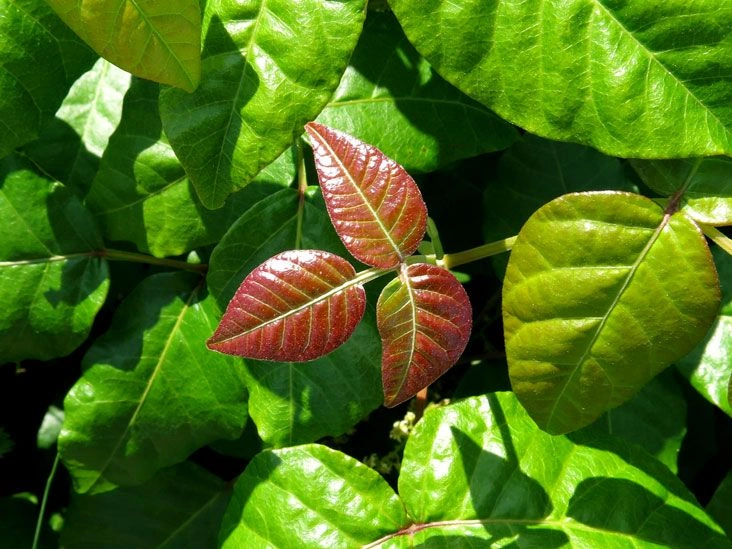

It often begins very innocently. You trim a scraggly bush while doing yard work. Later your limbs start to tingle and redden. Before long, an irritating rash appears. Only after the fact do you realize that the bush you handled was poison ivy.
Finding poison ivy is common in the United States — it grows in nearly every state except Alaska, Hawaii, and some arid areas of the Southwest. It’s also present in regions of Canada, Mexico, and parts of Asia.
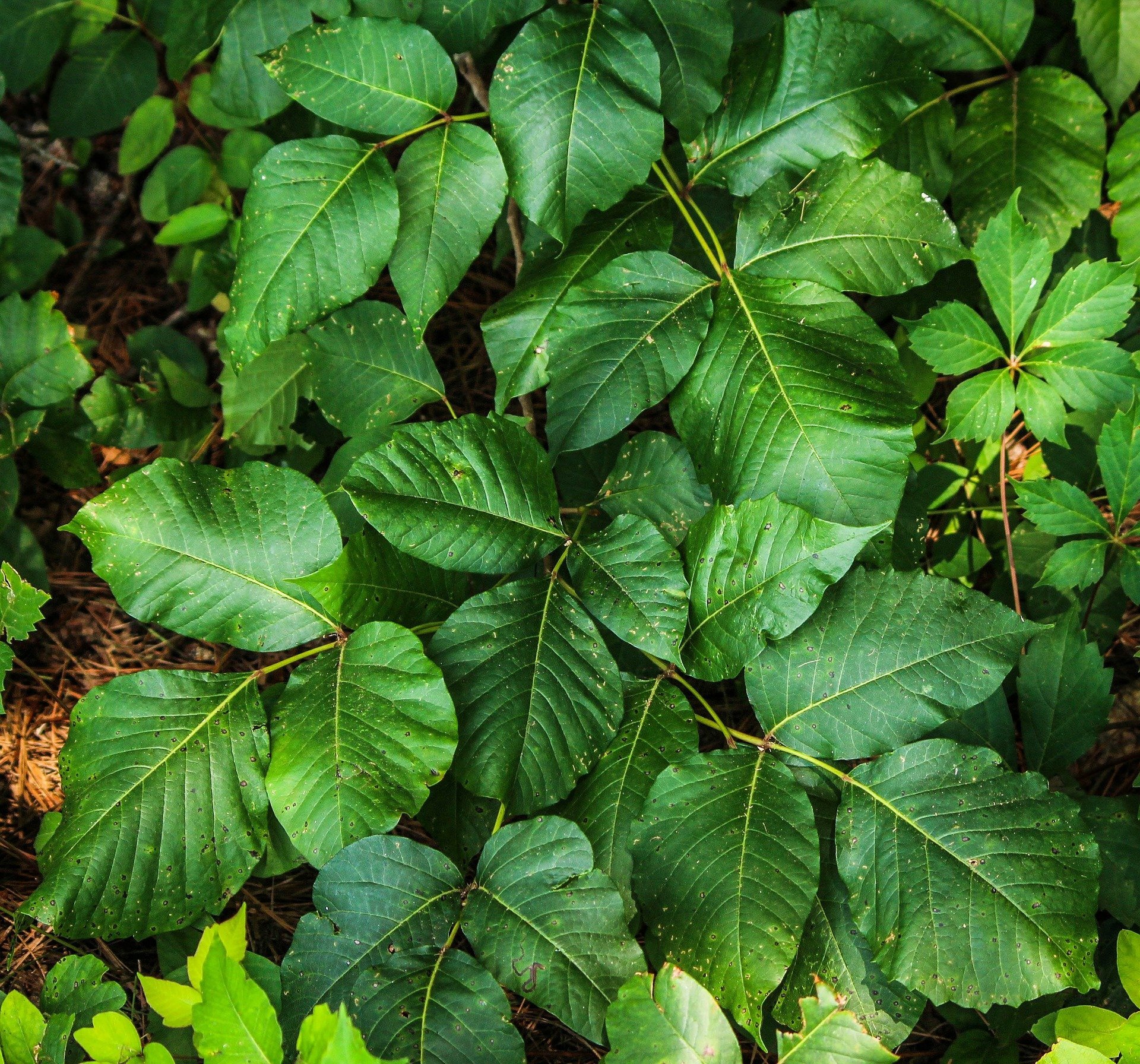
The plant is recognizable by groups of three pointed leaflets. In spring those leaflets may have a reddish hue, turn green in the summer, and shift to shades of red, yellow, or orange in autumn.
How it spreads
Poison ivy secretes an oil named urushiol that triggers a rash in roughly 85 percent of people exposed to it, according to the American Academy of Dermatology.
The rash itself isn’t contagious between people because it’s a skin reaction to the oil. However, the oil can be transferred and spread to others.
Urushiol is remarkably persistent. It will cling to many surfaces: clothing, footwear, gardening and camping gear, and even the fur of pets or horses.
The oil can move from your hands to your phone or other objects you touch and then to another person. It’s found on almost every part of the plant — leaves, stems, and roots — so even a brush against a bare winter vine can produce a rash.
Keep reading for practical tips to avoid getting a poison ivy reaction.
1. Dress for success
If you’re headed into an area heavy with poison ivy, plan to protect as much skin as possible. Effective protective items include:
- long-sleeved shirts
- pants that can be tucked into socks if necessary
- hats
- sturdy rubber gloves
- socks
- closed-toe footwear
2. Lather, rinse, repeat
Washing your skin with mild soapy water or rubbing alcohol within about an hour of touching poison ivy can remove urushiol and may prevent a rash — or at least reduce its severity.
Be sure to clean anything that contacted the plant. Urushiol can remain active for years, so neglecting to wash clothing or gear could cause another outbreak later.
Some people find dish soap effective at removing the oil. There are also specialty washes available from brands such as Burt’s Bees, Ivarest, and Tecnu.
3. Block the oil
If you prefer prevention, OTC barrier creams can slow urushiol from penetrating your skin. Products like IvyX and similar formulations are sold in drugstores and online.
Apply the barrier cream liberally over exposed skin less than an hour before potential contact. If you do encounter the plant, remove the cream within four hours of exposure so your skin doesn’t absorb the urushiol.
4. Wash, rinse, soak
If a poison ivy rash appears, anticipate it to clear in one to three weeks. Clean the affected area with soap and lukewarm water as soon as possible to remove any lingering oil.
After the rash forms, water can be comforting and help reduce itching and burning. Cool baths with colloidal oatmeal products such as Aveeno are often soothing, per the Mayo Clinic.
Applying a cool, damp compress to the rash for 15 to 30 minutes several times daily may also provide relief.
5. Cortisone and calamine
OTC hydrocortisone creams and calamine lotion can reduce some of the itching from a poison ivy rash. Follow the directions on the label and make sure the skin is clean and dry before reapplying.
Other soothing options include:
- aloe vera gel
- a paste of baking soda and water in a 3-to-1 ratio
- cucumber slices applied to the rash
You can also blend cucumber into a pulp and spread it on the rash to calm irritated skin.
6. Try oral antihistamines
Oral OTC antihistamines such as loratadine (Claritin) and diphenhydramine (Benadryl) may help relieve itching and swelling. Benadryl can also cause drowsiness, which can be useful at night.
There are many other OTC antihistamines available; ask your pharmacist for recommendations.
Avoid applying topical antihistamine creams to the rash, as they can sometimes intensify itching.
Using rubbing alcohol on a rash can help dry it and reduce the risk of infection. Other astringent home remedies that also dry out poison ivy blisters include:
- witch hazel
- apple cider vinegar — see more on apple cider vinegar for poison ivy
- a baking soda and water paste
7. Call the professionals
If your rash is extensive, affects your face or genitals, or features numerous blisters, contact your physician. They can prescribe corticosteroids like prednisone to reduce itching and inflammation.
Depending on the situation and your doctor’s judgment, they may provide steroid tablets, an injection, or topical treatments such as gels, ointments, or creams.
If scratching or ruptured blisters lead to a bacterial infection, your doctor can prescribe antibiotics, either oral, topical, or both.
For additional options, some people explore natural remedies including essential oil for poison ivy, though you should discuss complementary approaches with a clinician before trying them.
8. Head for help
Seek emergency care or urgent treatment right away if you experience any of the following:
- difficulty breathing or swallowing
- swelling, especially around an eye causing it to close, or swelling of the face or throat
- a rash inside or near your mouth
If symptoms are severe, your doctor may also consider prescription medication for poison ivy to manage the reaction effectively.


















Leave a Reply
You must be logged in to post a comment.