What You Need to Know About a Full Liquid Diet


A full-liquid diet consists of liquid foods that are more nourishing than plain tea or broth. Typical choices include soups, milk, hot cereals, and juices.
You may be familiar with a clear liquid diet, which limits intake to water, tea, and broths. A full-liquid diet is related but broader — it permits any food that is liquid, becomes liquid at room temperature, or melts at body temperature.
Your healthcare provider might suggest a full-liquid diet if you are:
- preparing for a diagnostic test or medical procedure
- recovering from surgery, for example bariatric surgery
- having trouble swallowing or chewing
Most people follow a full-liquid diet for a short duration, ranging from several days up to about two weeks.
How a full-liquid diet functions
On a full-liquid diet, you consume items that are liquid or will liquefy at room temperature. These foods generally have low fiber and sometimes limited protein, giving your digestive tract a rest.
You may need to eat more often than the usual three meals to meet calorie and nutrient needs. Aim for six to eight smaller feedings spread across the day, using a mix of liquids and strained or blended foods.
To boost calories, include full-fat dairy like butter or whole milk, or high-calorie nutritional shakes.
A liquid multivitamin can also be helpful if you’re concerned about meeting your nutritional requirements on this regimen.
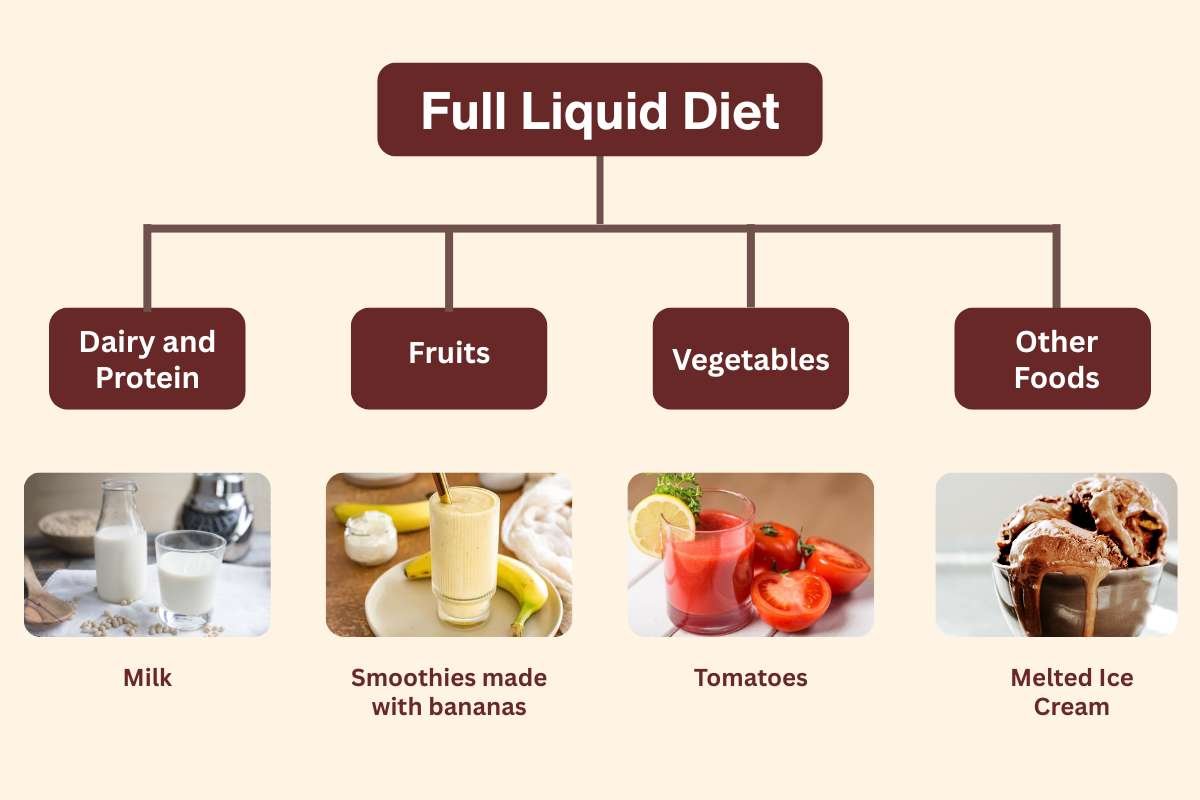
Sample menu for a day
An example day might look like this:
Breakfast
- 1 cup hot cereal (such as Cream of Wheat) thinned with whole milk
- 1/2 cup fruit juice
Morning snack
- 1/2 cup nutritional supplement drink, like Boost or Ensure
- 1/2 cup custard-style yogurt
Lunch
- 2 cups soup
- 1/2 cup tomato juice
- 1 cup chocolate pudding
Afternoon snack
- 1/2 cup supplement beverage
- 1/2 cup fruit juice
Dinner
- 2 cups soup
- 1/2 to 1 cup blended oatmeal thinned with milk
- 1/2 cup lemonade
Evening snack
- 1 cup supplement beverage
- 1/2 cup vanilla ice cream
Allowed foods on a full-liquid diet
Compared with a clear liquid diet, a full-liquid plan offers many more options.
Fruits and vegetables:
- all fruit or vegetable juices (avoid pulp unless advised otherwise by your clinician)
Soups:
- bouillon
- clear broths (beef, chicken, vegetable)
- strained and pureed vegetable soups
- strained meat- or cream-based soups (may include pureed vegetables or meat)
Dairy:
- all types of cow’s milk (whole, low-fat, reduced-fat, fat-free)
- lactose-free milk alternatives like soy, almond, or flax milk
- half-and-half
- butter
- sour cream
- custard-style yogurts
Grains:
- Cream of Wheat
- Cream of Rice
- grits
- other cooked cereals made from refined grains and thinned with milk
Fats:
- butter
- margarine
- mayonnaise
- smooth peanut butter or other creamy nut butters
Beverages:
- coffee and tea
- hot cocoa
- artificially flavored fruit drinks
- lemonade
- sports drinks, such as Gatorade
- milkshakes (you may add smooth peanut butter or canned fruit, but blend until completely smooth)
- pasteurized eggnog
Supplement beverages:
- Ensure
- Boost
- Carnation Instant Breakfast
- Glucerna
Desserts:
- pudding
- custard
- gelatin
- plain ice cream
- sherbet
- popsicles
- fruit ices
Other add-ins:
- sweeteners such as honey, sugar, and maple syrup
- salt
- herbs, spices, and flavored syrups like chocolate syrup
- brewer’s yeast
Check with your doctor or dietitian about these items. They are sometimes allowed on a full-liquid diet or introduced as you transition back to solids: pureed fruits (for example applesauce), pureed vegetables thinned into soups (such as strained pumpkin puree added to cream soup), cooked cereals like oatmeal, pureed potatoes, and strained or pureed meats.
Foods to avoid on a full-liquid diet
Avoid solid foods while on a full-liquid diet. That includes raw, cooked, or canned fruits and vegetables that contain skins or seeds.
Other items to exclude include:
- mashed fruits and vegetables with texture, such as mashed avocado
- nuts and seeds
- hard and soft block cheeses
- soups containing noodles, rice, or chunks
- ice cream with solid inclusions
- bread
- whole cereals and intact grains
- meats and meat alternatives
- carbonated drinks like sparkling water and soda
People who’ve had stomach surgery may also want to avoid oranges and other acidic juices, which can cause a burning sensation.
If you’re worried about vitamin C intake, ask your clinician about liquid vitamin C supplements. They can give tailored dietary instructions depending on the procedure you underwent.
Other considerations before starting
Your physician is the best source for guidance on which foods to include or exclude on a full-liquid plan. A registered dietitian can also help.
A dietitian will help design meal plans within full-liquid guidelines and customize recommendations to meet your unique needs.
For instance, people with diabetes may need a specialized approach. Those recovering from bariatric surgery might be advised to limit or skip certain items, like sugar, while on the full-liquid phase.
Additional points to keep in mind:
- Pureed foods should be stage 1 or “baby food” texture. Before adding them to soups or other liquids, there should be no lumps or visible pieces.
- Using milk, water, salad dressings, or mayonnaise can help moisten foods for smoother blending.
- Feeling full is a cue to stop drinking. Listen to your body’s signals as you consume liquids. Still, aim for at least 64 ounces of fluids daily.
- If you struggle to drink enough, sip slowly every 15 to 20 minutes throughout the day.
- Nutritional supplements may be useful if you must remain on a full-liquid diet for more than five days. Discuss options with your doctor.
The bottom line
You may experience rapid weight loss while on this diet. It’s intended for temporary use and should not be continued long term unless your healthcare professional advises otherwise.
Contact your healthcare provider if you develop fever, diarrhea, vomiting, or abdominal pain — these symptoms could indicate infection or other complications related to your surgery or health condition.
Frequently Asked Questions
A full liquid diet includes foods that are liquid at room temperature or melt at body temperature, such as milk, soups, and nutritional shakes. It’s often used short-term before procedures, after surgery, or when chewing or swallowing is difficult.
Duration varies by medical need but typically ranges from a few days to about two weeks. Your healthcare provider will advise based on your recovery and nutritional status.
Yes, with careful planning. Include high-calorie liquids, full-fat dairy, and commercial supplement drinks, and consider a liquid multivitamin if recommended by your clinician.
Solid foods, items with texture like nuts, seeds, bread, intact grains, chunky soups, and most meats are excluded. Avoid any food with lumps or pieces that won’t fully liquefy.
Yes. People with diabetes may need tailored choices to control blood sugar, such as low-sugar supplements or adjusted carbohydrate portions. Consult a dietitian or doctor for personalized guidance.



Related Posts

What Is Acerola Cherry?
Sep 9, 2026 • 24 min read
Raisins vs. Sultanas vs. Currants: What’s the Difference?
Aug 18, 2026 • 27 min read
The 8 Best Natural Energy Drinks, According to a Dietitian
Sep 29, 2026 • 26 min read
Does My Chocolate Craving Mean Anything?
Oct 8, 2026 • 31 min read
What Is Free-Range Chicken?
Sep 3, 2026 • 35 min read