Axillary Web Syndrome: Causes, Symptoms, and Treatment


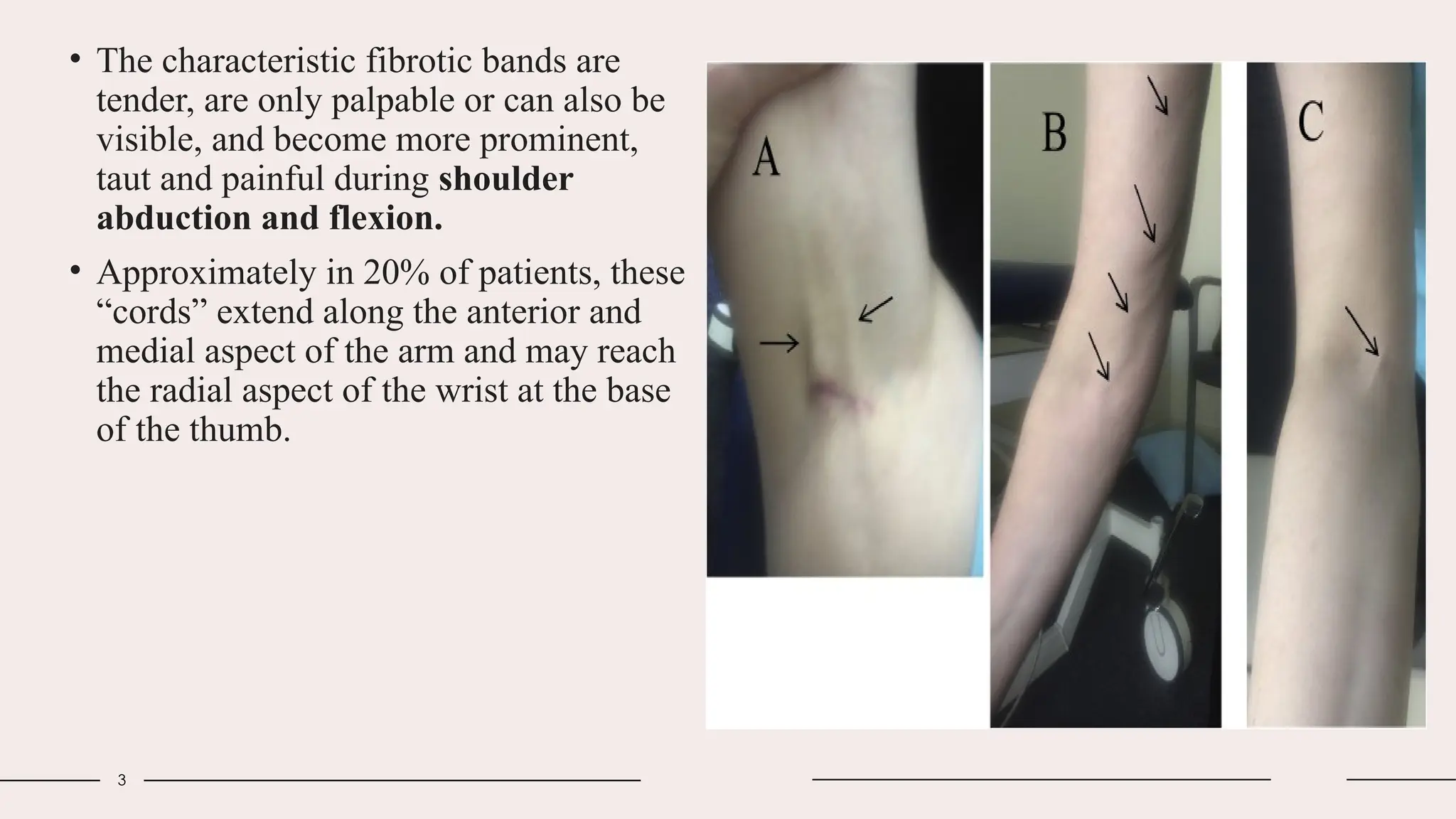
Axillary web syndrome (AWS), sometimes called cording or lymphatic cording, describes the rope- or cord-like bands that form just beneath the skin in the underarm region.
These cords can also extend partway down the arm and, in uncommon instances, reach as far as the wrist.
Causes of axillary web syndrome
Although the precise mechanism behind cording isn’t completely clear, it’s thought that surgery in the breast and underarm regions can injure the connective tissue around lymphatic vessels. This trauma may lead to scarring and stiffening of the tissue, producing the characteristic cords.
Several types of surgical procedures can be associated with developing AWS, including:
- mastectomy
- lumpectomy
- lymph node dissection
- breast reconstruction
Symptoms
The cord-like areas under the arm are often visible and palpable, and some people describe them as feeling like a web. In certain cases they may be raised but not immediately obvious.
These cords are frequently painful and restrictive, creating a sensation of tightness when attempting to lift the arm. You may experience a reduced range of motion, such as difficulty fully straightening the arm.
Such limitations in mobility can interfere with everyday tasks.
Cording following breast surgery
AWS most commonly appears as a complication after removal of a sentinel lymph node or multiple lymph nodes from the axilla, procedures frequently performed as part of breast cancer treatment.
Scar tissue forming after breast surgery in the chest area can also cause AWS even if lymph nodes weren’t removed. The cords may arise days, weeks, or months after the operation.
In some instances, the cords show up on the chest near the site of a breast procedure, such as a lumpectomy.
Treating axillary web syndrome
Over-the-counter choices
If your clinician agrees, pain can often be managed with over-the-counter nonsteroidal anti-inflammatory drugs (NSAIDs) or other analgesics. However, these anti-inflammatory medications don’t seem to resolve the cording itself.
Conservative and manual therapies
AWS is commonly addressed through physical therapy and massage. You can pursue one approach or combine both.
Conservative treatments for AWS include:
- stretching
- flexibility exercises
- range-of-motion exercises
- massage therapy
- lymphatic drainage massage
- petrissage massage
Although not strictly a natural therapy, low-level laser therapy can sometimes be helpful for AWS.
Stretches for lymphatic cording
Under the guidance of a qualified physical therapist, stretching can effectively treat AWS. There are a few stretches that may be particularly useful, such as:
- snow angels
- “bye-byes”
- nerve gliding
- cane stretch
Ideally, perform these stretches twice daily for a few minutes to help reduce pain and improve arm mobility. It’s typically advised to hold each stretch for up to 30 seconds and repeat it about 5 to 10 times.
Home remedies
Applying moist heat to the cording areas might provide relief, but consult your doctor before using heat. Excessive heat can increase lymphatic fluid production, potentially worsening cording and discomfort.
Prevention
Although AWS can’t be entirely prevented, performing stretching, flexibility, and range-of-motion exercises before and immediately after breast surgery—especially when lymph nodes are removed—may reduce the likelihood or severity.
Risk factors for axillary web syndrome
The principal risk factor for AWS is undergoing breast surgery that involves lymph node removal. While not everyone will develop AWS, it’s a relatively common occurrence after lymph node excision.
Other possible risk factors include:
- younger age
- lower body mass index
- complications during wound healing
Takeaway
With appropriate care and any exercises or therapies recommended by your healthcare provider, most instances of AWS tend to resolve.
If you notice tightness in your arm that prevents you from lifting it above shoulder level, or if you observe the characteristic cords or webbing in your underarm, consult your doctor.
AWS symptoms might not appear until weeks or even months after surgery. Generally, AWS occurs once and is unlikely to come back.
If you’re living with breast cancer and want community support, consider Healthline’s free Breast Cancer app, available for iPhone and Android.
Frequently Asked Questions
Axillary web syndrome (AWS) refers to rope- or cord-like bands that form under the skin in the underarm and sometimes extend down the arm, often after breast surgery.
AWS can appear days, weeks, or even months after breast or axillary surgery, particularly after lymph node removal or procedures that cause local tissue trauma.
Typical symptoms include visible or palpable cords under the arm, pain or tightness when raising the arm, and reduced range of motion that can affect daily activities.
Treatment usually involves conservative measures such as physical therapy, targeted stretching and range-of-motion exercises, massage (including lymphatic drainage), pain control, and occasionally low-level laser therapy.
While it may not be fully preventable, performing pre- and postoperative stretching, flexibility, and range-of-motion exercises can reduce the likelihood or severity of AWS after breast surgery.
Read Next
What Are Skin Neoplasms?
Is Shaving Against the Grain the Secret to Your Smoothest Shave Ever?
What’s the Best Antiseptic for Open Wounds? Iodine, Peroxides, and More

Do Tattoos Always Stretch? What to Know Before Getting Inked

How to Remove and Prevent Moths in Your Home

What to Know When Choosing a PEMF Therapy Device for Home
Related Posts

6 Natural Treatments for Shingles
Sep 8, 2026 • 21 min read
What Causes Peau D’Orange?
Aug 23, 2026 • 30 min read
The 10 Best Silicone-Free Shampoos
Oct 3, 2026 • 8 min read
Why Is My Sweat Salty? The Science Behind Sweat
Aug 27, 2026 • 34 min read
Hernias by Picture
Sep 26, 2026 • 18 min read