6 Best Knee Sleeves

- Quick look at the best knee sleeves
- The best knee compression sleeves
- The best knee sleeves compared
- How we chose the best knee sleeves
- How knee sleeves work
- How to choose a knee sleeve
- When should I wear a knee compression sleeve?
- Frequently asked questions
- What is the best material for knee sleeves?
- Are knee sleeves really effective?
- Takeaway
Knee compression sleeves deliver joint support and may help ease discomfort during exercise. Below are top choices to get you back in action.
:max_bytes(150000):strip_icc()/blitzu-knee-compression-sleeve-2bac001601464b21b233216268c067cf.jpg)
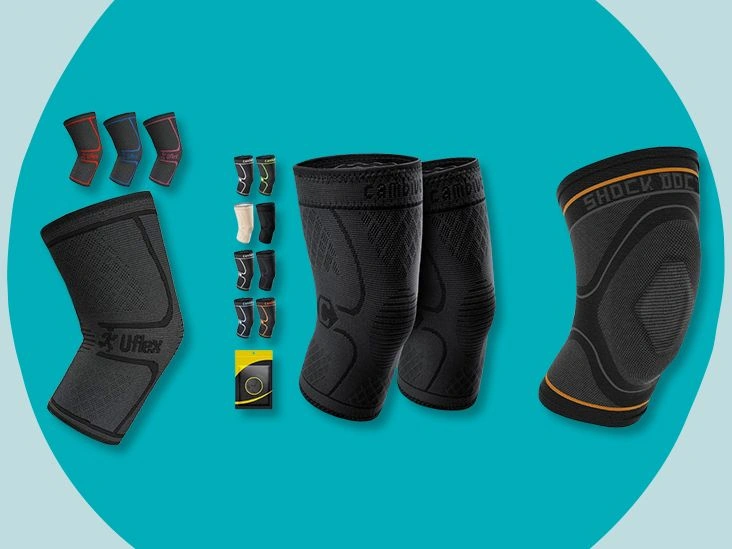
Quick look at the best knee sleeves
If you’re dealing with knee pain or rehabbing a mild injury, knee compression sleeves can provide support during activity. Unlike knee braces, which can limit knee motion partially or completely, knee sleeves are crafted from elastic fabric that stabilizes and supports the joint without restricting movement.
We’ve gathered the best knee sleeves across different activities, budgets, and support levels. Continue reading to see our selections and tips for choosing the proper knee sleeve for your needs.
The best knee compression sleeves
The best knee sleeves compared
-Price Sizes UFlex Athletics Knee Compression Sleeve$$S–XLCambivo Knee Compression Sleeve$S–3XLBauerfeind Sports Knee Support$$$XS–2XLBLITZU Flex Professional Knee Sleeve$$S–XLShock Doctor Knee Compression Sleeve$$S–XLNEENCA Knee Compression Sleeve$$$XS–3XLHow we chose the best knee sleeves
When picking the top knee sleeves, we weighed several priorities, including:
- Functionality: You don’t want style over substance when selecting supportive workout gear. We ensured our choices meet expectations for support, flexibility, and longevity.
- Durability: Investing in gear that won’t wear out quickly matters. Our picks are built to handle repeated workouts and are machine washable for ongoing cleanliness.
- Affordability: Cost is an important consideration when planning support for activity. We included options at multiple price levels so you can find a quality sleeve within your budget.
How knee sleeves work
The main attribute of a knee-compression sleeve is that it stretches over the knee to offer support and protection to the joint.
Instead of limiting knee movement like a brace, a sleeve permits motion while helping align the joint and shielding it by compressing surrounding muscles and tissues. That compression can boost blood flow to the area, which may lessen pain and swelling, such as from knee effusions or fluid accumulation in the knee’s bursa.
Knee sleeves are commonly worn during physical activity, when the knee joint is under strain and benefits from extra support. This is especially useful for load-bearing or knee-focused activities like weightlifting, running, and jumping.
It’s important you get the right fit when choosing a knee sleeve, says Greg Minnis, DPT, of Excel Physical Therapy in New Jersey. Make sure that the sleeve is not so tight that it causes discomfort, but not so loose that it slides around when you’re moving.
How to choose a knee sleeve
Getting the correct fit is crucial when selecting a knee sleeve. Dr. Greg Minnis, a physical therapist at Excel Physical Therapy in New Jersey, advises ensuring the sleeve isn’t so tight it becomes uncomfortable. “Conversely, you don’t want it so loose that it shifts while you move,” he explains.
Minnis recommends ordering two sizes when buying online and keeping the one that feels most comfortable while walking or performing the activities you plan to use the sleeve for.
When should I wear a knee compression sleeve?
A study found that a compression knee sleeve can be an effective and immediate method to lower pain and improve knee stability and confidence during activity. If you feel pain while doing exercises that involve substantial knee motion, using a knee sleeve might help.
Minnis notes that knee sleeves offer only modest support, so they’re best for easing mild to moderate pain and increasing stability during activity. People with more severe injuries or those recovering from major knee surgery may require the rigidity and support of a hinged knee brace instead of a sleeve.
Taping—the practice of wrapping the knee with special tape to limit unwanted movement and support the joint—is another option, Minnis says.
Other supportive choices include a knee strap, a patella brace (a smaller device that encircles the leg beneath the kneecap), or topical pain-relief patches. You can also consider ace wraps or elastic tubular bandages.
If you sleep on your side, a small knee support pillow may help maintain hip and spinal alignment. Low-impact exercise can also strengthen the muscles around your knee, enhancing joint support.
Lastly, for knee pain management consider applying ice for 15 minutes intermittently; elevating the leg when possible; and consulting your doctor or a healthcare professional if pain disrupts daily life or is accompanied by redness, swelling, or warmth.
Frequently asked questions
What is the best material for knee sleeves?
Knee sleeves are made from various elastic and moisture-wicking fabrics, such as polyester, cotton blends, nylon, and spandex.
Different materials suit different activities. For instance, the ideal sleeve for powerlifting often includes neoprene because it’s flexible yet resilient for heavy training.
Are knee sleeves really effective?
Knee sleeves deliver compression and support that can enhance blood flow, stabilize the knee during movement, and decrease discomfort.
They’re especially beneficial for people engaged in high-intensity workouts, prolonged training sessions, or those aiming to prevent injuries due to past joint issues.
Keep in mind that after significant knee trauma or surgery, you might need more support than a sleeve can provide. Speak with a doctor to determine whether a knee sleeve is appropriate for your situation.
Takeaway
If you have mild knee concerns and want to reduce pain while supporting mobility, a knee sleeve could be a solid choice. The guide above can help you select one with the level of support suited to your condition and activity demands.
However, if a knee sleeve doesn’t deliver the relief you expected or you keep experiencing considerable pain, consult a doctor or specialist to explore options. They can assess your condition more thoroughly and recommend next steps, sturdier knee braces, or treatment and therapy plans.
Frequently Asked Questions
Knee compression sleeves are elastic garments that fit over the knee to provide gentle compression, helping stabilize the joint, support surrounding muscles, and potentially improve blood flow to reduce pain and swelling during activity.
Wear a knee sleeve during activities that stress the knee—like running, weightlifting, or jumping—or when rehabbing mild injuries to increase stability and comfort. They’re best for mild to moderate pain, not severe injuries that require a rigid brace.
Measure around your knee and follow the manufacturer’s sizing chart. The sleeve should feel snug but not painful—tight enough to stay in place and provide support, yet loose enough to avoid numbness or circulation issues. Trying two sizes when ordering online is often recommended.
Neoprene offers warmth and strong support for powerlifting and heavy training. Breathable blends (nylon, polyester, spandex) work well for running and long workouts. Choose moisture-wicking fabrics for high-intensity or sweaty activities.
Knee sleeves can reduce discomfort, improve proprioception, and offer modest stability, which may help lower risk of minor overuse injuries. They do not replace medical treatment or rigid braces needed for serious injuries or post-surgical support.
Read Next

Hot and Cold Therapy: When to Use Each for Neck Pain

How to Check for Yeast Infections: The 4 Best At-Home Vaginal pH Tests

4 Best CBD Gummies for Anxiety and Stress in 2025

9 of the Best Keto-Friendly Protein Bars You Can Buy

6 Reasons Working from Bed Isn't Doing You Any Favors

Think You or Your Partner Have ‘Intimacy Anorexia’? Read This First
Related Posts

7 Best Knee Pillows for Back and Side Sleepers in 2025
Oct 1, 2026 • 20 min read
Stretches and Exercises to Help Ease SI (Sacroiliac) Joint Pain
Oct 5, 2026 • 25 min read
Green Tea for Hair: A Complete Guide
Aug 4, 2026 • 7 min read
All About the Chinese Body Clock
Sep 1, 2026 • 30 min read
7 Easy Ways to Stretch Tight Glutes
Sep 18, 2026 • 15 min read