

Sores or itchy patches on your skin might be insect bites, a rash, or another dermatologic condition. Inspect your mattress and bedding for signs of bedbugs, or consult a physician for a proper evaluation.

If you notice red, itchy spots, it’s understandable to suspect bedbugs. However, the bites themselves can be hard to distinguish unless you find proof of the insects at home. They may mimic other insect bites or several skin disorders.
No laboratory test can definitively confirm a bedbug bite, but a clinician can often narrow the cause by excluding other conditions such as hives or fungal infections.
Read on to learn how to spot a bedbug bite and how to differentiate them from other insect bites and dermatologic issues.
A note on skin tone
Bites and rashes may present differently depending on skin tone. Typically they appear pink or purple on darker skin tones and red on lighter skin.
Can you have bedbugs without actually seeing them?
It’s possible to have bedbug bites even if you never see the insects or sense them biting. You might, however, be able to locate signs of an infestation. Bedbug bites can also resemble bites from other pests.
Most bedbugs that bite humans are reddish-brown and have a flat, oval body. They’re generally about 1 to 7 millimeters (mm) long, possess six legs, and lack visible wings.
What bedbug bites look like on people
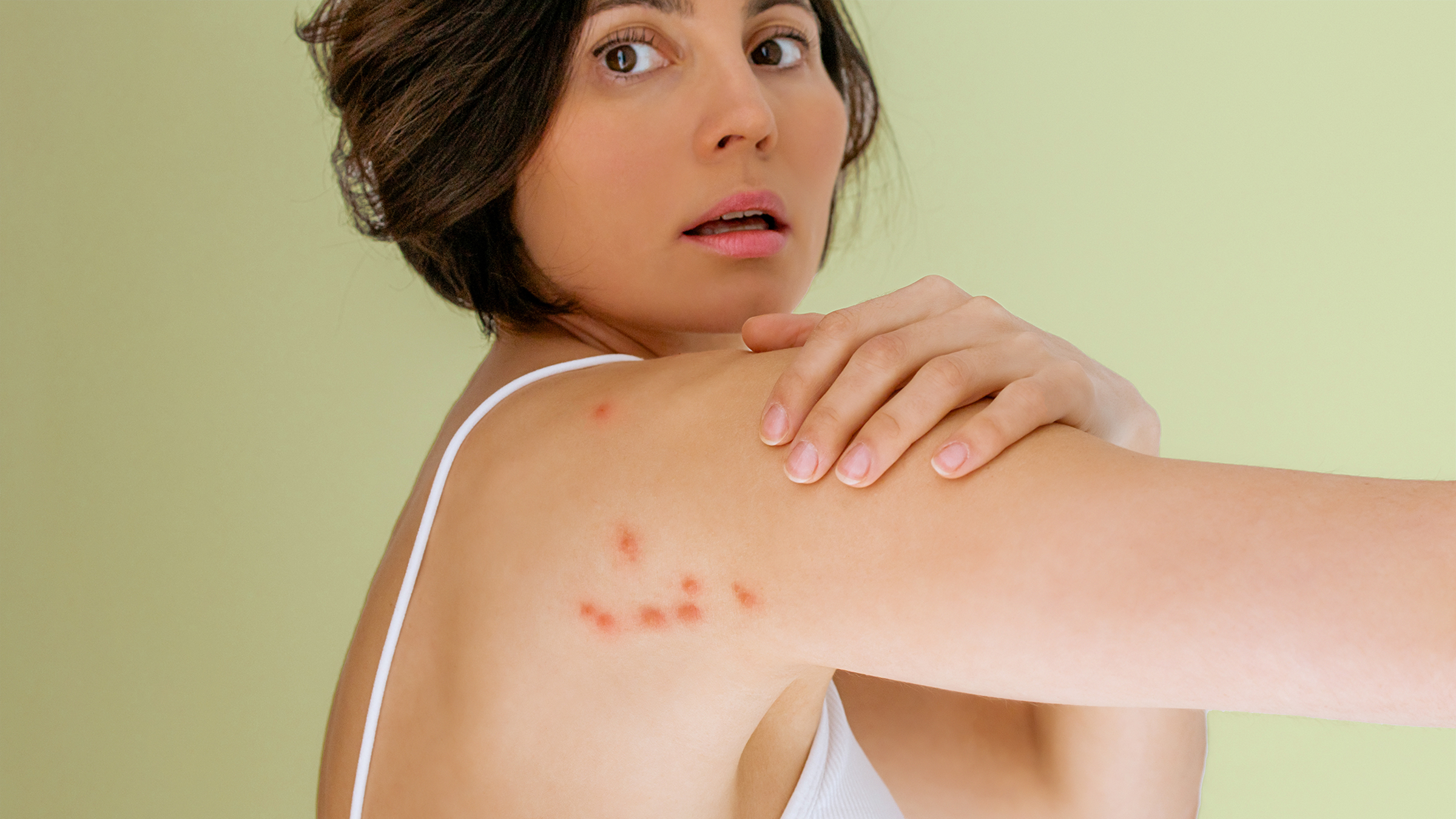
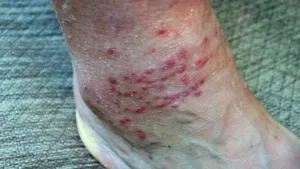
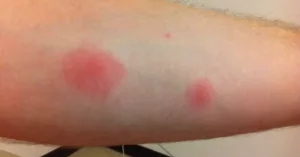
Bedbug bites often resemble other insect bites. They’re intensely itchy and typically under a quarter-inch in diameter. On lighter skin they usually look red; on darker skin they can appear faint-pink or purplish and may darken to brown over time.
In some people—especially those with allergies—bites can evolve into large weals (itchy, fluid-filled raised areas) exceeding 2 inches.
Bites usually appear on body parts exposed during sleep, including:
- face
- neck
- arms
- hands
- feet
Marks frequently show a “breakfast, lunch, dinner” arrangement — a line or zigzag of three or more bites.
How bedbugs colonize an area
Bedbugs most often infest locations near where people sleep. They are commonly found in:
- hotels
- shelters
- cruise ships
- buses
- trains
- workplaces
- movie theaters
Travel raises the chance of bringing bedbugs home in luggage. They usually hide within about 8 feet of where people sleep.
How to determine whether bites are from bedbugs
The clearest way to confirm bedbug bites is to find evidence of the insects at home. Signs of infestation include:
- reddish or rust-colored stains on sheets or the mattress from crushed bugs
- small dark dots from bug feces
- specks of blood on bedding or upholstery
- eggs about 1 millimeter in size
- shed skins (exoskeletons)
- a sweet, musty odor
Where bedbugs like to hide
Bedbugs feed mainly at night and hide in narrow crevices during the day. Typical hiding spots include:
- seams of chairs and sofas
- between cushions and curtain folds
- along drawer edges
- inside electrical outlets
- behind peeling wallpaper
- in the corner where wall meets ceiling
- in tiny cracks in beds or furniture
When to see a doctor
If your bites appear after travel and you can’t inspect for bedbugs, consider contacting a physician. A clinician may identify bites by sight or eliminate other possible skin disorders.
Seek medical attention if:
- you develop a fever
- the bites become markedly swollen
- blisters form over the bites
Night-biting insects that aren’t bedbugs
Bedbug bites can resemble several other insect bites. The following pests are often active at night.
Spiders
Many spider species are more active at night. Being bitten while asleep is uncommon; spiders typically bite only when threatened.
Most spiders have venom, but for the majority the venom isn’t potent enough to seriously harm humans and produces only mild injury.
Spider bite symptoms may include:
- swelling
- red or purplish welts
- itchiness
- rash
- blistering
Unlike bedbugs, spiders don’t feed on blood. Spider bites are more apt to be isolated, whereas bedbug bites often occur in clusters.
Mosquitoes
Mosquitoes pierce skin with a long tube-like mouthpart. Many mosquito species are most active at dusk and during the night.
Though mosquito bites are usually harmless, mosquitoes can transmit serious diseases such as:
- malaria
- West Nile virus
- dengue fever
Mosquito bites leave an itchy bump resembling a pimple that typically resolves in a few days.
While mosquito and bedbug bites can look alike, mosquito bites are more likely scattered randomly and are generally larger than bedbug bites. Bedbug bites tend to form straight lines or zigzags.
Mites
Mites are tiny, insect-like creatures often found on animals like birds and rodents. Symptoms of mite bites vary but usually include:
- a rash
- firm or inflamed bumps that are red on light skin or dark purple/brown on darker skin
- itching
- swelling
Mite bites are very small and often do not show an obvious puncture like many other insect bites.
Fleas
Your likelihood of flea bites increases if you have pets or allow them to sleep in your bed.
Flea bites are often mistaken for bedbug bites. Both are typically itchy and may appear in lines or clusters. Fleas usually target:
- feet
- legs
- armpits
- elbows
- knees
If bites are primarily on your upper body or around your face, they are more likely from bedbugs.
Optum Now is operated by RVO Health. By clicking on this link, we may receive a commission. Learn more.
Common biting pests
Some frequent biting creatures include:
- Lice: These insects live in hair and bite the scalp. Lice bites cause intense itching and sores. You might also spot lice eggs (nits) attached to hair strands.
- Scabies: Caused by a tiny mite spread through sharing clothing or bedding, scabies produce a rash and severe itching that often worsens at night.
- Ticks: Ticks prefer warm, moist areas such as armpits or the groin. They can remain attached to your skin for more than a week after biting.
- Chiggers: Chiggers are arachnid larvae that live in tall grass, berry patches, and wooded areas. Only the larval stage bites humans, favoring warm, moist skin areas. After the chigger detaches, you’re left with bumps that appear reddish on lighter skin and pink or purple on darker skin, sometimes with a bright red dot in the center. The lesions may resemble welts, blisters, pimples, or hives.
Rashes that mimic insect bites
Several skin disorders can look like bedbug bites.
Hives
Hives are raised, red bumps or welts caused by an allergic reaction. They’re usually very itchy and can be red, purplish, or skin-colored.
If marks expand rapidly or spread to other areas, they could be hives.
Fungal infection
Fungal infections commonly affect moist areas such as:
- feet
- genital area
- under the breasts
A fungal infection can provoke an allergic response, producing an itchy, bumpy rash elsewhere on the body.
Miliaria
Miliaria, or heat rash, is a common condition caused by inflammation or blockage of sweat ducts.
It’s most frequent in newborns and people living in hot, humid climates. Symptoms vary but often include itchy bumps that may be clear, white, or red.
Dermatitis herpetiformis
Dermatitis herpetiformis is a rare autoimmune disorder that produces itchy blisters and redness on lighter skin and purplish discoloration on darker skin tones.
The majority of individuals with this condition also have celiac disease.
This condition most commonly appears on:
- knees
- elbows
- buttocks
- scalp
- lower back
Summary
Bedbug bites can be mistaken for other insect bites or skin disorders. The most reliable way to determine whether bedbugs are the cause is to find signs of the insects in your living space.
If you suspect bedbug bites but can’t locate any evidence at home, consider consulting a healthcare professional.

















Leave a Reply
You must be logged in to post a comment.