Benefits of Hammer Toe Orthotics


- Overview
- Types of hammer toe splints (orthotics)
- Difference between splint and orthotic
- What a hammer toe orthotic does and doesn’t do
- Pros and cons of types of hammer toe orthotics
- Toe wraps
- Toe socks
- Gel toe separators (also called spreaders, relaxers, or stretchers)
- Ball of foot (metatarsal/sulcus) cushions
- Hammer toe crest pad
- Anatomy of the toe
- When to talk to a doctor
- Surgery
- What is a hammer toe?
- The takeaway
Overview
Hammer toe is a condition in which the middle joint of a toe bends upward. This bend forces the tip of the toe to point downward, producing a hammer-like appearance. Friction and pressure from footwear can lead to ulcers on the top of the bent middle joint.
If you have hammer toe affecting your second, third, or fourth toe — or multiple toes — there are several styles of hammer toe splints (orthotics) available to ease or avert associated foot problems.
Types of hammer toe splints (orthotics)
Difference between splint and orthotic
The U.S. Centers for Medicare and Medicaid Services (CMS) currently describes an orthotic, or orthosis, as an artificial support for a body part. An orthotic can be prefabricated or custom-crafted to suit your needs.
CMS characterizes a splint as a cast or wrapping material used to help set a broken, fractured, or dislocated bone.
This updated terminology is gradually supplanting older usage where splint and orthotic were sometimes used interchangeably. What was previously referred to as a hammer toe splint is now typically called an orthotic.
What a hammer toe orthotic does and doesn’t do
- Provides passive force or pressure. The aim of a hammer toe orthotic is to apply a straightening force to the muscles that curl your toe. This helps keep the muscles from tightening in the curled posture that can worsen the deformity.
- Doesn’t repair broken bones. A hammer toe orthotic won’t realign bone the way a splint used for fractures does, because the bone itself isn’t broken in hammer toe. Instead, the toe bends due to contracted muscles around the joint.
- Is preventative. Much of the discomfort from hammer toe stems from the bump or callus that often forms on top of the affected toe. Orthotics won’t eliminate that bump, but they can help control pain and may prevent further worsening of the toe’s bend.
You might find relief by experimenting with various over-the-counter orthotics until you discover one that helps. Some people benefit from combining devices, for example a heel pad together with a hammer toe orthotic.
A foot specialist may help you reach a solution more quickly and often at lower cost. Working with a good specialist can result in happier, healthier feet and an efficient resolution of hammer toe issues.
Pros and cons of types of hammer toe orthotics
There are numerous over-the-counter hammer toe orthotics on the market. With any of these aids, it’s crucial to wear shoes that fit well and provide ample space in the toe box. Trying to cram an orthotic into tight shoes can exacerbate the problem.
Some common orthotic types include:
Toe wraps
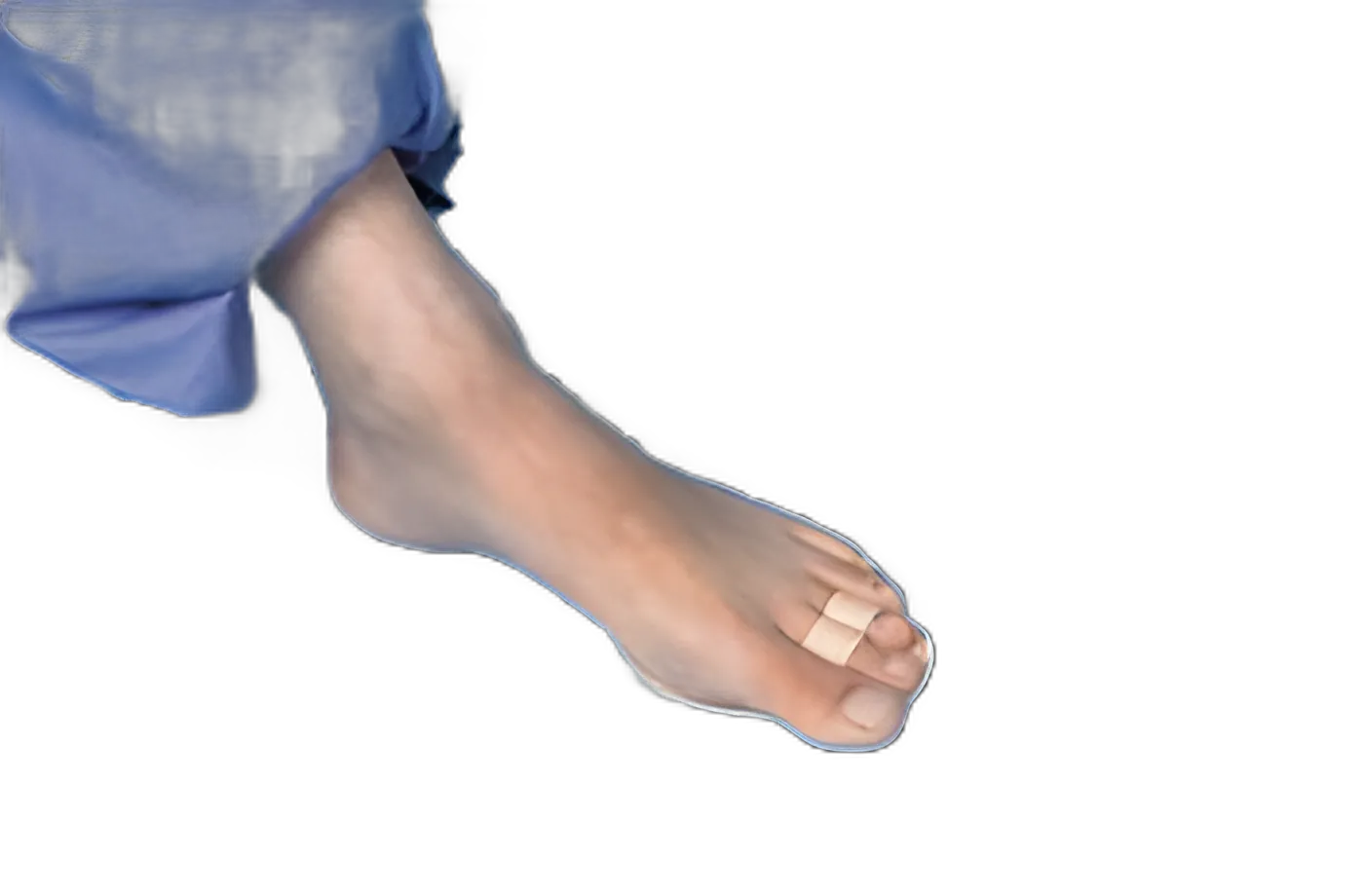
These are thin elastic bands with Velcro straps that hold the hammer toe against its neighbor. They work well for some people, are minimally invasive, and can be laundered and reused. They may be difficult to keep on if your toes are short or angled to the side.
Toe socks
Toe socks, specifically toe separator socks, are socks with five toe openings and padding to help separate the toes. They take up little space and usually don’t irritate, though they provide less separation than other devices.
Over time they may offer gentle relief. If you can’t find a good fit, you could fashion your own separator sock by cutting holes in a thin, well-fitting sock.
Gel toe separators (also called spreaders, relaxers, or stretchers)
These resemble cut-off gel gloves that separate toes and help keep them aligned. Some models separate all five toes while others separate just two. Gel toe separators can be effective when they fit well, particularly for crossed toes. If they don’t fit correctly they can be awkward and irritating.
Pay attention to sizing, especially for the style that covers all five toes. Toes vary widely in length, girth, and spacing — a one-size separator may not suit everyone.
A too-large separator can cause pain by overstretching toes or rubbing inside your shoe. Try different styles until you find one that matches your toes.
Ball of foot (metatarsal/sulcus) cushions
The metatarsals are the five long bones connecting to your toes. Some hammer toe pain transfers to the metatarsal area. Insoles that cushion the ball of the foot or give added support beneath the toes can sometimes reduce discomfort.
Hammer toe crest pad
A toe crest pad is a ring of material encircling the hammer toe and held by an attached pad beneath the toes. Typically made of gel or felt, these pads can help some people with overlapping toes if they aren’t too irritating.
Allowing your toes enough space to splay naturally in shoes will greatly influence improvement or deterioration of hammer toes. If you can’t get new shoes right away, try wearing suitable orthotics at home when you’re barefoot or while sleeping.
When shopping for new shoes, wear your orthotics during fitting to find the proper size and comfort.
Anatomy of the toe
Knowing toe anatomy can assist you in choosing the right over-the-counter orthotic or understanding recommendations from a doctor or orthotist. Key points about toe joints include:
Your toe consists of three small bones called phalanges. From the tip inward, they are:
- the distal (end or tip)
- the middle
- the proximal (nearest the foot)
The joint affected in hammer toe is the proximal interphalangeal joint (PIPJ) — the middle joint between the proximal phalanx and the middle phalanx. In hammer toe the PIPJ is bent downward (flexed).
The metatarsophalangeal joint (MTPJ) may be neutral or hyperextended. The distal interphalangeal joint (DIPJ) is either hyperextended or neutral.
When to talk to a doctor
If over-the-counter orthotics fail to help or make the issue worse, consult a doctor.
Foot specialists (podiatrists) can prescribe custom-made orthotics tailored to you. An orthotist or prosthetist can design an orthotic to match your foot and specific condition.
Your foot doctor can also evaluate factors you might not notice, such as:
- excessive pronation
- flexible deformities
- combined conditions, like hammer toe occurring with Achilles tendinosis
Surgery
If pain persists or worsens despite orthotics, surgery is sometimes necessary. Resection arthroplasty is the procedure most commonly performed.
In resection arthroplasty:
- A surgeon removes a portion of one of the toe bones.
- Tendons are cut and then reattached.
- A wire or tape may be used to keep the toe straight while it heals, usually for three to six weeks.
Healthy patients often undergo this procedure without needing an overnight hospital stay.
A 2000 study of 63 people (118 toes) reported that resection arthroplasty relieved pain for 92 percent of participants. About 5 percent experienced minor complications. The follow-up was an average of 61 months after surgery.
What is a hammer toe?
The predominant cause of hammer toe is frequently wearing shoes that squeeze the toes, including high heels. The condition often develops gradually , though it can result from injury.
Hammer toe can also develop secondary to another deformity called hallux valgus, a misalignment of the big toe that typically produces a bunion on the toe’s outside.
Big-toe misalignment crowds the smaller toes, which can lead to hammer toe in the same way tight shoes do.
Two related deformities are mallet toe and claw toe. Mallet toe occurs when the distal interphalangeal joint, not the middle joint, bends downward.
In claw toe, the metatarsophalangeal joint is hyperextended while the proximal and distal interphalangeal joints are flexed. These conditions also affect the second, third, or fourth toes and can produce painful bumps.
The takeaway
Hammer toe and the associated bump can be painful and interfere with daily life. A range of over-the-counter orthotics and aids may ease your discomfort. If these don’t help, medical providers can offer custom-fitted orthotics. As a final option, surgery is effective for many people.
Frequently Asked Questions
A Hammer Toe Splint is an orthotic device designed to apply gentle pressure to straighten a curled toe, reduce friction and pain, and slow progression of the deformity. It can provide support and cushioning but does not realign broken bone.
Common options include toe wraps, toe socks, gel toe separators, crest pads, and metatarsal cushions. Each offers different levels of separation, padding, and fit; effectiveness depends on toe shape and shoe space.
See a doctor if over-the-counter splints worsen pain, fail to relieve symptoms, or if you have ulcers, severe deformity, or difficulty walking. A podiatrist can recommend custom orthotics or discuss surgical options.
Splints and orthotics can relieve pain and may prevent worsening in many cases, but they cannot always avoid surgery. If conservative measures fail and pain or deformity persists, surgical correction may be recommended.
Choose shoes with a roomy toe box and good support. Try orthotics inside the shoes when fitting to ensure comfort. Avoid tight or narrow footwear that increases pressure on the affected toe.






Related Posts
7 Ways to Remove Dead Skin from Your Feet
Sep 10, 2026 • 14 min read
Why Are Blisters Forming Between My Toes and How Do I Treat Them?
Jul 31, 2026 • 28 min read
What to Do When Your Shoes Are Too Tight
Aug 12, 2026 • 10 min read
Who Should Consider Getting Peroneal Tendon Surgery?
Aug 9, 2026 • 7 min read
8 Exercises to Ease Heel Spur Pain
Sep 27, 2026 • 31 min read