Can Yoga Improve Hair Growth and Thickness?

- Ways yoga could support hair health
- Yoga helps lower stress, a potential contributor to hair loss
- Yoga may boost circulation to the scalp, which could counteract hair loss
- Yoga postures to try
- Pose 1: Uttanasana (Standing Forward Fold)
- How to do a Standing Forward Fold
- Pose 2: Adho Mukha Svanasana (Downward-Facing Dog)
- How to do a Downward-Facing Dog
- Pose 3: Prasarita Padottanasana (Wide-Legged Forward Fold)
- How to do a Wide-Legged Forward Fold
- Pose 4: Sasangasana (Rabbit Pose)
- How to do a Rabbit Pose
- Pose 5: Balasana (Child’s Pose)
- How to do a Child’s Pose
- Other strategies to support hair growth
- Final thoughts
Could practicing yoga be an effective approach to promoting hair regrowth? Some yoga enthusiasts think so, citing yoga’s capacity to lower stress and improve circulation to the scalp.
Read on to learn how yoga may support hair health, what studies indicate, and which poses might be most helpful for your hair.
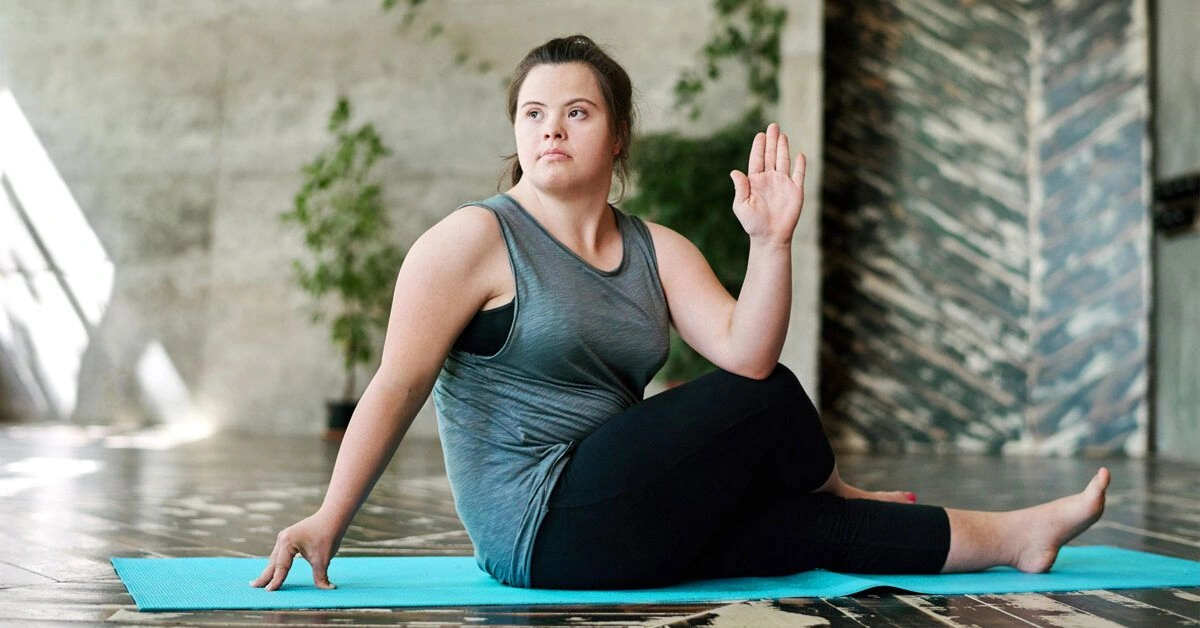
Ways yoga could support hair health
There are two main mechanisms by which yoga might protect against hair thinning and encourage hair growth. The first is via stress reduction.
Yoga helps lower stress, a potential contributor to hair loss
Excessive stress has been associated with hair shedding, according to a 2017 study. While the precise pathway isn’t fully understood, researchers propose that intense stress can alter immune responses and temporarily slow hair growth.
Yoga practice can reduce stress levels. A 2016 study reported that yoga helped lower serum cortisol, a hormone linked with high stress.
Another 2015 study documented that routine yoga practice decreased inflammatory markers in participants. Lower inflammation might diminish the impact stress has on the body, potentially reducing the risk of stress-related hair loss.
Yoga may boost circulation to the scalp, which could counteract hair loss
Yoga might also help prevent hair thinning by promoting blood flow to the head. Inverted or partially inverted poses can increase circulation to the scalp.
Many hair-loss treatments, including topical minoxidil, act by improving scalp blood flow — a mechanism that research from 2020 suggests can help reverse hair thinning.
Keep in mind that yoga produces a temporary increase in blood flow to the scalp. That is different from the sustained effect that regular application of treatments like minoxidil may provide.
Also, there’s no standardized “dose” of yoga for hair benefits. For example, one of the 2015 yoga and stress studies observed participants practicing about an hour most days of the week. Still, even less frequent practice could give you some stress-relief advantages.
Yoga postures to try
The following poses may help calm stress and increase scalp circulation. Specifically, 2019 research suggests incorporating the sequences found in Sun Salutations. You may also find yoga for endometriosis resources helpful if you’re looking into broader therapeutic yoga practices.
Pose 1: Uttanasana (Standing Forward Fold)

This pose stretches the legs and back while folding you forward, which may encourage blood flow toward the scalp. Here’s how to practice it.
How to do a Standing Forward Fold
- Stand with feet about shoulder-width apart and arms relaxed at your sides.
- Hinge at the hips, folding forward as your arms slide down your legs.
- Reach your fingertips toward your knees, toes, or the floor depending on flexibility; a slight bend in the knees is fine.
- Allow your head to hang and feel the stretch along the backs of your legs. If helpful, shift weight slightly to the balls of your feet for balance.
- Hold for several deep breaths, then lift your head to return to standing.
Pose 2: Adho Mukha Svanasana (Downward-Facing Dog)

Downward-Facing Dog is a staple pose that’s partially inverted and can boost circulation to the scalp while promoting relaxation. Follow these steps to perform it.
How to do a Downward-Facing Dog
- Begin on hands and knees on a yoga mat.
- Press up so your weight rests on hands and feet, legs hip-width and hands shoulder-width apart.
- Spread your fingers wide and imagine energy extending from your hands to the mat; form an upside-down V with your body.
- Lengthen the spine and tilt the pelvis to deepen the hamstring stretch.
- Hold for three to five breaths before moving on.
Pose 3: Prasarita Padottanasana (Wide-Legged Forward Fold)

This calming forward fold can also support increased blood flow to the head. Do it as follows.
How to do a Wide-Legged Forward Fold
- Stand with legs wider than hip-distance apart, feet pointing forward.
- Fold forward from the hips, placing hands flat on the floor. If feasible, rest your head on the mat or on a yoga block for added support.
- Hold for about 10 breaths.
- Inhale to lift the torso back up, flatten the spine, and rest hands on your hips.
Pose 4: Sasangasana (Rabbit Pose)

Rabbit Pose relieves tension and increases scalp circulation without being fully inverted. It’s a good transition into or out of Child’s Pose. Try it using these steps.
How to do a Rabbit Pose
- Kneel with the tops of your feet on the mat and toes pointed.
- Fold forward at the hips and tuck your head so the crown touches the floor; you may place hands beside your body for support or use a block under the head if needed.
- Interlace your hands behind your back and lift the arms to open the chest and front of the shoulders.
- Gently rock forward and back a few times to create a soothing, massage-like effect on the scalp. Repeat the motion three times.
Pose 5: Balasana (Child’s Pose)

Child’s Pose is a restful posture commonly used between poses. It’s soothing, reduces stress, and can be done almost anywhere with enough room. Perform it like this.
How to do a Child’s Pose
- Kneel and separate your knees about hip-width apart.
- Exhale and fold forward, bringing your torso down over your thighs.
- Extend your arms forward with palms on the floor, imagining your hands moving forward while your pelvis stretches back.
- Breathe deeply and stay in the pose for 30 seconds or longer, envisioning stress easing from your body.
Other strategies to support hair growth
Yoga can be part of a broader approach to hair health. The following habits may also promote better hair growth:
- Consume a nutritious, balanced diet rich in lean proteins. Protein is essential for hair structure, and a protein deficiency may impede hair growth . Good sources include lean meats, skinless poultry, fish, eggs, legumes, low-fat dairy, and nuts.
- Avoid excessive supplementation with vitamin A, vitamin E, or selenium. Studies have linked high intakes of these nutrients to hair shedding. Follow recommended daily allowances on supplement labels and stick to suggested doses.
- Handle your hair gently. Limit heat styling and avoid very tight braids or ponytails, which can cause breakage and traction alopecia.
- Try regular scalp massage. Massaging the scalp can boost circulation and reduce tension. There’s no set duration — continue until you feel the calming effect.
Remember that medical conditions, such as alopecia areata, can cause hair loss that lifestyle changes alone won’t resolve. If you’re worried about hair loss, consult a healthcare provider to explore treatment options.
Final thoughts
Healthy hair can contribute to one’s overall appearance. While yoga may not directly restore hair for everyone, it offers definite stress-reduction benefits and can improve general well-being.
Incorporating these yoga poses a few times per week may boost your sense of wellness and, over time, contribute to the appearance of healthier hair.
Frequently Asked Questions
Yoga may support hair thickness indirectly by lowering stress and temporarily increasing blood flow to the scalp, both of which can create a healthier environment for hair growth.
Forward folds (Uttanasana, Prasarita Padottanasana), Downward-Facing Dog, Rabbit Pose, and gentle inversions can increase blood flow toward the head and may help circulation to the scalp.
There’s no standardized “dose,” but regular practice—several times per week, even 30–60 minutes sessions—can help reduce stress and may offer some benefit over time.
No. Conditions like androgenetic alopecia or alopecia areata often require medical treatments. Yoga is a supportive lifestyle measure, not a guaranteed cure.
Inverted poses are generally safe for most people but should be avoided or modified if you have high blood pressure, glaucoma, neck issues, or other contraindications; consult a healthcare provider if unsure.
Read Next

Related Posts
Is It Possible to Encourage Facial Hair Growth?
Aug 23, 2026 • 22 min read
What Are the Different Types of Hairlines for Women and Men?
Sep 22, 2026 • 7 min read
Does Having High Blood Pressure Cause Nosebleeds?
Sep 12, 2026 • 22 min read
Hiya Vitamins Review By a Mom Who Is a Dietitian
Sep 25, 2026 • 28 min read
What Exactly Is a Tooth Piercing?
Sep 11, 2026 • 20 min read