Does Medicare Cover CPAP Machines? Coverage Rules and Costs Explained

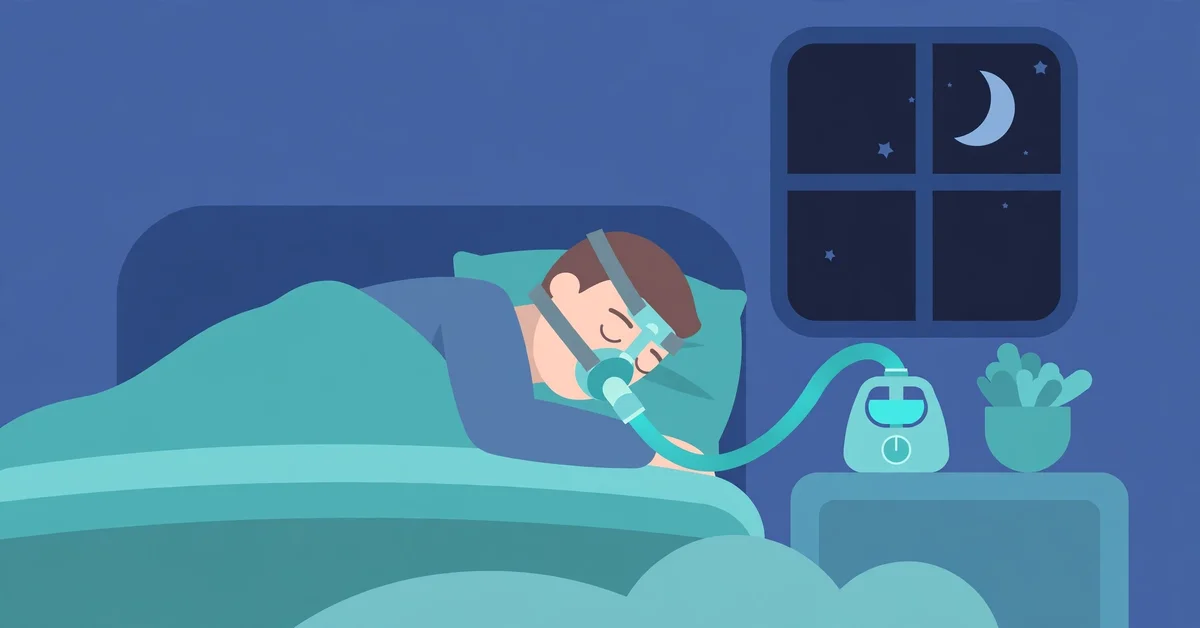
- CPAP coverage at a glance
- Who qualifies for a Medicare-covered CPAP machine?
- 1. A face-to-face evaluation with your doctor
- 2. A sleep study that meets Medicare’s criteria
- 3. A written order, filled by a Medicare-enrolled supplier
- The 12-week trial and the compliance rule
- Tips for passing the first 90 days
- Your CPAP coverage timeline
- What does a CPAP cost with Medicare?
- What supplies does Medicare cover, and how often?
- What Medicare does not cover
- Repairs and getting a replacement machine
- What if you fail the 90-day trial?
- What about APAP and BiPAP machines?
- Already had a CPAP before joining Medicare?
- How to get started
- The bottom line
Yes. Medicare Part B covers CPAP machines for people diagnosed with obstructive sleep apnea (OSA), but it does not simply buy you a machine. A CPAP device is classed as durable medical equipment (DME), and Medicare pays for it as a rental over 13 months while you prove, in the first 90 days, that you actually use it and that it helps you. After you meet the Part B deductible — $283 in 2026 — you pay 20% of the Medicare-approved amount and Medicare pays 80%, according to Medicare.gov and the CMS 2026 premiums and deductibles fact sheet .
This guide walks through the exact qualification steps, the compliance rule that decides whether coverage continues, a month-by-month timeline, and what you will really pay — including the supply replacement schedule most people never see until a claim is denied.
CPAP coverage at a glance
| Question | Medicare’s rule |
|---|---|
| Which part covers CPAP? | Part B, as durable medical equipment (DME) |
| Who qualifies? | People with obstructive sleep apnea confirmed by a sleep study that meets Medicare’s criteria |
| How is the machine paid for? | Capped rental: Medicare pays the supplier monthly for 13 continuous months, then you own the machine |
| What do you pay? | The Part B deductible first ($283 in 2026), then 20% of the Medicare-approved amount |
| Is there a test period? | Yes — a 12-week (90-day) trial with a usage requirement (see below) |
| When is the machine replaced? | Generally after its 5-year reasonable useful lifetime |
Who qualifies for a Medicare-covered CPAP machine?
Coverage follows a strict sequence. Missing a step — or doing the steps out of order — is one of the most common reasons CPAP claims are denied. There are three requirements.
1. A face-to-face evaluation with your doctor
Before anything else, you need an in-person evaluation with the doctor or qualified practitioner who will treat you. At this visit, the clinician documents why sleep apnea is suspected — symptoms such as loud snoring, witnessed breathing pauses, or excessive daytime sleepiness — and the evaluation becomes part of your treatment plan. Under CMS documentation rules, this face-to-face encounter must take place within the six months before the written order for the machine.
2. A sleep study that meets Medicare’s criteria
Your diagnosis must come from a sleep study (polysomnography). Medicare accepts facility-based lab studies and certain home sleep tests. Part B also helps cover the sleep study itself, generally at the same 80/20 cost split after the deductible.
The study must show an apnea-hypopnea index (AHI) — the average number of breathing disruptions per hour of sleep — at or above one of these thresholds set by CMS coverage policy:
- AHI of 15 or more events per hour, or
- AHI of 5 to 14 events per hour plus documented symptoms or conditions, such as excessive daytime sleepiness, impaired cognition, mood disorders, or insomnia — or diagnosed hypertension, ischemic heart disease, or a history of stroke.
A home sleep test result in the 5–14 range with no symptoms or related conditions is the classic borderline case that gets denied, which is why the documentation from step 1 matters.
3. A written order, filled by a Medicare-enrolled supplier
Your treating clinician must sign a written order for the device. The machine and supplies must then come from a DME supplier enrolled in Medicare. If the supplier is not enrolled, Medicare will not pay — even with a valid prescription — and the full cost falls on you. Whenever possible, choose a supplier that also accepts assignment, meaning it accepts the Medicare-approved amount as full payment; a supplier that does not accept assignment can leave you with noticeably higher charges. You can find enrolled suppliers through the Medicare supplier directory on Medicare.gov or by calling 1-800-MEDICARE (1-800-633-4227).
The 12-week trial and the compliance rule
Medicare does not grant permanent CPAP coverage on day one. As Medicare.gov explains, it first covers a 12-week trial of CPAP therapy, including the device and accessories. During this window your supplier downloads the usage data your machine records automatically — hours used per night, and on how many nights.
To keep coverage beyond the trial, you must meet Medicare’s adherence definition during the first 90 days:
- Use the CPAP for at least 4 hours per night,
- on at least 70% of nights — that is, at least 21 out of 30 nights —
- within a consecutive 30-day period in those first 90 days.
You also need a second face-to-face visit with your treating clinician, held between day 31 and day 91, at which the clinician reviews the machine’s data and documents that you are using the device and that therapy is benefiting you (for example, less daytime sleepiness). Only then does Medicare continue paying the rental. Mask fit problems in the first weeks are the usual cause of failed trials — tell your supplier early, because a different mask can change your usage numbers before the window closes.
Tips for passing the first 90 days
- Start the night the machine arrives. Skipped nights early on shrink the window you have to build a compliant 30-day stretch.
- Fix mask problems in week one. Leaks and pressure discomfort are the top reasons people stop early; suppliers can swap mask styles during the trial.
- Wear it while reading or watching TV in the evening if falling asleep with it is hard at first — the goal is consistent nightly hours.
- Ask your supplier for a mid-trial data check around day 30–45, so a shortfall can still be corrected before day 90.
- Book the follow-up visit early. The day 31–91 appointment is easy to miss, and coverage can lapse on that technicality alone.
Your CPAP coverage timeline
| When | What happens |
|---|---|
| Before day 1 | Face-to-face evaluation (within 6 months of the order), sleep study, diagnosis, written order |
| Weeks 1–12 | Trial period: machine and accessories covered as a rental; your usage data is recorded |
| Days 31–91 | Face-to-face re-evaluation: clinician confirms adherence (4+ hours, 70% of nights) and clinical benefit |
| Months 4–13 | Medicare continues the 80/20 rental payments as long as you keep using the machine |
| Month 13 | After 13 continuous months of rental payments, the machine is yours — no more rental charges |
| Year 5 | The machine reaches its reasonable useful lifetime; you can get a new machine through the same rental process if you still need CPAP |
Note the word continuous: the 13 months must be uninterrupted. A long gap in use or in rental payments can restart the clock.
What does a CPAP cost with Medicare?
Under Original Medicare, your costs have three parts:
- The Part B deductible: $283 for 2026 (CMS). Amounts you pay for other Part B services during the year count toward it.
- 20% coinsurance on the Medicare-approved rental amount, billed monthly, plus 20% on covered supplies. The standard Part B premium ($202.90 per month in 2026) is separate and applies whether or not you use CPAP.
- Nothing extra after month 13 for the machine itself — ownership transfers to you. Supply coinsurance continues.
The Medicare-approved amount is set by fee schedules and varies by where you live, so no honest source can quote one national monthly figure. The table below shows how the math works at three example approved amounts — treat these as illustrations, not quotes:
| Example approved monthly rental | You pay 20% per month | Your 13-month total |
|---|---|---|
| $60 | $12 | $156 |
| $100 | $20 | $260 |
| $150 | $30 | $390 |
Medicare Advantage (Part C) plans must cover CPAP at least as well as Original Medicare, but many use flat copayments instead of 20% coinsurance and may require prior authorization or an in-network supplier — the details are plan-specific, so check your plan’s Summary of Benefits. If you have a Medigap (Medicare Supplement) policy with Original Medicare, most plans cover the Part B coinsurance, which can reduce your CPAP cost share to little or nothing beyond premiums; coverage depends on the specific Medigap plan letter you hold.
What supplies does Medicare cover, and how often?
Medicare also pays 80% (after the deductible) toward the accessories a CPAP needs to work — but only on a maximum replacement schedule set by CMS coverage policy (LCD L33718). Ordering sooner than the schedule allows means a denied claim, and replacements are covered only while you are actively using the machine. The standard maximums are:
| Supply | Medicare’s maximum replacement frequency |
|---|---|
| Disposable filters | 2 per month |
| Nasal mask cushion or nasal pillows | 2 per month |
| Full-face mask cushion | 1 per month |
| Mask interface (nasal or full-face frame) | 1 every 3 months |
| Tubing (standard or heated) | 1 every 3 months |
| Headgear | 1 every 6 months |
| Humidifier water chamber | 1 every 6 months |
| Non-disposable filter | 1 every 6 months |
These are maximums, not a subscription — a part is replaced when it is worn or damaged, within the frequency cap. Your supplier can tell you which items you are due for.
What Medicare does not cover
Comfort and convenience accessories are not part of the CPAP benefit, no matter how useful they seem. You pay for these yourself:
- CPAP cleaning machines (ozone or UV light devices) — none is cleared by the FDA for cleaning CPAP equipment, and Medicare does not cover them.
- Mask liners, comfort pads, and CPAP pillows — classed as comfort items.
- Hose holders, stands, and similar accessories.
- Batteries and travel power supplies.
- A second machine just for travel. Compact travel devices such as micro CPAP machines are generally bought out of pocket; Medicare funds one medically necessary device, not a spare.
Repairs and getting a replacement machine
During the 13-month rental, the supplier owns the machine and is responsible for keeping it working — repairs during rental should not cost you anything. After ownership transfers, Medicare can still help with repairs: it pays 80% of the approved repair amount after the deductible, and you pay 20%.
CPAP machines have a five-year reasonable useful lifetime. Medicare generally will not fund a replacement before five years from when you started using the machine — with one main exception: if the machine is lost, stolen, or damaged beyond repair in a specific incident, a replacement may be covered sooner with documentation of what happened. Once five years have passed, you may choose a new machine through the same rental process if you still need therapy; there is no rule forcing you to replace a machine that still works.
What if you fail the 90-day trial?
Failing the compliance trial does not permanently disqualify you. Coverage for that machine stops, but you can qualify again — the catch is that you essentially start the clinical process over, with a new face-to-face evaluation and a repeat sleep study. Before restarting, ask your clinician to address why the first trial failed: a different mask style, adjusted pressure settings, or treatment for nasal congestion often makes the second attempt succeed where the first did not.
What about APAP and BiPAP machines?
Auto-adjusting CPAP (APAP) devices, which vary pressure through the night, are handled under the same CPAP benefit and the same rules described here when your doctor orders one — there is no separate coverage track to qualify for.
BiPAP (bilevel) devices are different. Medicare classifies them as respiratory assist devices with stricter medical criteria — they are covered for conditions such as central or complex sleep apnea, severe COPD, restrictive thoracic disorders, and hypoventilation syndrome, each with its own testing requirements. A BiPAP requested only because CPAP feels uncomfortable will not meet the criteria. Cost sharing, when a bilevel device is covered, follows the same deductible-plus-20% structure.
Already had a CPAP before joining Medicare?
If you were already using CPAP when you became eligible for Medicare, you are not automatically out of luck. Medicare.gov notes that if you meet certain requirements, Medicare may cover a rental or replacement machine and accessories. Expect to document your existing diagnosis and therapy — talk to a Medicare-enrolled supplier about what records are needed before assuming you must start from zero.
How to get started
- See your doctor for a face-to-face sleep apnea evaluation.
- Complete the sleep study your doctor orders — in a lab or, if offered, at home.
- Get the signed written order once the study confirms sleep apnea at a qualifying level.
- Choose a Medicare-enrolled DME supplier that accepts assignment (supplier directory on Medicare.gov, or 1-800-MEDICARE).
- Use the machine every night from day one — your first 90 days of data decide whether coverage continues.
If a CPAP claim is denied, you have the right to appeal. Most CPAP denials trace back to a documentation gap — a missing face-to-face note, a study that did not meet criteria, or compliance data that fell short — so the first appeal step (a redetermination with your Medicare Administrative Contractor, due within 120 days) should include the specific missing evidence rather than the same paperwork again.
Coverage rules differ sharply between Medicare services. If you are weighing other procedures, see our guides on whether Medicare covers cataract surgery and whether Medicare covers Ozempic.
The bottom line
Medicare does cover CPAP machines — through Part B, as a 13-month rent-to-own arrangement for people whose sleep study confirms obstructive sleep apnea at a qualifying level. Your share is the Part B deductible ($283 in 2026) plus 20% of the approved amounts for the machine and supplies. The make-or-break detail is the first 90 days: use the machine at least 4 hours a night on 70% of nights and attend the follow-up visit, and coverage continues; miss those marks and you restart the process. When in doubt about your own eligibility or costs, call 1-800-MEDICARE or check your plan — amounts and plan rules vary.
This article is general information about Medicare coverage rules and is not medical, legal, or financial advice. Coverage decisions are made by Medicare and its contractors based on your individual documentation, and Medicare Advantage and Medigap terms vary by plan. Talk with your doctor about your treatment and with Medicare or your plan about your coverage.
Frequently Asked Questions
Yes. Medicare Part B covers CPAP machines as durable medical equipment (DME) for people diagnosed with obstructive sleep apnea through a qualifying sleep study. Coverage starts as a 12-week trial and continues as a 13-month rental if you meet Medicare’s usage requirements; after 13 continuous months of payments, you own the machine.
You first meet the annual Part B deductible ($283 in 2026), then pay 20% of the Medicare-approved rental amount each month; Medicare pays 80%. Approved amounts vary by area — at an example approved rental of $100 a month, your share would be $20 a month, or $260 over the 13-month rental. Supplies carry the same 20% coinsurance. Medigap plans may cover the coinsurance, and Medicare Advantage plans set their own copays.
During the first 90 days, you must use the CPAP at least 4 hours per night on at least 70% of nights — at least 21 of 30 nights — within a consecutive 30-day period. You must also meet with your doctor in person between day 31 and day 91 so they can document that you are using the device and benefiting from it. If you meet both conditions, Medicare keeps paying the rental.
Medicare covers replacements on a maximum schedule: disposable filters and nasal cushions or pillows up to 2 per month, full-face cushions 1 per month, mask frames and tubing 1 every 3 months, and headgear, humidifier water chambers, and non-disposable filters 1 every 6 months. You pay 20% of the approved amount for supplies after the deductible, and replacements are covered only while you are actively using the machine.
Yes. Medicare Advantage (Part C) plans must cover CPAP at least as well as Original Medicare, but the way you pay often differs: many plans charge flat copayments instead of 20% coinsurance, and they may require prior authorization or an in-network equipment supplier. Check your plan’s Summary of Benefits for its exact CPAP rules and costs.
Medicare stops paying for that machine, but you are not permanently disqualified. You can qualify again by restarting the clinical process with a new face-to-face evaluation and a repeat sleep study. Fixing the reason the first trial failed — usually mask fit, pressure settings, or congestion — makes a second trial far more likely to succeed.
A replacement for your main machine is generally covered only after its 5-year reasonable useful lifetime, unless the machine is lost, stolen, or damaged beyond repair in a documented incident. A second machine bought purely for travel — such as a compact micro CPAP — is not covered; Medicare funds one medically necessary device, and travel machines are usually an out-of-pocket purchase.






Related Posts
What is Decannulation of a Tracheostomy?
Sep 6, 2026 • 35 min read
SpO2 Levels Chart: Normal Oxygen Levels, Danger Zones and What to Do
Nov 12, 2026 • 35 min read
Smoker's Cough: Everything You Need to Know
Sep 13, 2026 • 10 min read
Tonsillitis Pictures: A Visual Guide to Swollen and Infected Tonsils
Nov 11, 2026 • 11 min read
Best CBD Gummies for Pain: 4 Options If You Don’t Like Topicals
Sep 30, 2026 • 13 min read