
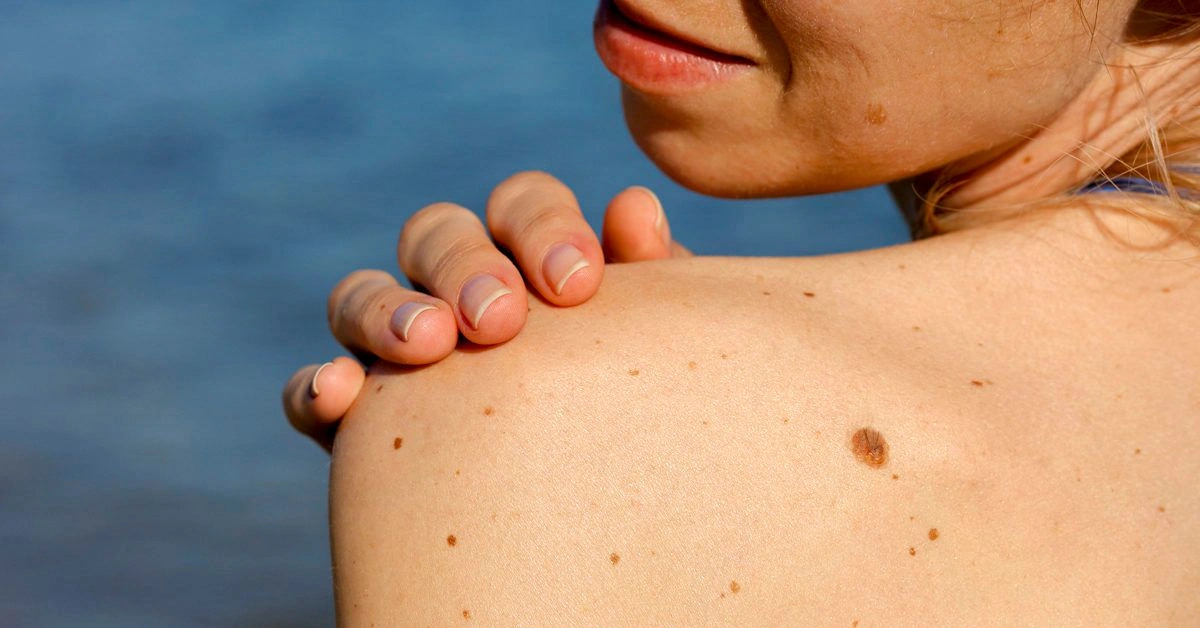
Moles develop on your skin when groups of melanocytes, the pigment-producing cells, cluster in concentrated spots. They typically show up as colored bumps or patches that differ in shape and size and are darker than the surrounding skin, ranging from tan to brown to black. Most moles, often referred to as common moles, are noncancerous.
But what about a mole that has one or more hairs sprouting from it? A widespread belief claims that hairy moles are frequently cancerous, but this is merely a misconception. In reality, a hair emerging from a mole can be a sign that the area is healthy and not malignant.

What causes a hairy mole?
Hair can grow through a mole if the mole sits over a hair follicle. Because the skin cells that make up the mole are often normal, hair production can proceed as usual. The follicle is responsible for the hair, not the mole itself. The hair then pushes through the mole’s surface just as it would through any other skin area.
It’s common to notice one or several hairs coming from a mole. Sometimes the hair protruding from a mole may look darker or coarser than nearby body hair. This can happen because extra pigment in the mole’s cells may also darken the hair.
Clinical experience from dermatologists and other practitioners indicates that hairy moles are rarely malignant. That said, a mole with hair can still potentially become cancerous. Some doctors theorize that when the cells above the hair follicle in the mole become abnormal, it may inhibit hair growth.
Can you remove mole hair?
Another variant of this myth warns that plucking or removing a hair from a mole could trigger cancer. Fortunately, that is not true.
You can remove hair protruding from a mole safely if you prefer its appearance gone. Treat it like any other unwanted hair. You may pluck the hair or have it removed professionally via electrolysis.
If the mole lies flat and flush with the surrounding skin, you can shave across it or use waxing. However, avoid shaving over a raised or elevated mole.
If you’re worried about irritating the mole, consider trimming the hair as close to the skin surface as possible. If prior attempts caused irritation, consult your dermatologist about removing the mole.
Mole removal is a straightforward, in-office procedure. First, your clinician will numb the area with an injection, then either shave the mole away or excise it. Larger moles may require the site to be closed with stitches. While mole removal is generally simple, it can leave a permanent scar. Depending on the mole’s placement, weigh the potential scarring against the benefit of removal.
Symptoms of cancerous moles
Moles often appear on skin that has had repeated or prolonged sun exposure, but they can arise anywhere on your body. People with fairer complexions tend to develop more moles than those with darker skin. Most individuals have a modest number of moles (10 to 40) on their bodies, while some have 50 or more.
Normal, benign moles can range from a small flat spot to a larger bump the size of a pencil eraser and are typically:
- symmetrical, round, and even
- edged by a smooth border
- stable in appearance and not changing
- uniform in color: brown, tan, red, pink, flesh-toned, clear, or even blue
- no greater than 5 millimeters (¼ inch) in diameter
People with many moles or repeated sun damage have a higher chance of developing skin cancer. It’s wise to monitor your moles and see a dermatologist regularly. Even benign moles can evolve into cancers such as:
- basal cell carcinoma
- squamous cell carcinoma
- melanoma
Warning signs in an unusual mole include:
- irregular, asymmetrical outline
- uneven or ragged borders that don’t clearly separate from nearby skin
- multiple colors inside the mole, often a mix of black, brown, pink, white, or tan
- a size larger than a pencil eraser
- a change in surface texture: rough, scaly, crusted, smooth, or bumpy
- itching
- bleeding
- rapid change or growth
The earliest signs of melanoma usually involve changes in an existing mole or the emergence of a new one. Regular self-exams are the best way to detect suspicious moles early. If you have many moles or a personal history of skin cancer, schedule an annual skin check with a dermatologist.
Keep in mind that an atypical mole does not automatically mean cancer. Typical moles may darken or lighten over time. Still, if you spot any of the changes or unusual traits listed above, make an appointment with your dermatologist. They can remove the mole and send it to a lab for testing.
Conclusion
If you find a hairy mole, there’s usually no cause for alarm. Hair growing through a mole generally indicates an active hair follicle underneath and likely normal skin cells above. Most hairy moles do not turn cancerous.
If the mole bothers you cosmetically, you may remove the hair or ask your dermatologist to excise the mole. If you have any concerns about skin cancer, see your clinician for an evaluation and ask whether a biopsy is recommended.






















Leave a Reply
You must be logged in to post a comment.