
Key takeaways
- Both lupus and rosacea can produce a butterfly-shaped rash across the face.
- Rosacea usually affects only the face, whereas lupus can involve multiple organs and cause additional signs such as fatigue and aching joints.
- Determining the cause of a malar rash requires assessing the rash’s traits, reviewing other symptoms, and sometimes ordering tests to exclude certain diseases.
Lupus is an intricate autoimmune condition in which the immune system mistakenly targets the body’s own tissues and organs, including the skin.
Rosacea is a frequent dermatologic disorder that leads to flushing or persistent redness and visible blood vessels on the face. Flushing episodes may last for weeks and then subside, or a steady background redness may persist.
Both disorders can produce a facial rash that spreads like a butterfly over the cheeks and bridge of the nose, often called a malar rash. Although they share this feature, the two diseases are not connected.
There are nuanced differences between a malar rash from rosacea and one caused by lupus. If you develop a malar rash, a clinician may order several diagnostic evaluations to pinpoint the underlying cause.

What can cause a malar (butterfly) rash?
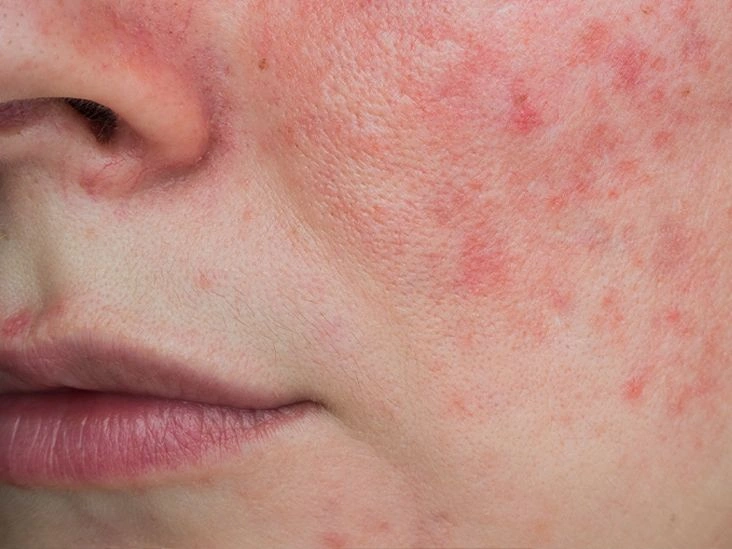
A malar rash is a skin eruption on the cheeks and across the bridge of the nose. Some people refer to it as a butterfly rash because of its shape.
Numerous conditions can produce a malar rash. These can be systemic (involving the whole body) or localized (limited to facial skin).
The specific appearance of a malar rash can differ depending on the cause. A malar rash may show:
- red or purplish coloring
- a blotchy or uniform look
- flat, slightly raised, or pus-filled bumps
- itching or pain
- dryness or flaking
Possible causes of a malar rash include:
- lupus
- rosacea
- skin infections such as cellulitis and erysipelas
- pellagra, a systemic illness from niacin deficiency
- Lyme disease, a bacterial infection transmitted by ticks
- dermatomyositis, a connective tissue disorder
- photosensitivity, or heightened reaction to sunlight
- contact dermatitis, an allergic skin reaction
- seborrheic dermatitis, a type of eczema that affects the scalp and face
Rosacea is the most frequent cause of a malar rash.
About half of people with lupus develop a malar rash, but lupus is uncommon and can be hard to identify. The Centers for Disease Control and Prevention (CDC) estimates lupus affects around 200,000 adults in the United States.
What does a malar rash look like?
What is lupus?
Lupus is an autoimmune disorder where the immune system wrongly attacks the body’s own organs and tissues. Organs that may be affected include the kidneys, joints, and skin.
Lupus symptoms range from mild, such as a minor rash or joint discomfort, to severe, like high fever, organ impairment, or intense pain.
Several forms of lupus exist. One common form is systemic lupus erythematosus (SLE). SLE typically involves multiple organ systems and can produce a variety of symptoms, including skin manifestations.
Another form, cutaneous lupus erythematosus (CLE), primarily affects the skin. CLE can cause rashes or lesions and scalp changes that may lead to hair thinning. A malar rash is a kind of CLE and often signals the presence of SLE.
Risk factors for lupus include:
- Sex: Lupus is far more prevalent in people assigned female at birth.
- Age: Symptoms commonly begin between ages 15 and 44.
- Race/ethnicity: In the U.S., lupus is more common among People of Color, including Black, Hispanic, Latino, Asian American, and Native American groups.
- Family history: Your risk may rise if a family member has lupus.
What is rosacea?
Rosacea is an inflammatory skin condition that causes facial redness and small red bumps. Areas commonly affected include:
- cheeks
- chin
- nose
- forehead
- eyelids
- neck
- chest
Certain triggers can provoke facial flushing. Typical triggers include:
- hot beverages
- sun exposure
- emotional stress
- alcohol
Factors that affect rosacea risk include:
- Sex: People assigned female at birth are more prone to rosacea.
- Age: Most people with rosacea develop symptoms between about 30 and 50.
- Race/ethnicity: Rosacea is more common in white individuals, particularly those of Celtic or Scandinavian descent.
- Skin type: Rosacea often appears in people with fair or light skin.
- Family history: A family history of rosacea can increase your risk.
Is it lupus or rosacea?
It can be challenging to determine whether a malar rash stems from lupus or rosacea based solely on appearance. Yet, subtle distinctions in the rash may assist a clinician in differentiating them.
For instance, unlike lupus-related rashes, a malar rash from rosacea often shows pustules and visible telangiectasias (dilated blood vessels). A lupus malar rash frequently has a raised border at its outer edge, a feature usually absent in rosacea.
Rosacea is confined to the face and generally does not produce signs elsewhere in the body. A clinician will likely evaluate more than just the facial rash when making a diagnosis.
Below is a comparison of some important differences between these conditions:
| Lupus | Rosacea | |
|---|---|---|
| Symptoms | • fatigue• joint pain or swelling• headache• fever• chest discomfort• photosensitivity• hair loss• mouth ulcers• symptoms vary widely• small red or purple spots or bumps• may include disc-shaped sores or scaly lesions, often with a raised outer edge• may be painful or itchy• can affect the scalp and cause hair loss | • flushing• facial burning or stinging• rough, flaky, dry skin • eye symptoms: dry, itchy, watery, burning, or sore eyes• skin thickening• small red, pus-filled bumps resembling acne• visible swollen spider veins• raised plaques• redness that often extends to the forehead and chin |
| Systemic or local | • systemic (SLE) or restricted to the skin (CLE) | • confined to the face |
| Rash characteristics | • some signs may be persistent• other signs may flare and remit | • some signs may be persistent• other signs may flare and remit |
| Duration of symptoms | • some features permanent• some flare intermittently | • episodic flares |
| Groups with higher risk | • people assigned female at birth• ages 15–44• People of Color | • people assigned female at birth• ages 30–50• white people with fair skin |
Although the two disorders are unrelated, it’s possible to have both lupus and rosacea at once. Speak with a clinician if you suspect you may have both conditions.
When to contact a doctor
Most rashes are not urgent, but they can signal an underlying illness. If a butterfly-shaped rash develops on your face, consider reaching out to a healthcare provider.
A malar rash can stem from many causes. Skin conditions like rosacea are commonly manageable and not typically dangerous. However, other causes such as lupus or Lyme disease may be more serious.
A clinician will review all your symptoms and perform a comprehensive physical exam to help reach an accurate diagnosis. Be sure to mention any other symptoms you have, like fever or joint pain, along with the rash.
How do doctors diagnose lupus vs. rosacea?
No single test definitively diagnoses lupus or rosacea. Lupus can be particularly challenging to identify because its manifestations overlap with many other illnesses.
If you have a facial rash, a dermatologist will first inspect your skin. They will ask about your symptoms, when they began, and how frequently they occur. The presence of visible dilated blood vessels and pustules can help a clinician distinguish rosacea from other disorders.
Even with a likely rosacea diagnosis, a dermatologist may order further testing to exclude other causes such as lupus.
If lupus is suspected, a rheumatologist may assist in confirming the diagnosis. The Lupus Foundation of America reports it takes an average of 6 years from symptom onset to receive a lupus diagnosis for many people.
However, a clinician can often diagnose a malar rash as lupus when it occurs with other signs (for example, arthritis, mouth ulcers, or Raynaud’s) and specific laboratory results.
Some tests that help identify lupus or exclude other conditions include:
- blood tests, such as an antinuclear antibody (ANA) test
- urine testing
- X-rays
These examinations look for anemia, autoimmune antibodies, or evidence of damage to organs such as the kidneys, liver, heart, or lungs.
A skin biopsy is not always necessary but can confirm a CLE diagnosis. During a biopsy, a small skin sample is removed and sent to a lab for analysis. This procedure can cause scarring.
A clinician will integrate the results of these tests and may consult other specialists before giving a definitive diagnosis.
What is the treatment for lupus vs. rosacea?
Rosacea is limited to facial skin. A clinician may prescribe antibiotics or medicated topical creams to improve the skin. Home remedies and natural approaches can also help relieve symptoms.
Treatment for lupus depends on the symptoms present. There is currently no cure for lupus. For rashes, a clinician might recommend topical corticosteroids or other medicated creams.
Medications exist to manage other lupus symptoms and reduce flares. Many clinicians advise most patients with lupus to take hydroxychloroquine (Plaquenil) to help prevent disease progression.
In severe cases, doctors may prescribe immune-suppressing drugs such as belimumab (Benlysta) or anifrolumab (Saphnelo).
How can I prevent a malar rash from lupus or rosacea?
Preventing a malar rash from lupus or rosacea isn’t always feasible. However, you may be able to reduce flare-ups by avoiding common triggers.
For instance, sunlight can provoke a malar rash in people with lupus or rosacea.
Follow these strategies to lower the chance of a skin flare-up:
- Apply a broad-spectrum sunscreen (SPF 30 or higher) at least 20 minutes before sun exposure and reapply during the day.
- When outdoors, wear long-sleeved clothing, pants, and wide-brimmed hats. Consider clothing with UV protection.
- Schedule outdoor activities for early morning or evening when sunlight is less intense.
- If your home receives a lot of sun, consider installing UV-blocking window coverings.
Takeaway
A malar or butterfly rash can be a sign of both rosacea and lupus. While there are distinguishing features between the rashes each condition produces, the appearance alone may not suffice for a definitive diagnosis.
If you suspect a malar rash, see a healthcare provider to discuss your symptoms. They will likely perform a physical exam and order additional tests before confirming a diagnosis and outlining a treatment plan.












Leave a Reply
You must be logged in to post a comment.