

Permanent or fixed retainers consist of a metal wire bonded to the surfaces of your teeth. Typically the wire is either smooth and solid or braided, and it’s attached and contoured to your bite to prevent teeth from shifting or becoming misaligned.
Permanent retainers are commonly advised by orthodontists following braces to stop teeth from drifting back toward their original positions.
An orthodontist might also recommend a fixed retainer if you have trouble following instructions for removable retainers. However, there must be an adequate amount of tooth surface for the bonding agent to adhere the retainer securely.
Often, orthodontists use both removable and permanent retainers together for optimal long-term stability. Recent surveys of clinicians indicate that fixed retainers are being prescribed more frequently.
Removable retainers are often prescribed for the upper arch while permanent retainers are used on the lower arch, though the choice depends on what’s best for your particular dentition.
Below we’ll examine how permanent retainers function, how they compare with other retainer types, and how to maintain and clean them so you keep your smile in top condition.
About permanent retainers
Permanent retainers are also referred to as:
- bonded retainers
- lingual wire
- fixed retainers
These retainers are most commonly used on the lower teeth.
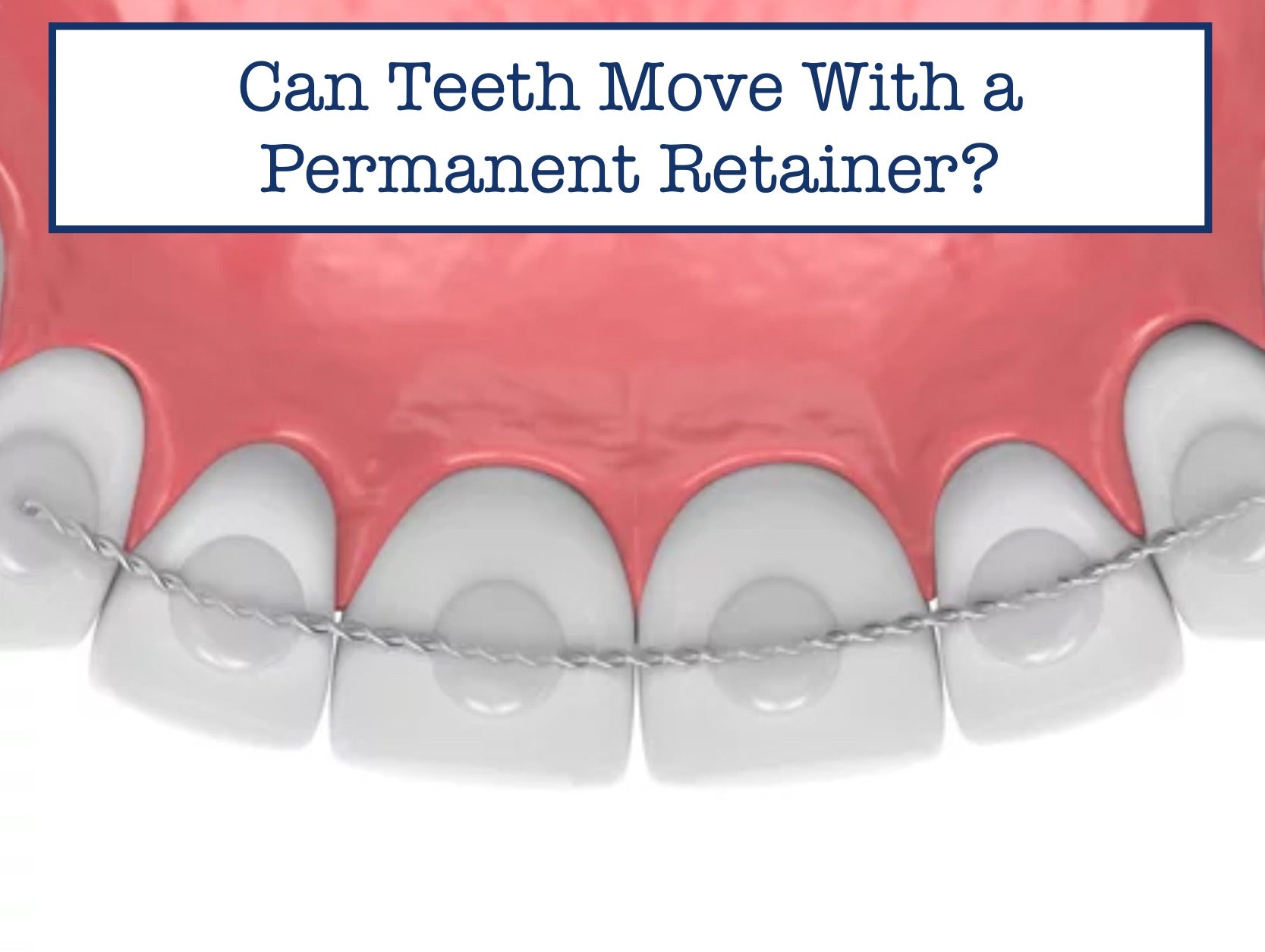
The term lingual wire comes from the fact that the device is bonded to the back (lingual) surfaces of the teeth. It’s usually easier to attach bonding material securely to lower teeth such as the canines, which makes the approach effective for long-term retention.
“Permanent retainer” describes the purpose of the device: it remains affixed to your teeth long-term to keep them stable. In many cases, a permanent retainer can remain in place for the rest of your life.
Your orthodontist or dentist may remove a permanent retainer if it causes gum irritation or leads to excessive plaque or tartar buildup in surrounding teeth.
How much do permanent retainers cost?
Having a bonded retainer placed or replaced commonly ranges from about $150 to $500. The cost to place it initially may be included in the overall price of your orthodontic treatment.
Permanent vs. removable retainers
Pros of permanent retainers
- You don’t need to remove it, which makes it simpler to maintain tooth position after braces.
- It’s largely invisible to others, since it’s bonded to the back of your teeth.
- It typically doesn’t affect speech, so you won’t feel self-conscious while wearing it publicly.
- You won’t misplace it, because it’s securely glued to your teeth.
- It resists everyday wear and tear, making it hard to damage through normal use.
- It consistently holds teeth in position, because the retainer remains in place at all times.
Pros of removable retainers
- They’re removable whenever you need, such as when eating or cleaning your teeth.
- Creating a removable retainer is quick, with impressions taking roughly 30 seconds to a minute to capture for a long-lasting appliance.
- They’re easy to clean, by soaking in one of several available cleaning solutions; this helps prevent bacterial buildup on plastic appliances.
- Flossing is simpler, because you can remove the retainer to access interdental spaces.
- They may be preferable for the upper teeth, since a lower fixed retainer can sometimes contact an upper bonded retainer, risking damage or destabilization.
If managing a removable retainer seems difficult for comfort or cosmetic reasons, a permanent retainer might appear appealing. Both removable and fixed options have advantages and trade-offs.
Drawbacks of permanent retainers
Consider these potential downsides and practical issues related to permanent retainers:
- The bonding procedure can be lengthy and uncomfortable. Attaching a fixed retainer may take up to an hour, whereas a removable retainer only requires a quick impression to create.
- Brushing and flossing around a bonded retainer require extra attention. If you don’t clean thoroughly, you may be at higher risk for cavities and gum disease near the appliance.
- Having metal in your mouth at all times can be bothersome. Your tongue may rub on the wire. If the bond fails or the wire fractures, it can irritate or scratch the tongue.
- Certain foods can compromise effectiveness. Biting into hard foods (like whole apples) or very tough meats can bend the wire. Sugary or acidic foods and sodas can wear down the bonding and loosen the attachment.
- The wire can detach or break, which will require repair or replacement—and you may incur a replacement charge.
Optum Now is operated by RVO Health. By clicking on this link, we may receive a commission. Learn more.
What should you do if your retainer gets bent or moves?
If your bonded retainer is bent or has shifted, do not try to fix it yourself. Applying force could break the bond or wire and damage teeth.
A misshapen retainer won’t maintain proper tooth positions. If your retainer is bent or loose:
- Schedule an appointment with your orthodontist. If the retainer isn’t causing pain or injury, arrange a visit as soon as feasible to have it adjusted or repaired.
- Contact your dentist or orthodontist immediately if the retainer has come off or is injuring other areas of your mouth—prompt care reduces further damage to your teeth or soft tissues.
- Look for emergency contact options. Many dental practices provide an emergency line or on-call service. Ask your provider if one is available so you can reach them quickly if the retainer breaks or causes injury.
Cleaning your permanent retainer and teeth
Keep your retainer clean every day to preserve oral health and protect the teeth adjacent to the bonded area.
Brush as you normally would, ensuring the bristles reach around and behind the wire so no spots are neglected—especially near the bonding material.
Tips for flossing with a permanent retainer
Flossing around a bonded retainer is the primary challenge.
However, it becomes straightforward after a few attempts. Try these steps to floss effectively around a permanent retainer:
- Cut a 6-inch length of floss and use a floss threader to guide the floss under the wire between two lower front teeth—hold one end of the floss between your fingers and the other in the threader.
- Once the floss is positioned between the teeth, gently move it up and down along the tooth surfaces from the top toward the gum line. Be gentle to avoid injuring the gums.
- After cleaning one contact, slide the floss back up above the teeth and move it to the next contact.
- Thread the floss down between the next teeth and repeat the up-and-down cleaning motion.
- Continue this process until you’ve flossed between each tooth secured by the bonded retainer.
Floss threaders are available online and in most stores.
The takeaway
Fixed retainers can be a convenient substitute for removable plastic retainers, but they aren’t the right choice for everyone.
Discuss your options with a dentist or orthodontist (seeking more than one opinion is fine) to determine which approach best meets your dental needs and goals. Also consider reading about different retainer types to better understand your choices.



















Leave a Reply
You must be logged in to post a comment.