

Some essential oils may promote sleep, ease anxiety, and even lessen colic symptoms in infants. They are generally considered for use once a baby is at least 6 months old.

Aromatherapy, or essential oil therapy, involves using naturally derived plant scents to support physical and emotional wellness.
Humans have relied on essential oils for therapeutic purposes for millennia. Before applying them to infants, it’s crucial to learn correct dilution guidelines and safe application techniques.
Essential oils are not evaluated or regulated by the FDA and should not be advertised as cures for illnesses. Always consult a healthcare provider prior to use.
Using essential oils with infants
Plant-derived aromatic extracts have a wide range of uses, from treating minor burns and soothing skin to reducing stress and encouraging calm.
Because essential oils are widely sold today, read labels carefully to confirm you’re buying pure, authentic, and uncontaminated products.
Preblended oils that contain alcohol can irritate the skin. Also avoid synthetic fragrances — they are not essential oils, don’t provide therapeutic benefits, and can be irritating to the skin.
Each essential oil has its own profile. While other oils may be appropriate for infants, the oils discussed below are generally considered safe when used correctly and sparingly.
Unless noted otherwise, adhere to the dilution ratios and application methods outlined below.
Never apply undiluted essential oils directly to the skin; always mix them with a carrier oil. Babies must never ingest essential oils — oral use is unsafe for infants.
Highlights
- Do not use essential oils on infants younger than 3 months.
- Aromatherapy can improve sleep, reduce anxiety, and ease colic symptoms.
- Essential oils are very concentrated and must be diluted with a carrier oil or cream.
Chamomile (Matricaria chamomilla or Chamaemelum nobile)
German chamomile and Roman chamomile are mild essential oils that can help babies who struggle to sleep.
Chamomile has a naturally calming effect and is traditionally used to address insomnia in both young children and adults.
Chamomile, together with lavender, can ease colic symptoms. It’s also been shown to help with anxiety and low mood, which may comfort a fussy infant.
Dill (Anethum sowa)
Dill is a soothing, antispasmodic oil that may assist with digestive discomfort.
For application, dilute dill at 1 drop per teaspoon of carrier oil, mix well, and gently massage the blend onto the baby’s skin.
Lavender (Lavandula angustifolia)
Lavender is well known for its calming and mild sedative qualities. A light lavender oil massage can relax a distressed baby and promote sleep.

Lavender may also soothe insect bites and reduce itching. A 2022 study suggests lavender helps relieve colic symptoms.
Dilution recommendations
Because essential oils are highly concentrated, always dilute them with a carrier oil or cream before applying to skin.
Dilution is particularly important for infants and young children. For babies over 3 months, the National Association for Holistic Aromatherapy (NAHA) recommends a safe dilution of 0.5 to 1 percent, compared with 2.5 to 10 percent for adults.
Since baby skin is more delicate than adult skin, consult your doctor, midwife, or another healthcare professional before using any essential oils.
Even diluted, essential oils can cause irritation and increase sun sensitivity. It’s advised to do a patch test (or “spot test”) with each new oil introduced.
How to perform a patch test
- Apply a small amount (no larger than a dime) of the diluted oil to the baby’s arm or leg.
- Wait 24 hours to monitor for any reaction.
- If you see a reaction, stop using the oil immediately (reactions may include discoloration, redness, or pain).
- If there is no reaction, it is likely safe to proceed with using the essential oil.
The NAHA advises avoiding certain oils on infants, such as birch or wintergreen, which are high in methyl salicylate, as well as peppermint.
Suggested applications
Do not give essential oils internally to children or infants, and keep them out of infants’ baths to prevent accidental swallowing.
The topical approaches below are safe and effective when proper dilution ratios are followed.
Blend with a carrier
Vegetable oil, coconut oil, and sweet almond oil are frequently used as base oils. They blend well with essential oils and add moisturizing benefits to help nourish the skin.
Peanut oil may be included in some base oil blends, so check ingredient lists for potential allergens.
To create a blend, dilute essential oil to 0.5 percent in the base oil. Shake or stir thoroughly to combine. After mixing, perform a patch test on the baby’s arm or leg to ensure the mixture is nonirritating.
Spritz
Lightly mist the baby’s room to introduce a calming fragrance before naps or bedtime. Avoid spraying directly onto pillows to prevent accidental contact or ingestion.
Because carrier oils are thick, they won’t work well in spray bottles. When making a room spritz, many people use only a tiny amount of essential oil in water; dilution is not always required for room misting.
Diffuse
Essential oils are a natural substitute for chemical room fresheners. Instead of open-flame diffusers, water-based ultrasonic diffusers offer a safer, flameless way to disperse scent throughout a room.
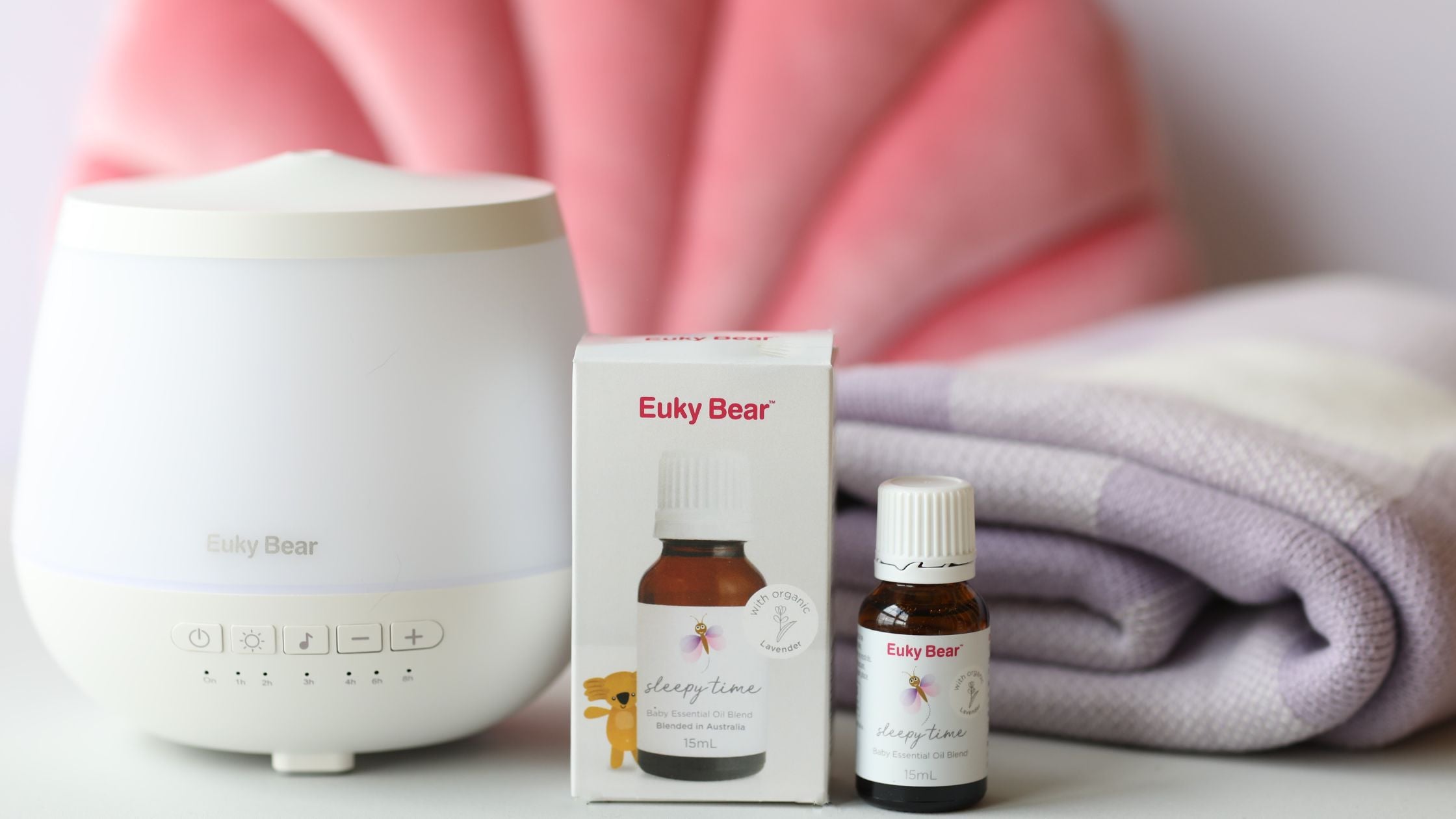
When introducing a new oil around an infant, run the diffuser with a small amount of the oil for an hour and observe for any signs of irritation. No topical dilution is needed for diffusion.
Talk with a doctor
Some essential oils can interact with medications or be unsuitable for certain medical conditions, so always consult your doctor before using them on your baby.
If you are pregnant, discuss essential oil use with your healthcare provider before applying any oils to yourself or your infant.
Frequently asked questions
Which essential oils are safe for babies?
Lavender, chamomile, and dill are among the essential oils generally considered safe for infants when used appropriately.
How should essential oils be diluted for babies?
The National Association for Holistic Aromatherapy (NAHA) recommends a safe dilution range of 0.5 to 1 percent for infants.
What is the best oil for a baby’s skin?
An edible or food-grade vegetable oil is often safest for delicate baby skin. Options include sweet almond oil or coconut oil.
Takeaway
Essential oils can be helpful for relaxation and easing stress. When properly diluted with a carrier oil, they may reduce issues in babies such as colic. For more information on gentle options, you might also read about essential oils for teething.
Always consult a doctor, midwife, or other healthcare professional before using essential oils on yourself or your child.






















Leave a Reply
You must be logged in to post a comment.