Can Essential Oils Help Teething Pain?


- Can essential oils reduce teething pain?
- Are essential oils safe to use on babies?
- Five essential oils people sometimes try for teething
- Chamomile (Matricaria chamomilla or Chamaemelum nobile)
- Lavender (Lavandula angustifolia)
- Ginger (Zingiber officinale)
- Marjoram (Origanum majorana)
- Clove bud (Eugenia caryophyllata)
- Key points about diluting essential oils
- What do doctors recommend for teething relief?
- Avoid these teething remedies
- Takeaway
Teething is a challenging and frequently painful phase for many infants. Parents can try a variety of strategies to ease discomfort. Some caregivers consider essential oils — but are they safe to use?
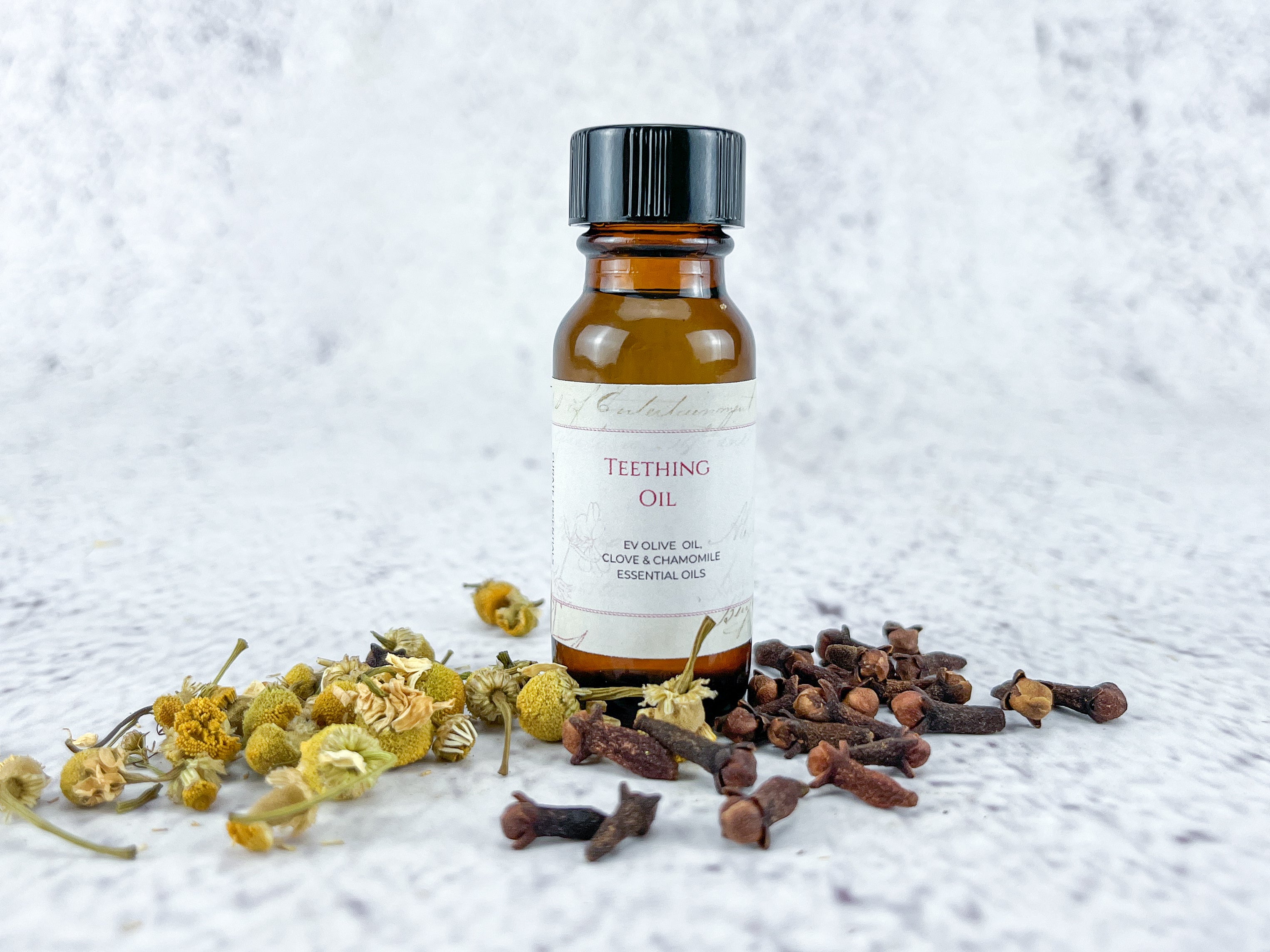
Most infants sprout their first tooth at about 6 months, and by roughly 2½ years they usually have a full set of 20 primary (baby) teeth. During this period, gums can become swollen as teeth push through the skin, which may be painful and stressful for both babies and their caregivers.
The American Academy of Pediatrics (AAP) recommends gum massage as a safe and helpful approach for mild teething discomfort. Some caregivers consider adding diluted essential oils to gum massage in hopes of reducing pain and fussiness. Many health professionals, however, warn against placing essential oils inside a baby’s mouth or on their face.
Below is a review of essential oils for teething, including safety concerns and which oils some people suggest might help.
Can essential oils reduce teething pain?
There isn’t sufficient clinical evidence proving essential oils lessen teething discomfort, though some parents and caregivers say they’ve found relief using them.
Research indicates using essential oils on or near infants and young children carries potential hazards. One study reported that topical use of essential oils increased the chance of allergic contact dermatitis. Another study of more than 500 children found links between exposure to certain essential oils in aromatherapy and a higher risk of endocrine problems.
Further research is required to establish whether essential oils are both safe and effective for easing teething pain in infants and toddlers.
Are essential oils safe to use on babies?
Babies should never ingest or swallow essential oils. Some suggest rubbing a small amount of diluted essential oil mixed with a carrier oil on a baby’s jaw to ease teething discomfort.
Undiluted essential oils must never be applied to a baby’s skin. If you choose to put an essential oil on a baby or adult, always dilute the essential oil in a carrier oil. Use only a few drops of the essential oil blended into a base oil such as jojoba, almond, or sunflower oil.
The FDA notes that essential oils themselves are not regulated in the same way as drugs, though certain health claims may trigger review. Because most essential oils don’t carry specific medical claims, they typically aren’t regulated, meaning you can’t always be certain what’s in the bottle you buy.
Five essential oils people sometimes try for teething
Users of essential oils often recommend the following options, but there’s no solid research supporting their use in young children. Most pediatricians advise against putting essential oils — even diluted — inside a baby’s mouth or applying them broadly to their skin.
Using essential oils in a diffuser for aromatherapy may be less risky, but never leave a child unattended with essential oils. Kids may have an adverse reaction, and those who are mobile could access and swallow oils, which is dangerous.
Teething can begin as early as 4 to 7 months. Because very young infants are particularly sensitive, only two essential oils are sometimes suggested for topical use during this early phase: chamomile and lavender. Also consider reading about natural teething remedies for alternatives.
Chamomile (Matricaria chamomilla or Chamaemelum nobile)
Chamomile is frequently recommended by essential oil users for teething because of its reportedly calming and mild sedative qualities.
Lavender (Lavandula angustifolia)
Lavender is often described by users as soothing, mildly antiseptic, and helpful for easing muscle soreness.
As babies grow older, some caregivers consider additional oils, though these should be used with caution and generally not on infants:
Ginger (Zingiber officinale)
Ginger oil is sometimes used to ease pain associated with arthritis, fatigue, and muscle aches. Users warn, however, that ginger can irritate the skin if not diluted correctly.
Marjoram (Origanum majorana)
Marjoram is suggested by some for increasing circulation and relieving muscle and joint pain. Adults sometimes use it for arthritis and muscular discomfort.
Clove bud (Eugenia caryophyllata)
Clove bud oil is considered a potent analgesic and antiseptic and is used in certain dental products for adults. Because it is strong, clove bud should not be used on children under 2 years old and should never be ingested.
If you’re pregnant, consult your physician before using any essential oils on yourself or your child.
Key points about diluting essential oils
Practitioners and organizations that work with essential oils advise diluting essential oils prior to skin contact. Experienced users recommend the following dilution guidance:
Some oils are stronger and should be diluted to less than 0.25% essential oil per carrier oil. Other oils can be diluted to about 0.5% essential oil per carrier oil. It’s important not to exceed recommended dilution levels because improper dilution can cause burns or irritation.
Perform a patch test first by applying a small amount of the diluted blend to a baby’s arm or leg and wait to observe any reaction. If there is no visible reaction, it may be safer to apply the blend more widely.
Essential oils should never be swallowed.
What do doctors recommend for teething relief?
The AAP suggests several items and tactics to help soothe teething discomfort.
Offer any of these as teething aids:
- a damp cotton washcloth chilled in the freezer for 15–30 minutes
- a frozen banana or berries if your baby is already eating solids
- solid (not liquid-filled) teething rings chilled in the refrigerator (avoid fluid-filled rings and don’t freeze them — avoid very hard chew items)
- a frozen bagel
- a soft “lovey” toy
- your finger — let the baby chew on your finger or use it to gently massage their gums (this can be particularly useful before nursing to discourage biting)
Keep teething items clean by washing them frequently. The AAP notes it’s fine if a baby chews on something much of the day.
Avoid these teething remedies
Certain common teething remedies carry risks. The FDA advises against the following for infants and young children:
- Over-the-counter numbing gels: Gels containing benzocaine (brands such as Anbesol, Cepacol, Chloraseptic, HurriCaine, Orabase, Orajel, and Topex) may cause methemoglobinemia, a serious condition in which red blood cells can’t carry enough oxygen.
- Certain prescription numbing agents: Products containing lidocaine, including topical oral viscous lidocaine solution, are not appropriate for infants and young children because they can cause severe complications such as heart problems, brain injury, or death. They’ve also been linked to seizures when overapplied or swallowed.
- Homeopathic teething tablets: Some over-the-counter homeopathic teething products have included belladonna and other concerning ingredients; the FDA has issued warnings against their use.
- Teething necklaces: Beaded necklaces, including amber varieties, present a choking risk to infants and young children.
Takeaway
Teething can be a trying period for both infants and caregivers. There are multiple strategies you can try to soothe your baby during teething.
Some families opt to use essential oils; we summarized five oils some caregivers recommend. While some report benefits, more research is needed to confirm the safety and effectiveness of essential oils for teething.
There are several AAP-recommended home options you can try first, such as offering a chilled, damp cotton washcloth, a frozen banana if your baby eats solids, or using your finger to gently massage their gums.
Frequently Asked Questions
Essential oils can pose risks to infants, including skin irritation, allergic reactions, and endocrine effects. Many health professionals advise against applying essential oils directly to a baby’s mouth or face. If used at all, they should be extremely diluted and used cautiously under guidance from a pediatrician.
Some caregivers suggest chamomile and lavender for their calming properties, while others mention ginger, marjoram, and clove for older children. There’s limited clinical evidence supporting these uses, and certain oils (like clove) are unsafe for young infants.
Practitioners recommend very low dilutions for infants—often below 0.25% for stronger oils and around 0.5% for milder ones. Always mix with a carrier oil, perform a patch test, and consult a pediatrician before any topical use.
Yes. The American Academy of Pediatrics suggests chilled (not frozen) damp washcloths, refrigerated teething rings (not frozen or liquid-filled), a frozen banana for older babies, or gentle gum massage with a clean finger.
Avoid over-the-counter benzocaine gels, prescription lidocaine products for infants, homeopathic teething tablets with concerning ingredients, and teething necklaces due to choking hazards. These can cause serious harm and are not recommended.
Read Next

Hot and Cold Therapy: When to Use Each for Neck Pain

12 Bench Press Alternatives to Build Size and Strength

What’s the Difference Between THC Lotion and CBD Lotion?

Try These Squats for Glutes for a Well-Rounded Workout
Semaglutide and Phentermine: What to Know About These Weight Loss Drugs

What's the Difference Between Kosher and Halal Diets?
Related Posts

How to Use an Alum Block When Shaving
Aug 7, 2026 • 23 min read
Can You Use Face Mapping to Improve Your Skin’s Health?
Sep 20, 2026 • 35 min read
What Causes Bleeding After Being Fingered?
Aug 14, 2026 • 24 min read
Why Are Blisters Forming Between My Toes and How Do I Treat Them?
Jul 31, 2026 • 19 min read
How to Remove Nicotine Stains from Your Teeth
Aug 14, 2026 • 29 min read