
The fast facts
- Existing studies have examined CBD doses and outcomes ranging from 10 to 1,500 mg per day. Findings are mixed. It’s wise to begin with a low dose and raise it gradually until you achieve the desired result.
- Your optimal CBD dose depends on many variables, such as your body weight, individual biochemistry, and the potency of the CBD product you’re using.
- CBD is not currently regulated by the Food and Drug Administration (FDA), and there are no official dosing guidelines. Consult a healthcare provider to determine an appropriate starting dose for you.
You’ve likely heard claims about CBD’s possible health benefits, but how much should you take to notice them?
Whatever symptoms you want to manage, taking an adequate CBD dose is crucial — otherwise it may not be effective. Keep in mind that much about CBD remains unclear.
Below is what you need to know to work out the right CBD amount for you.
What the research says about CBD dosage
As this 2017 review indicates, a large body of research has shown that CBD appears to be a relatively safe intervention. The studies in that review did not identify a single dose that fits everyone.
Rather, they highlighted that different people (and in animal research, different species) respond to different CBD doses. Most human trials have used doses in the 20 to 1,500 milligrams (mg) per day range.

A more recent 2021 review likewise found that effective CBD doses vary widely by individual and condition, from about 10 to 900 mg per day. In many cases, doses below 100 mg were less effective, but if you’re new to CBD it’s still sensible to start low.
Working out the right amount for you
The CBD amount that’s suitable for you depends on several factors, including:
- your body weight
- your unique body chemistry
- the CBD concentration in each pill, capsule, drop, or gummy
In short, many variables affect how much CBD you should take. Before trying CBD, discuss dosing and possible risks with your physician. If your doctor prescribes a dose, follow their advice.
This is particularly important if you’re taking a prescription drug that contains CBD, like Epidiolex, a treatment for seizures.
If your doctor doesn’t give dosing guidance, a conservative approach is to begin with a small amount and increase slowly. For many people that might mean starting at 20 to 40 mg per day. After a week, add about 5 mg. Keep increasing until your symptoms are satisfactorily controlled.
For instance, you could begin with 40 mg to address severe pain. Take 40 mg on days with intense pain. After a week, raise it to 45 mg, and after another week move to 50 mg. At that stage your pain may be manageable.
It’s helpful to track how much CBD you take and whether your symptoms improve. Record it on paper or use a notes app on your phone.
How to calculate dosage
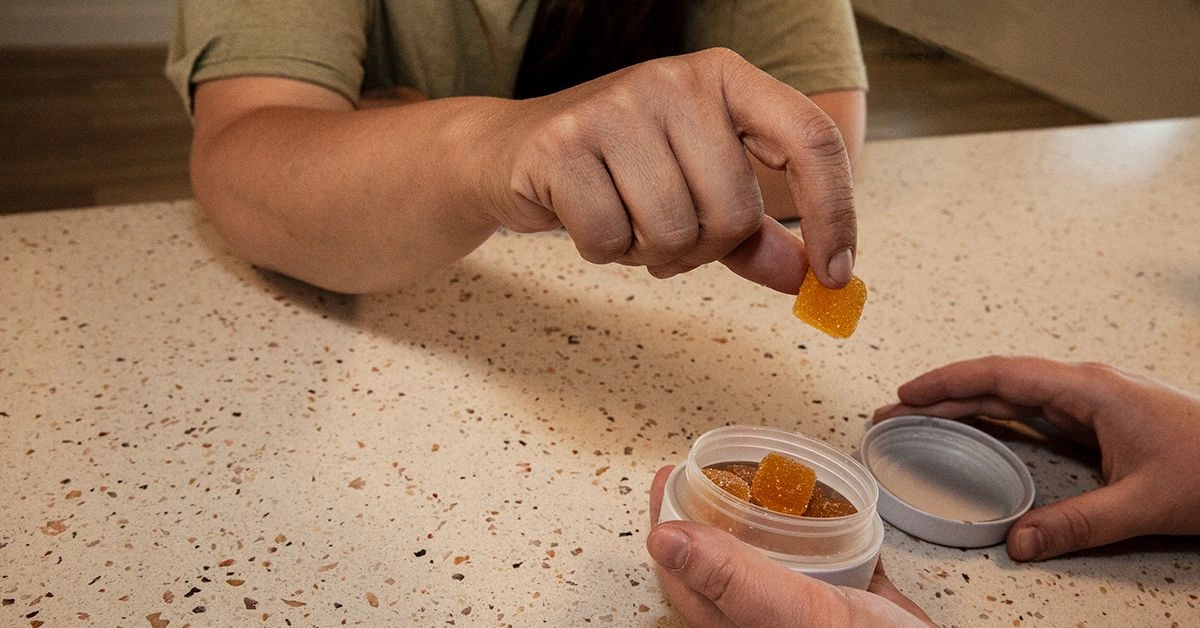
Some items, like CBD gummies, capsules, or tablets, list the CBD content per serving. For example, a bottle of CBD capsules may note 5 mg of CBD per capsule.
If you’re using CBD oil, it commonly comes in a dropper bottle. The label may state how much CBD is in a full dropper (often 1 mL). From there you can decide how many droppers or drops to take.

Remember that a single drop of CBD oil is roughly 0.05 milliliters (mL) — not a full dropper, just one drop.
That means a 10-mL bottle of CBD oil contains about 200 drops. If that 10-mL bottle lists 1,000 mg of CBD total, each drop would contain approximately 5 mg of CBD.
So, to consume 20 mg of that CBD oil, you would take four drops.
Can you take too much CBD?
A 2011 review on CBD safety and side effects found that prolonged use of CBD, even at high levels such as 1,500 mg daily, was well tolerated in humans.
A 2017 follow-up review supported these findings. However, a 2019 animal study raised safety flags when dosing exceeded 20 mg per kg of body weight — a level far above the amounts found in commercial CBD products.
If you’re on prescription medications and want to try CBD, speak to your healthcare provider first.
Possible side effects
CBD has relatively few known adverse effects. When side effects occur, they can include diarrhea, changes in appetite, and tiredness.
- fatigue
- diarrhea
- changes in appetite
- changes in weight
Is CBD legal? The 2018 Farm Bill removed hemp from the legal definition of marijuana under the Controlled Substances Act. That made some hemp-derived CBD products with less than 0.3% THC legal at the federal level. CBD products containing over 0.3% THC still qualify as marijuana under federal law and remain illegal at that level. Some states have their own CBD rules, so check local laws when traveling. Also note the FDA has not approved nonprescription CBD products, and labeling can sometimes be inaccurate.
For more on strains and topical options that may help with anxiety or pain, you might find these resources useful: high cbd cannabis strains for anxiety and best cbd cream for pain.




















Leave a Reply
You must be logged in to post a comment.