
Fluctuations in cabin pressure during air travel can make a sinus infection worse. While the safest option is to postpone flying until your sinus infection resolves, there are steps you can take before and while airborne to ease discomfort.
A sinus infection, also called sinusitis, happens when fluid accumulates in the tissues lining your sinuses, leading to inflammation. The sinuses are air-filled cavities in your skull around the nasal passages and help channel mucus away from your nose.
Typical signs of a sinus infection include:
- sharp pressure or pain across the cheeks and forehead
- thick, yellow-green nasal discharge and nasal blockage
- persistent cough
- stuffy nose
- headaches
Because cabin pressure shifts can amplify sinus pain and pressure, it’s generally advisable to avoid flying until symptoms subside.
This article explains what occurs when you fly with sinus or ear infections and outlines practical measures to reduce discomfort.
What happens when you fly with a sinus infection?
You’ve likely experienced your ears “pop” during a flight — that sensation is due to pressure differences affecting your eustachian tubes.
The eustachian tube links the middle ear to the nasal and sinus cavities. It’s responsible for:
- shielding your ears from loud noises
- clearing mucous secretions
- equalizing pressure in the ear
Airplane cabin pressurization is designed to maintain a comfortable, safe environment for travelers at varying altitudes.
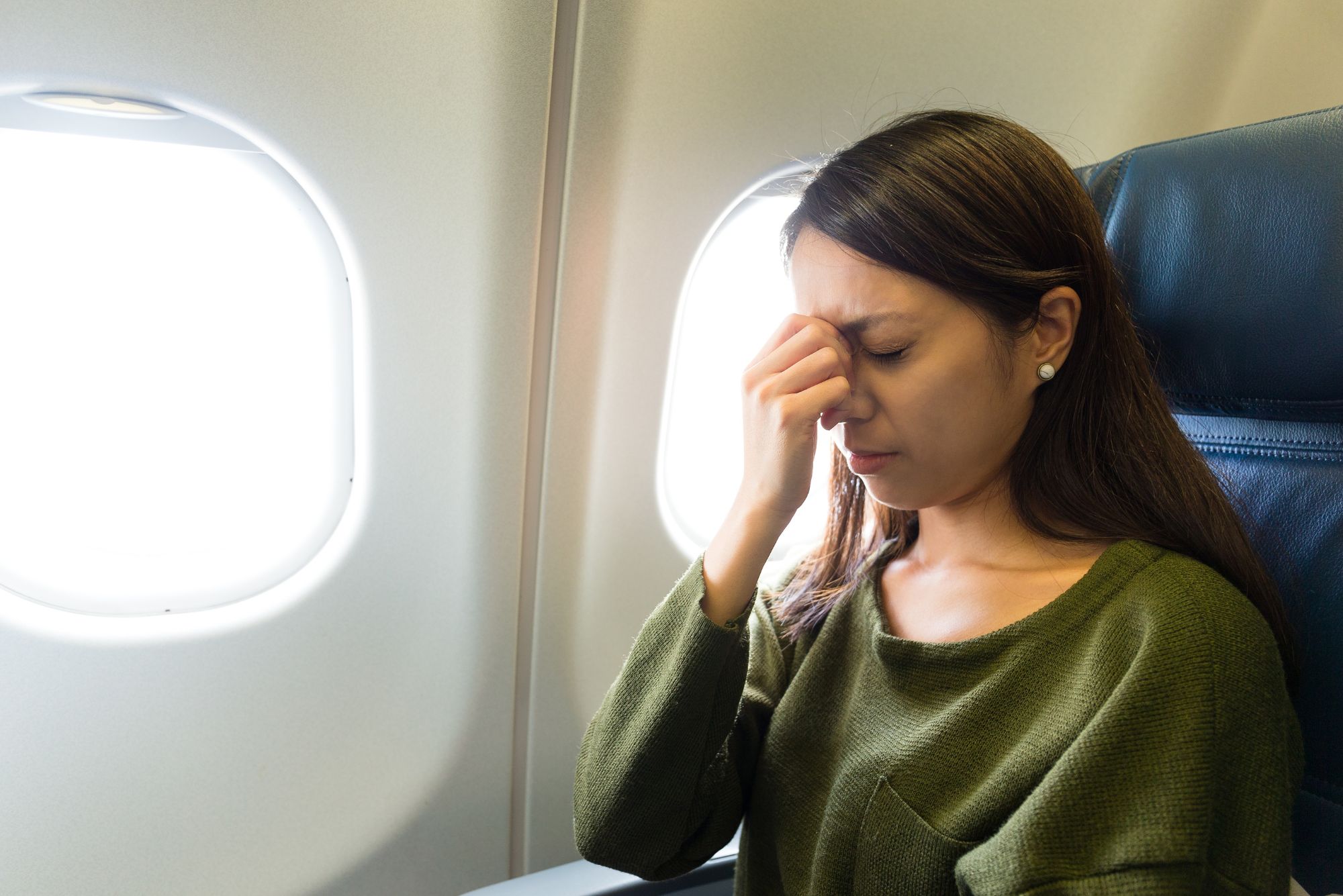
But when cabin pressure shifts — especially during takeoff and landing — your eustachian tube may struggle to equalize, producing increased sinus pressure and pain.
Normally, eustachian tubes remain closed and open when you yawn, chew, or swallow. Chewing gum during ascent and descent helps keep the tube open and allows pressure to balance between your middle ear and the cabin atmosphere.
Cabin pressure changes can also irritate the sinuses, resulting in sinus squeeze. Sinus squeeze (also called barosinusitis or aerosinusitis) occurs when the sinus lining can’t adapt quickly enough to abrupt surrounding air pressure changes.
Symptoms of sinus squeeze include:
- pain
- nosebleeds
- watery eyes
- runny nose
To prevent sinus squeeze, wait until sinus infection symptoms resolve before traveling. Alternatively, use preventive strategies to minimize symptoms before and during the flight.
Optum Now is operated by RVO Health. By clicking on this link, we may receive a commission. Learn more.
What happens when you fly with an ear infection?
Pressure shifts in the cabin can also worsen symptoms of an ear infection, making flying uncomfortable or painful.
Airplane ear — also referred to as ear barotrauma, barotitis, or aero-otitis — describes ear pain that can develop during flights when the aircraft climbs or descends. An existing ear infection can make these symptoms worse.
Airplane ear is among the most frequent health issues associated with air travel.
Common signs of airplane ear include:
- discomfort
- pain
- a sense of fullness in the ear
- mild to moderate hearing reduction
More serious complications of airplane ear can include:
- intense pain
- moderate to significant hearing loss
- tinnitus (ringing in the ears)
- vertigo (a sense of imbalance)
- hemotympanum (blood in the middle ear)
Yawning or swallowing can help relieve pressure, but an ear infection may block airflow to the eustachian tube, making these actions difficult and painful.

How can you relieve sinus or ear pressure while flying?
If traveling with a sinus or ear infection is unavoidable, several tactics can reduce pressure and relieve pain before and during the flight.
Here are suggestions for easing sinus and ear pressure and discomfort during air travel:
Seek medical care
Before you fly, consult a healthcare provider to confirm you have a sinus infection, since its symptoms can resemble those of:
- the common cold
- allergies
- the flu
- COVID-19
A clinician can recommend appropriate therapies.
Use decongestants
Decongestants, offered as oral medications and nasal sprays, work by reducing swelling of the nasal lining so sinuses can drain. Taking a decongestant about 30 minutes before your flight can help ease pressure and discomfort.
Avoid prolonged use of topical nasal decongestants for more than 7 days, since overuse can cause rhinitis medicamentosa (rebound congestion) and worsen nasal blockage.
Avoid sleeping during takeoff and landing
Snoozing as the plane climbs or descends can reduce swallowing frequency, limiting opportunities to equalize ear pressure. Try to stay awake during ascent and descent, or wake up before these phases if you do nap.
Chew gum or drink water
Chewing gum and sipping water encourage swallowing, which can help pop the eustachian tube and temporarily relieve sinus or ear pressure and pain.
Do the Valsalva maneuver
The Valsalva maneuver is a breathing technique that forces air through the eustachian tube to equalize pressure.
To perform the Valsalva maneuver:
- Pinch your nose closed.
- Shut your mouth.
- Gently blow through your nose for 10–15 seconds.
- Repeat as needed.

Takeaway
Avoid flying if you have a sinus or ear infection, since cabin pressure changes can make symptoms worse.
If travel is unavoidable, take prescribed or recommended medications beforehand, swallow frequently, and use the Valsalva technique for short-term relief.
If sinus symptoms don’t improve within about a week, seek medical attention.




















Leave a Reply
You must be logged in to post a comment.