

Sea buckthorn oil is a well-known natural remedy that may offer a range of health advantages, from enhancing skin and hair radiance to potentially reducing risks of cancer, cardiovascular disease, and diabetes.
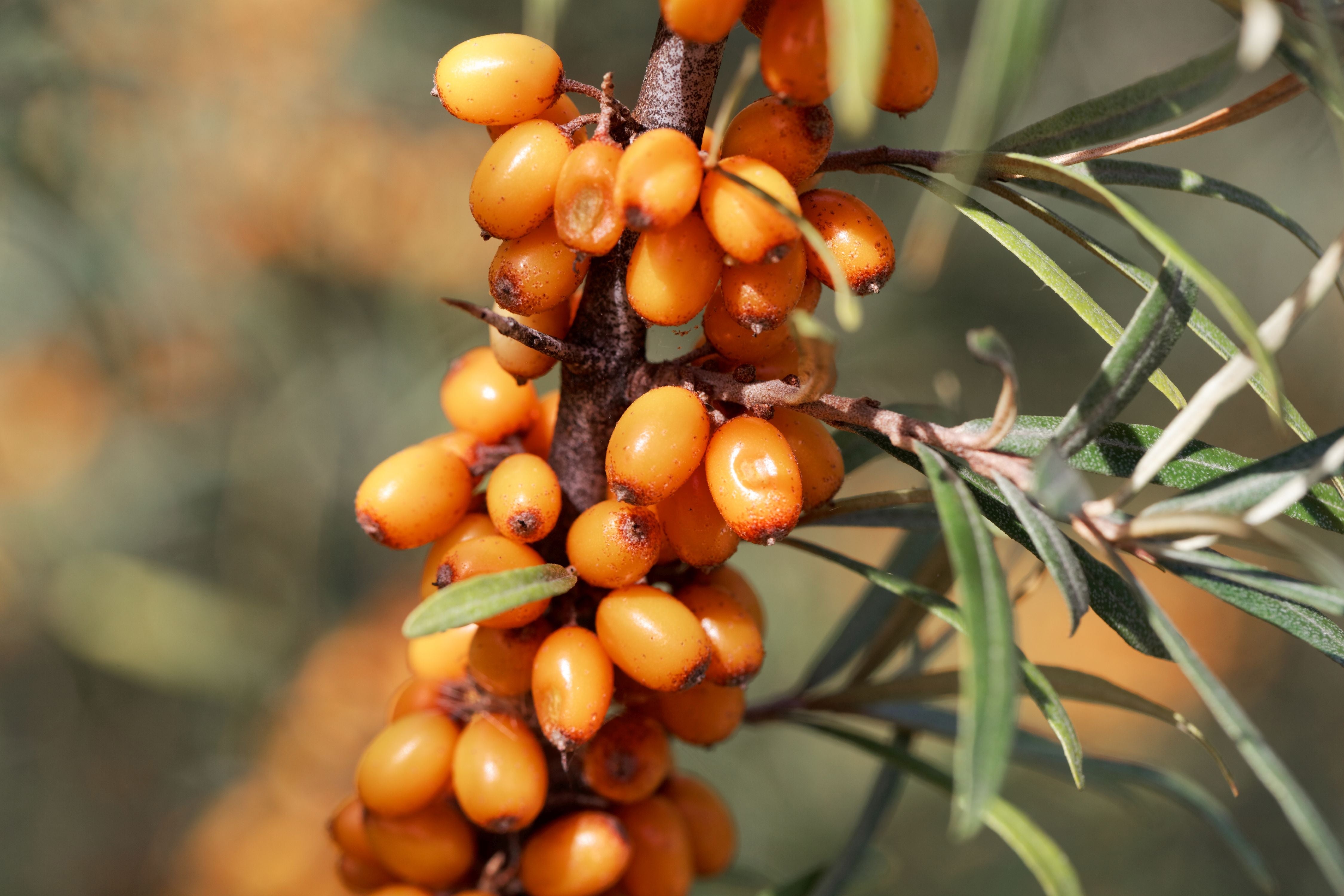
Used for millennia across Southeast Asia and Europe, sea buckthorn oil has a long history as a traditional treatment for a variety of conditions.
It’s obtained from the berries, leaves, and seeds of the sea buckthorn shrub (Hippophae rhamnoides), a small plant that thrives at high elevations in the northwest Himalayan area.
Sea buckthorn oil can be applied topically or consumed orally. Research indicates it’s included in more than 200 commercial items, such as shampoos, soaps, and food additives.
Below are 11 benefits of sea buckthorn oil supported by scientific studies.
1. Loaded with nutrients
Sea buckthorn contains a wide array of vitamins, minerals, and healthful plant constituents.
Researchers have detected over 190 bioactive compounds in the seeds, fruit, and juice of sea buckthorn. Examples include:
- Vitamins: A, B, C, K, E
- Minerals: iron, calcium, magnesium, potassium, copper, zinc
- Polyphenols: proanthocyanidins, gallic acid, epicatechin, epigallocatechin
- Flavonoids: quercetin, isorhamnetin, kaempferol, myricetin
- Fatty acids: omegas 3, 6, 9, and 7
Sea buckthorn is naturally abundant in antioxidants, which may help shield the body from aging and diseases like cancer and heart disease.
Its seeds and leaves also contain phytosterols, plant substances that may hinder the absorption of dietary cholesterol. This is one mechanism by which sea buckthorn oil might lower heart disease risk.
The oil, extracted from seeds or berries, is considered the most prized part of the plant.
2. May safeguard your skin
Sea buckthorn oil has a long history as a natural skin remedy.
It’s abundant in unsaturated fats, antioxidants, phytosterols, carotenoids, and vitamins E and K — all working together to support skin integrity and encourage renewal.
The oil is also high in palmitoleic acid (omega-7), a fat naturally present in human skin that may aid in treating burns and promoting wound repair.
Notably, sea buckthorn is among the few plant sources that provide all four omega fatty acids — 3, 6, 7, and 9.
It supplies appreciable amounts of omega-6 fatty acids like linoleic acid and gamma-linolenic acid, which may help alleviate acne and psoriasis and guard against dry, flaky skin.
Additionally, compounds in sea buckthorn oil show promise in shielding skin from harmful UV radiation.
Unsurprisingly, sea buckthorn is frequently included in anti-aging and wrinkle-reducing formulations, as well as in products designed for dry, irritated, or itchy skin.
3. May support cardiovascular health
Sea buckthorn oil may promote heart health through several pathways.
For one, it’s a rich source of phytosterols, plant compounds with antioxidant and anti-inflammatory roles that help protect the body from damage and disease.
These substances can reduce dietary cholesterol absorption, potentially preventing LDL (bad) cholesterol from forming blockages in blood vessels and arteries.
Sea buckthorn oil is also a notable source of quercetin, an antioxidant associated with a decreased risk of heart disease.
Furthermore, a 2017 study reported that taking 0.15 teaspoons (0.75 mL) of sea buckthorn oil daily reduced blood pressure in people with hypertension. Triglycerides, total cholesterol, and LDL cholesterol also fell among participants with elevated cholesterol.
However, effects were smaller in people who already had normal blood pressure and cholesterol.
4. May lower blood sugar
Sea buckthorn oil may help regulate blood glucose and reduce diabetes risk by enhancing insulin secretion and sensitivity.
In a 2021 trial involving 38 people with impaired glucose regulation — a precursor to type 2 diabetes — one group consumed 3 ounces (90 mL) of sea buckthorn puree daily for 5 weeks while the other received a placebo.
The sea buckthorn group experienced a significantly greater decrease in fasting blood glucose, although the reduction after 5 weeks was only 0.14 mmol/L, a relatively modest change.
Generally, better insulin secretion and increased cellular sensitivity to insulin lower the risk of type 2 diabetes.
Still, more research is required to clarify sea buckthorn oil’s role in blood sugar control.
5. May strengthen the immune system
Sea buckthorn oil might help defend the body against infections.
Some experts attribute this to its high palmitoleic acid content, a fatty acid that may enhance immune function and reduce inflammation.
The oil is also rich in antioxidants. Flavonoids such as quercetin and isorhamnetin, in particular, may support immunity and increase resistance to illness by shielding cells from oxidative damage caused by free radicals.
That said, human research on this effect is limited.
6. May benefit liver function
Sea buckthorn oil may help maintain liver health.
It contains healthy fats, vitamin E, and carotenoids, which may help protect liver cells from harm.
A 2018 animal study in rats found that compounds in sea buckthorn oil could reduce liver inflammation, damage, and fibrosis (scarring) and promote healing.
A 2020 animal study also reported that a fermented sea buckthorn liquid improved liver function markers and the gut microbiome in mice with alcohol-related liver disease.
While these findings are encouraging, additional human studies are needed.
7. May exhibit anticancer properties
Flavonoids and antioxidants in sea buckthorn oil may possess anticancer activity.
For example, sea buckthorn is a good source of quercetin. A 2020 review noted that some in vitro, in vivo, and ex vivo studies found that quercetin appears to kill cancer cells. Other antioxidants like carotenoids and vitamin E may offer additional protective effects.
A 2018 review suggested that certain animal studies found sea buckthorn extracts could limit cancer cell spread and protect healthy cells from radiotherapy damage.
Remember that these results haven’t been established in humans, so further research is necessary.
Other possible benefits
While many additional health claims are made about sea buckthorn oil, not all are strongly supported by evidence. Those with the most research include:
- May aid digestion: Some studies indicate sea buckthorn may reduce gastrointestinal inflammation and help prevent or treat stomach ulcers.
- May ease menopause symptoms: Sea buckthorn may lessen vaginal dryness and serve as an alternative for people in menopause who cannot take estrogen.
- May relieve dry eye: A 2019 study linked daily sea buckthorn consumption to reduced eye redness and irritation.
- May enhance hair appearance: Sea buckthorn contains small amounts of lecithin, a lipid that may help remove excess oil from hair. It may also assist in repairing damaged hair and restoring elasticity.
More research is needed to fully understand how sea buckthorn oil might help manage these conditions.
Potential side effects of sea buckthorn oil
Sea buckthorn oil has a long history of use and is generally viewed as safe. Adverse effects seem uncommon.
However, in a 2014 study, some participants reported increased digestive issues and joint pain after using sea buckthorn oil for three months.
Animal research has not shown toxicity with short-term use, but rigorous human safety trials are lacking, making it hard to define safe dosages or durations.
Additionally, there’s little to no research on its safety during pregnancy, breastfeeding, in children, or when combined with medications or other supplements.
If you experience unexplained symptoms after taking or applying sea buckthorn oil, discontinue use. If symptoms persist, consult a healthcare provider.
The takeaway
Sea buckthorn oil is a widely used natural remedy believed to benefit various aspects of health.
It’s nutrient-dense and may support skin, immune, liver, and heart health, and could help reduce risks of diabetes and some cancers.
While it has a long tradition in folk medicine and appears to have limited side effects, it’s wise to consult a healthcare professional before adding sea buckthorn oil to your regimen.



















Leave a Reply
You must be logged in to post a comment.