
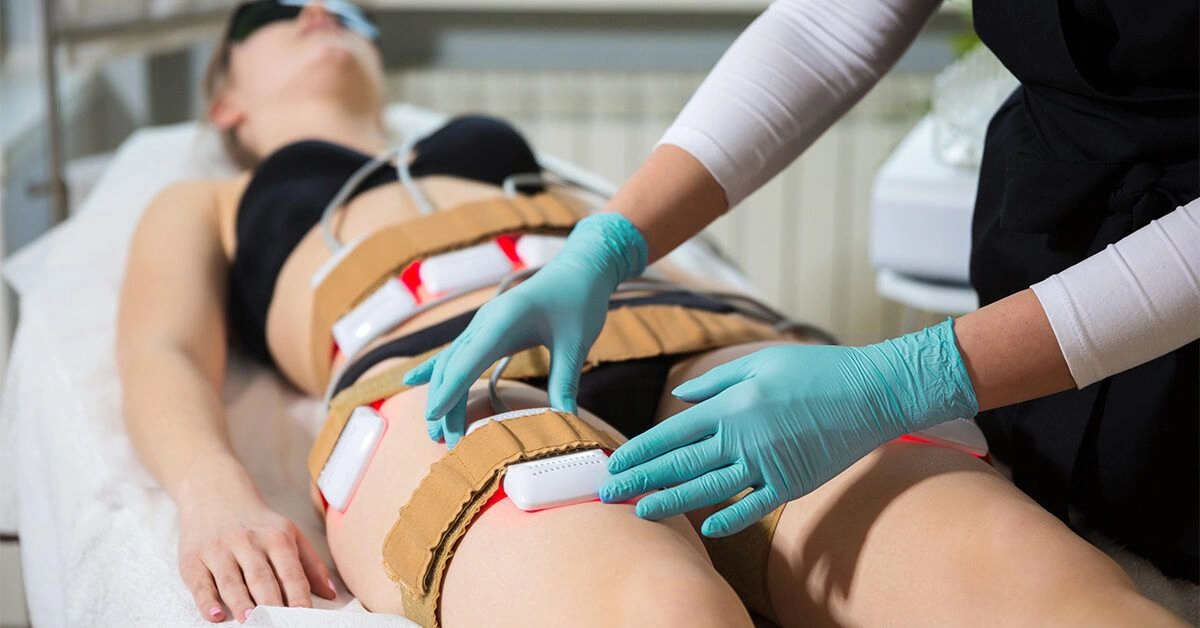
Red light therapy — sometimes called low-level laser therapy (LLLT) or infrared light treatment — is a growing non-surgical approach to reducing body fat.
Although it may sound like a quick fix, advocates of red light therapy say it can target “stubborn” fat that diet and exercise haven’t eliminated. Still, many clinicians remain doubtful about its true benefits.
Given the mixed opinions, you might be wondering if it’s worth trying.
This article examines red light therapy for slimming down, covering its possible advantages, limitations, and safety considerations.

What is red light therapy?
Commonly referred to as low-level laser therapy (LLLT), red light therapy is a non-invasive treatment typically administered in medical or aesthetic clinics.
It’s a well-known method of body contouring — a non-surgical approach that aims to reduce fat cells without the need for operations.
The treatment uses a low-power laser that emits red, blue, and infrared wavelengths that penetrate roughly 1–2 inches (2.5–5 cm) into the skin. It targets the fat layer directly beneath the skin’s surface (1, 2).
Although the exact process is debated, a prevailing hypothesis is that LLLT temporarily disrupts portions of the fat cell membrane. This allows stored lipids to escape, causing the cells to shrink, after which the body’s natural elimination systems clear them away (1, 2).
During a session, a licensed practitioner — often a board-certified dermatologist or plastic surgeon — positions the laser over each treatment zone for about 10–40 minutes. Clinics commonly recommend at least six sessions to notice changes.
There’s no recovery time required, and you can go back to normal activities right away. That said, maintaining a balanced diet and regular exercise is strongly advised.
Summary: Red light therapy, or low-level light therapy, is a non-surgical technique that might reduce fat in specific areas of the body.
Does it work for weight loss?
Using red light therapy for weight reduction is contentious. Despite favorable patient reports and encouraging outcomes in certain studies, many researchers and healthcare professionals remain cautious about its claimed effects.
Several investigations have reported positive outcomes for LLLT or red light therapy.
For example, a 6-week pilot trial involving 60 participants found that twice-weekly LLLT sessions produced a modest 0.8-inch (2-cm) decrease in waist circumference. However, the absence of a control group limits the strength of these findings (1).
A randomized, double-blind trial with 67 people showed that those receiving six LLLT sessions over two weeks lost significantly more combined inches from the abdomen, hips, and thighs — about 3.5 inches (8.9 cm) — compared with the control group (3).
Likewise, a two-week study of 86 patients at a U.S. clinic documented notable reductions in waist (1.1 inches or 2.8 cm), hip (0.8 inches or 2 cm), and thigh circumference (1.2 inches or 3 cm), though this trial also lacked a control arm (4).
In another study of 40 subjects comparing LLLT on upper-arm circumference to a placebo, the LLLT group showed a significant 1.5-inch (3.7 cm) reduction after two weeks, while the control group saw no change (5).
These and other trials suggest some beneficial effects of LLLT for fat reduction (6, 7, 8, 9).
However, study results are inconsistent, and there’s limited information about long-term durability or clinical significance.
Summary: Most evidence indicates small fat reductions after multiple red light therapy sessions, but larger and longer trials are necessary.
Downsides and risks
If you’re considering red light therapy, be aware of several drawbacks.
Cost
The biggest drawback is the price.
Depending on location and clinic, a package of six sessions can cost between $2,000 and $4,000, which puts it out of reach for many people.
May not work for everyone
Many studies have focused on individuals with a BMI of about 25–30, so its effectiveness in those outside this BMI bracket is unclear.
Additionally, most participants in the research have been white, making it uncertain how well results translate to other racial groups.
Evidence consistently supports a healthy lifestyle as the most reliable path to weight loss. This includes eating minimally processed, nutrient-dense foods, engaging in regular physical activity, getting adequate sleep, and managing stress (10, 11, 12).
Adverse effects
To date, most trials report that red light therapy is safe, with no major adverse events recorded (1, 3, 4, 5, 9).
That said, one investigation reported two participants with severe skin injury, which appeared linked to the laser making direct skin contact — a circumstance not present in most other studies (13).
Always consult a qualified professional before undergoing red light therapy.
Summary: While generally regarded as safe, red light therapy is expensive and underresearched in diverse groups. Those seeking weight loss may prefer more affordable, evidence-based strategies like dietary and exercise changes.
Recommendation
Red light therapy (LLLT) can lead to modest reductions in fat and weight.
Overall, the effects tend to be modest.
If you choose to pursue red light therapy, consult a licensed healthcare provider, such as a board-certified dermatologist or plastic surgeon, who can evaluate your health and provide personalized guidance.
However, LLLT is not required to lose weight. Eating a diet of minimally processed foods and following a consistent exercise regimen can create the calorie deficit necessary for weight loss.
Summary: Red light therapy may yield modest fat and weight loss, but a nutritious diet and regular exercise are likely more sustainable for long-term results.
The bottom line
Red light therapy, also called low-level laser therapy (LLLT), is a body contouring method that might aid in reducing stubborn fat.
Most studies find some fat loss in areas like the waist and arms, but changes are generally modest. The treatment is costly, and the durability of results is uncertain.
If your goal is weight loss, prioritizing a healthy lifestyle that includes a balanced diet and regular physical activity remains the most supported approach.
If you’re still interested in LLLT, speak with a qualified healthcare professional to determine whether it’s appropriate for you.




















Leave a Reply
You must be logged in to post a comment.