
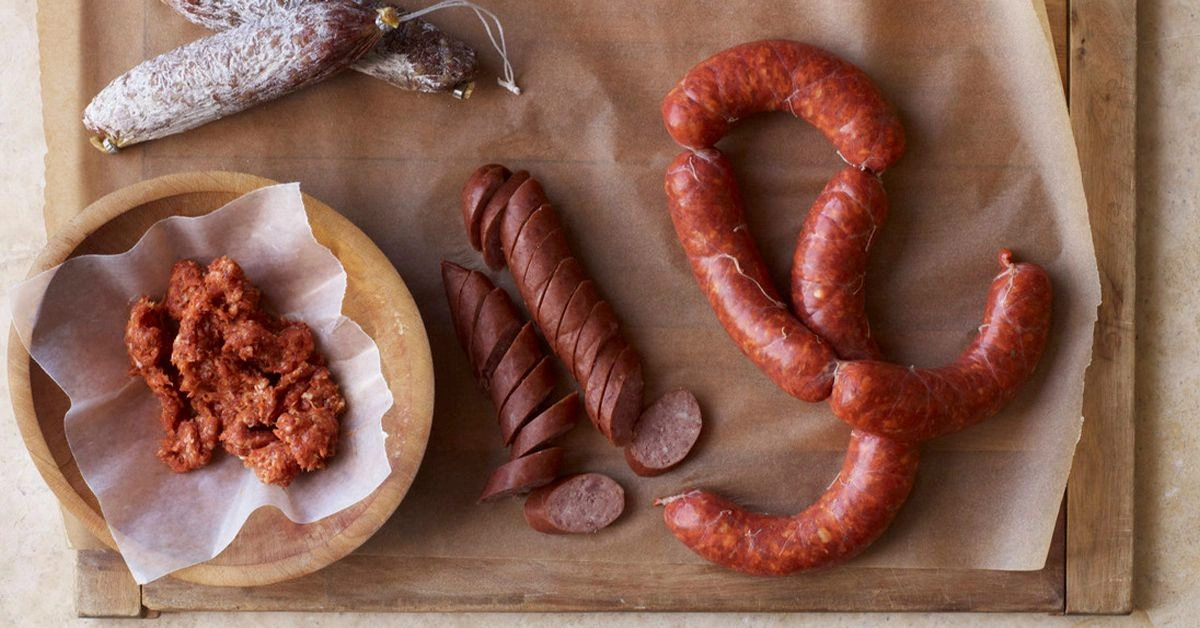
From Cajun andouille to chorizo to bratwurst, sausages are savored in cuisines across the globe.
Although recipes differ, most sausages are made from a blend of ground meat, fat, and seasonings. Because of this, many varieties are rich in protein and frequently regarded as low in carbohydrates.
That said, you might be surprised that certain sausages include additional carbohydrate sources from added flavorings and binding ingredients.
This article examines the carbohydrate content of different types of sausage.
:max_bytes(150000):strip_icc()/sausage_annotated2-a66e9bb2d934410aa69dda602c353e8a.jpg)
Sausage basics
Sausage is a meat product typically produced from red meats like beef and pork, or poultry such as chicken and turkey (1).
While they supply substantial protein, they’re often high in fat too, since fat helps retain moisture during cooking (1).
For instance, 3.5 ounces (100 grams) of pork sausage contains roughly (2):
- Calories: 268
- Fat: 18 grams
- Saturated fat: 7 grams
- Protein: 27 grams
Besides meat and meat derivatives, sausages often have added flavors from herbs, spices, vegetables, or fruits. The mixture is ground and then formed into links using a casing or into patties.
Contents vary depending on the meat or combination of meats and any supplemental ingredients. In the United States, sausage composition is overseen by regulatory standards.
Examples of standards for various product labels include (1):
- Breakfast sausages. Made from meat and meat byproducts and must not exceed 50% fat by weight.
- Fresh pork sausages. These may not contain pork byproducts and are limited to a maximum of 50% fat by weight.
- Italian sausage products. Whether cured or uncured, these must consist of at least 85% meat or a meat-and-fat blend. Total fat can’t exceed 35% of the finished product.
Italian sausage products must also include salt, pepper, fennel, and/or anise and contain no more than 3% water. Optional ingredients might include garlic, onion, or paprika (1).
Because sausages are often preserved by curing, salting, smoking, or drying, they fall into the category of processed meats (1).
Consequently, there are health concerns associated with their consumption, as processed meat intake has been linked to a higher risk of some chronic diseases (3).
Summary: Sausages are meat products crafted from ground meat or poultry along with various seasonings. The ingredient mix differs by sausage type, and in the U.S., specific labels have regulated ingredient requirements.
Sources of carbs in sausages
Since sausages are predominantly made from ground meat and meat derivatives, any carbohydrates present generally originate from added components like seasonings and binders (4).
Many sausages include spices, which add negligible carbs. Yet some are flavored with natural additions such as fruits, sugars, or cheeses, each contributing varying carbohydrate amounts.
Other typical carb contributors are binding agents. Ingredients like breadcrumbs and potato flour improve texture and prevent the mixture from falling apart (5).
Other binders include lentil flour, soy flour, vital wheat gluten, and corn syrup. These ingredients differ widely in carbohydrate content.
For example, corn syrup has about 30 grams of carbs per 2 tablespoons (30 grams), whereas vital wheat gluten contains roughly 4 grams of carbs per 1/4 cup (30 grams) (6, 7).
Ultimately, the choice and amount of binding agents and flavorings determine the final carbohydrate level in a sausage product.
Summary: Sausages are commonly high in protein and fat but may include carbs from added components like natural flavorings and binders.
How many carbs are in various types of sausages?
Because flavorings and additives differ between brands and recipes, the most reliable way to find the carb count in a given sausage is to check its nutrition label.
Below are typical types of sausages and an estimated carbohydrate amount found in 3.5 ounces (100 grams) of each (8):
- Andouille sausage: 3 grams
- Beef sausage: 0 grams
- Bratwurst: 3 grams
- Breakfast sausage links (pork or turkey): 1 gram
- Breakfast sausage beef patties: 3 grams
- Chicken sausage: 4 grams
- Chorizo: 2 grams
- Italian sausage: 4 grams
- Polish sausage (Kielbasa): 5 grams
- Pork sausage: 0 grams
- Salami: 6 grams
- Turkey sausage: 3 grams
- Vienna sausage (Frankfurter): 2 grams
As shown, the majority of sausages have only a small amount of carbs, with salami on the higher end because it often includes corn syrup and cornstarch as binders (9).
Even fruit-flavored options like Johnsonville’s Apple Chicken Sausage, which contains dried apples, corn syrup, and cane syrup, provide just 6 grams of carbs per 3.5 ounces (100 grams) (10).
Therefore, despite the inclusion of some carb-containing additives, sausage remains a generally low-carb choice. If you’re tracking carbs closely, you might also want to consider how the sausage pairs with foods higher in carbohydrates — for example, many rice varieties are a concentrated source; see more on carbs in rice.
Summary: Even with added carbohydrate-containing ingredients, most sausages are low in carbs, typically providing 0–6 grams per 3.5-ounce (100-gram) serving.
The bottom line
Sausages are produced from ground meats — commonly beef, pork, or poultry — and include various ingredients for flavor and texture.
While these additions can introduce modest amounts of carbohydrates, sausages are overall a protein-rich, low-carb option.
Keep in mind, though, that sausages are processed meats and can be high in saturated fat, so they should be consumed in moderation as part of a balanced diet.























Leave a Reply
You must be logged in to post a comment.