

- Licorice root contains antioxidant, anti-inflammatory, and antimicrobial compounds such as glycyrrhizin, which may provide health advantages including easing acid reflux.
- Although licorice root appears promising for conditions like skin disorders, GERD, peptic ulcers, and may show anticancer activity, additional studies are required to verify these effects.
- Long-term use or high doses of licorice root can lead to glycyrrhizin buildup and associated adverse effects. It may also interfere with various medications.

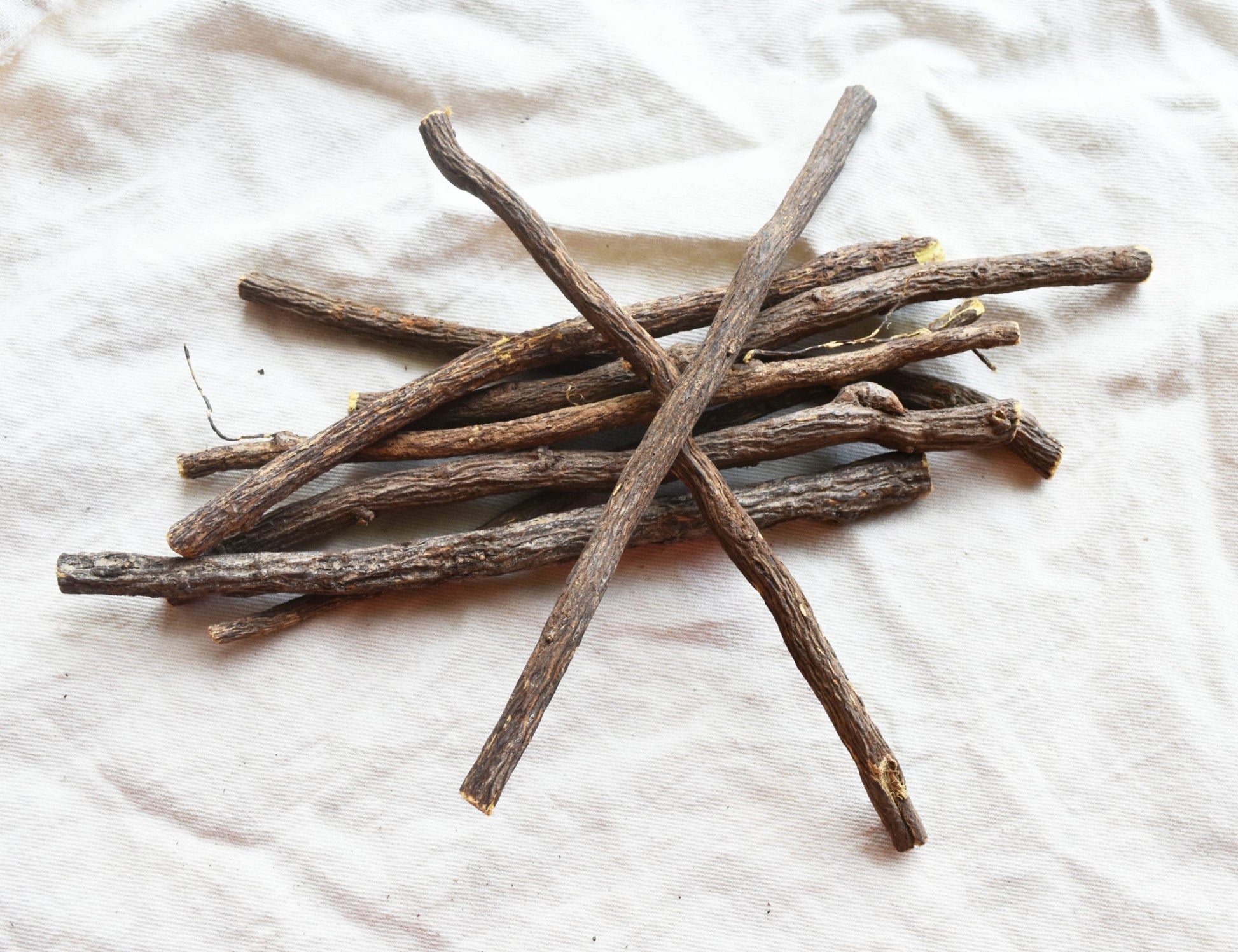
Licorice root is harvested from the root of Glycyrrhiza glabra, a plant that thrives in Asia, southern Europe, and the Middle East.
Medicinal applications of licorice extend back to ancient Egypt, where the root was brewed into a sweet beverage for pharaohs. Today, it’s used both medicinally and as a flavoring in candies, beverages, and pharmaceutical products.
Licorice root contains nearly 300 different constituents, with glycyrrhizin being the main active ingredient. Glycyrrhizin imparts the root’s sweetness and contributes to its antioxidant, anti-inflammatory, and antimicrobial actions.
That said, glycyrrhizin has also been associated with some harmful effects. Because of this, certain products are formulated as deglycyrrhizinated licorice (DGL), which has had the glycyrrhizin removed.
Read on for more about licorice root’s possible benefits, risks, and suggested dosages.
Potential benefits
Current studies indicate potential therapeutic uses for licorice root, but more rigorous research is needed to conclusively support these claims.
May improve skin conditions
Evidence indicates that licorice root extract may assist in treating several skin issues, including acne and eczema.
Additionally, a 2019 trial found a cream combining licorice root, gentian root, and willow bark extract to be as effective as a 1% hydrocortisone cream in alleviating eczema symptoms.
May lessen acid reflux and indigestion
Licorice root extract may be used to ease symptoms of gastroesophageal reflux disease (GERD), including heartburn, acid reflux, and indigestion.
A 2017 study of 58 adults with GERD reported that daily licorice root intake reduced symptoms over a two-year period more effectively than common antacids.
Find out more about herbal approaches to GERD and acid reflux.
May support peptic ulcer treatment
Licorice root extract and glycyrrhizin may assist in treating peptic ulcers—painful sores that form in the stomach, lower esophagus, or small intestine due to H. pylori bacteria.
A 2023 animal study showed that licorice flavonoids could help heal peptic ulcers by boosting mucus secretion, reducing inflammation, and improving the gut microbiome.
A 2016 clinical study of 120 adults found that adding licorice extract to standard therapy significantly lowered H. pylori presence after two weeks.
May exhibit anticancer effects
Licorice root extract is under investigation for protective effects against certain cancers, according to the National Cancer Institute.
Animal studies have shown licorice root can slow or inhibit cell proliferation in skin, colorectal, and breast cancer models.
Since most data come from in vitro and animal research, the impact on human cancers remains uncertain.
However, studies suggest licorice root extract may be as effective as standard care for oral mucositis, a common chemotherapy side effect.
May relieve upper respiratory issues
A 2019 review reported that glycyrrhizin extract from licorice root may ease asthma because of its anti-inflammatory effects, and the authors propose it could have fewer adverse effects than other asthma treatments.
Another 2019 study found licorice tea and extracts may offer protection against streptococcal throat infections.
Nonetheless, additional research is required.
May help prevent cavities
Studies indicate licorice root may protect against dental caries and aid in treating:
- oral thrush
- canker sores
- tooth decay
- periodontal disease
Further investigation is needed to determine optimal dosing and formulation for oral health uses.
Other possible benefits
Licorice root extract is also associated with several other potential advantages, including:
- supporting diabetes management
- alleviating menopausal symptoms
- aiding weight loss
- treating hepatitis C
However, more robust evidence is needed to confirm these effects.
Potential side effects and precautions
The U.S. Food and Drug Administration (FDA) considers licorice root generally safe for use in food products.
That said, the FDA does not regulate supplements for purity, potency, or label accuracy.
Therefore, consult a healthcare professional before using licorice root to address health issues.
Licorice root overdose
Long-term consumption or high doses of licorice root may cause glycyrrhizin to accumulate in the body. Research indicates that in rare situations this accumulation can lead to:
- elevated blood pressure
- low potassium (hypokalemia)
- irregular heartbeat
- kidney impairment
- congestive heart failure
- pulmonary edema
Who should avoid licorice root?
The National Center for Complementary and Integrative Health (NCCIH) warns that long-term licorice use may be risky for people with hypertension, heart disease, or kidney disease, as well as for those who are pregnant or breastfeeding.
Drug interactions
Licorice root can interact with a variety of medications, including:
- antihypertensive drugs
- anticoagulants
- lipid-lowering medications
- diuretics
- estrogen-containing contraceptives
- nonsteroidal anti-inflammatory drugs (NSAIDs)
If you use any of these medicines, avoid licorice products unless your clinician advises otherwise.
Dosage and forms of licorice root
Licorice root is available fresh or dried. As supplements, licorice preparations come in many forms, such as:
- capsules
- powders
- tinctures
- topical gels
- teas
How much licorice root is safe daily?
There is no universally accepted standard dose.
A 2021 review notes dosing varies by product type and the condition being treated. For instance, two 380-milligram DGL tablets before meals are suggested for GERD.
For asthma, possible regimens include:
- 1–5 grams of dried licorice root powder, taken three times daily
- 2–5 milliliters of licorice tincture, taken three times daily
- 250–300 mg of licorice extract, taken three times daily
The World Health Organization (WHO) and the European Scientific Committee on Food (SCF) both advise keeping glycyrrhizin intake below 100 mg per day.
Choosing DGL powders or capsules is another option, since these lack glycyrrhizin, the compound responsible for many side effects. However, it’s uncertain whether DGL delivers the same therapeutic effects.
Always consult a healthcare provider before starting any licorice product.
Frequently asked questions
Does licorice root repair the gut?
Some research indicates licorice root may benefit the gut microbiome in animal models, but human studies are still needed.
Can I drink licorice root tea every day?
Having one cup of licorice tea is unlikely to cause harm. Yet in rare instances, consuming large amounts of licorice tea daily has led to high blood pressure and low potassium levels, sometimes requiring hospitalization.
Takeaway
Licorice root has a long history of use for treating numerous ailments, including respiratory and digestive complaints.
Its phytochemicals show strong antioxidant, anti-inflammatory, and antimicrobial actions.
While it may help with acid reflux, eczema, peptic ulcers, and other conditions, more thorough human research is necessary to confirm these potential benefits.



















Leave a Reply
You must be logged in to post a comment.