

Foods that are high in FODMAPs — such as garlic, onion, baked beans, rye, and others — can trigger digestive discomfort in certain individuals. Swapping high FODMAP choices for lower FODMAP alternatives within the same food category can help you determine whether this dietary strategy suits your needs.
Diet is one of the most frequent contributors to digestive complaints. Specifically, items rich in fermentable carbohydrates may provoke symptoms like gas, bloating, abdominal cramping, and changes in bowel movements in some people.
These fermentable carbohydrates are collectively known as FODMAPs. Foods are generally categorized as either high or low in these compounds based on standardized measurements.
Reducing intake of high FODMAP foods can significantly ease gastrointestinal symptoms, particularly for individuals diagnosed with irritable bowel syndrome (IBS).
This guide outlines 10 commonly consumed foods and ingredients that are high in FODMAPs, along with practical substitutions to consider if they are contributing to digestive issues.

High FODMAP meaning
FODMAP stands for fermentable oligo-, di-, mono-saccharides, and polyols. These scientific terms describe specific carbohydrates that can be difficult to digest for some individuals.
A food is classified as high FODMAP based on established cutoff values.
According to published thresholds, a high FODMAP food contains more than one of the following carbs:
- oligosaccharides: 0.3 grams of fructans and galacto-oligosaccharides (GOS), (0.2 grams for fruits and vegetables)
- disaccharides: 1.0 gram of lactose
- monosaccharides: 0.15 grams fructose in excess of glucose (0.4 grams for fruits and vegetables when fructose is the only FODMAP present)
- polyols: 0.2 grams of either mannitol or sorbitol or 0.4 total polyols
Two institutions offer validated FODMAP food databases and mobile apps — Monash University and King’s College London.
FODMAPS can draw water into the small intestine, increase gas production through fermentation, and stimulate excess short-chain fatty acid production.
For some individuals — particularly those living with IBS — this may result in abdominal discomfort, bloating, flatulence, diarrhea, or constipation after consuming high FODMAP foods.
It’s important to recognize that FODMAP restriction is not necessary for everyone. In fact, these carbohydrates provide benefits for most people.
Before eliminating FODMAPs, consult a qualified healthcare professional such as a gastroenterologist (GI) or registered dietitian (RD). They can help determine whether this approach is appropriate and guide you through the process safely.
High FODMAP foods
1. Wheat
Wheat is one of the primary contributors of FODMAPs in Western dietary patterns.
This is largely due to the volume in which wheat is consumed, not because it is especially concentrated in FODMAPs by weight.
Common wheat-based foods include bread, pasta, breakfast cereals, crackers, and baked goods.
Suggested low FODMAP swaps:
- brown rice
- buckwheat
- maize
- millet
- oats
- polenta
- quinoa
- tapioca
Summary Wheat is a major dietary source of FODMAPs, but it can be replaced with other whole grains that are naturally low in FODMAPs.
2. Garlic
Garlic is among the most concentrated dietary sources of FODMAPs.
Because it is widely used in sauces, dressings, marinades, and packaged foods, avoiding garlic can be challenging.
Fructans are the primary FODMAP found in garlic. Dried garlic contains approximately three times as many fructans as fresh garlic.
Although garlic is high in FODMAPs, it also offers numerous health benefits. Therefore, only individuals who are FODMAP-sensitive should limit it.
Suggested low FODMAP swaps:
- garlic-infused oil
- garlic scape powder
- chili
- chives
- cilantro
- cumin
- fenugreek
- ginger
- lemongrass
- mustard seeds
- oregano
- paprika
- saffron
- turmeric
Summary Garlic is highly concentrated in FODMAPs but should only be restricted by those who are sensitive.
3. Onion
Onions are another rich source of fructans and are frequently used as a flavor base in cooking.
While fructan levels vary among onion types, all onions are categorized as high FODMAP.
Suggested low FODMAP swaps:
- chives
- green tops of onions and scallions (not the bulb)
- leek leaves (not the bulb)
- asafoetida
Summary Although FODMAP content differs slightly among varieties, all onions are considered high FODMAP foods.
4. Fruit
All fruits contain fructose, a FODMAP carbohydrate. However, fructose levels differ, which is why some fruits appear on a Low fructose fruits and vegetables list while others do not.
Fruits that contain balanced amounts of fructose and glucose are typically better tolerated, since glucose assists with fructose absorption.
Even fruits categorized as low FODMAP can provoke symptoms when consumed in large quantities. Portion control is essential.
For additional guidance, you can explore this comprehensive list of Low fructose fruits to make informed choices.
High FODMAP fruits include:
- apples
- apricots
- blackberries, blueberries, and raspberries, depending on quantity
- cherries
- figs
- grapes
- mangoes
- nectarines
- peaches
- pears
- plums
- watermelon
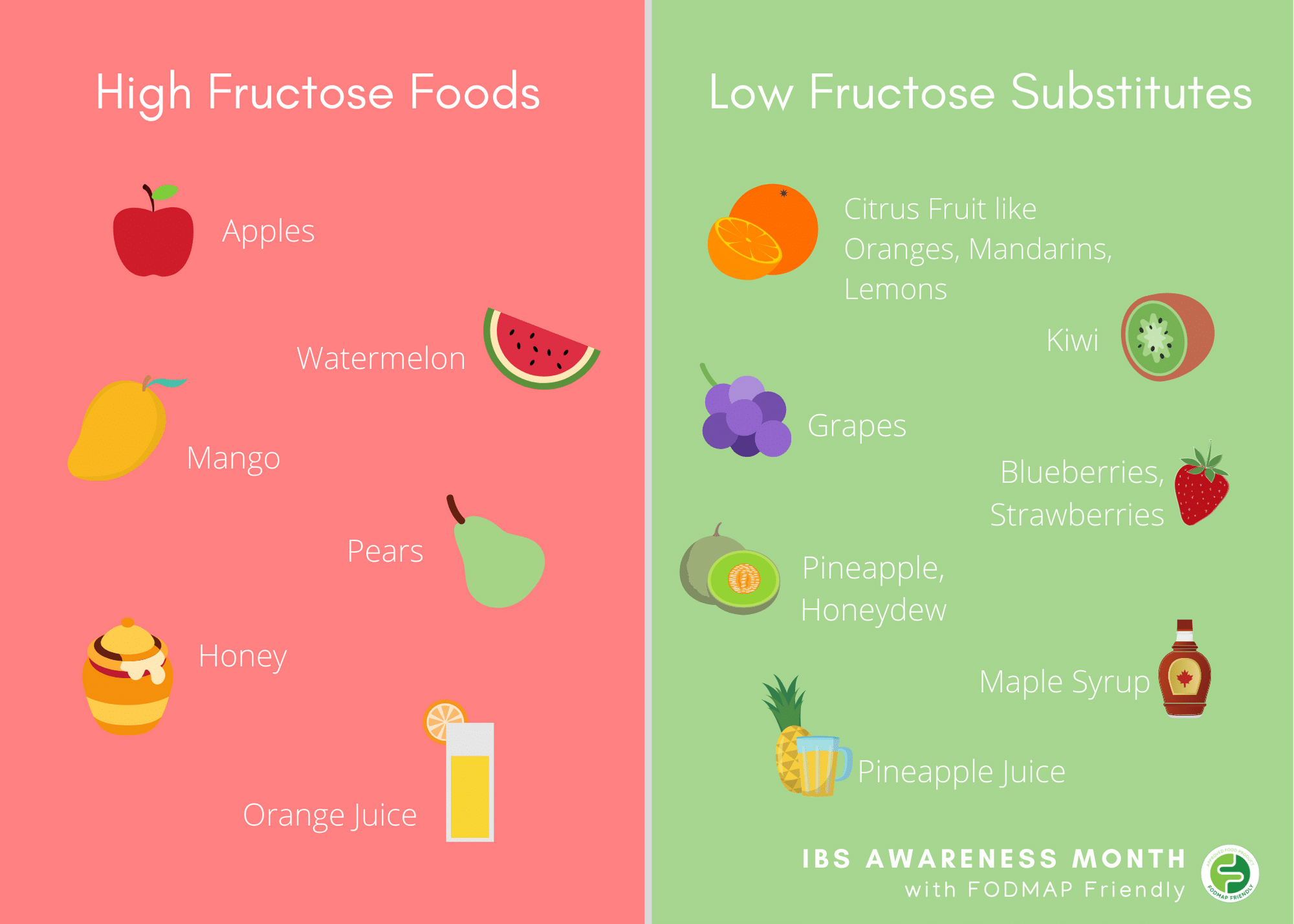
Low FODMAP fruits include:
- unripe bananas
- clementine
- kiwi
- limes
- mandarins
- oranges
- papaya
- passionfruit
- pineapple
- rhubarb
- starfruit
Summary While all fruits contain fructose, many can be enjoyed in moderation as part of a low FODMAP eating plan.
5. Vegetables
Certain vegetables are naturally high in FODMAPs, while others appear on a Low fructose fruits and vegetables list due to their lower fermentable carbohydrate content.
Vegetables may contain fructans, GOS, fructose, mannitol, sorbitol, or combinations of these.
Rather than eliminating vegetables altogether, focus on substituting high FODMAP options with lower FODMAP varieties to maintain nutritional balance.
High FODMAP vegetables include:
- asparagus
- beets
- Brussels sprouts
- butternut squash
- cauliflower
- fennel
- globe and Jerusalem artichokes
- karela
- leeks
- mushrooms
- snow peas

Low FODMAP vegetables include:
- arugula
- bean sprouts
- bok choy
- cabbage
- carrot
- choy sum
- collard greens
- cucumber
- daikon radish
- eggplant
- green bell pepper
- jicama
- kale
- lettuce
- okra
- tomato (cooked or canned)
- spinach
- yam
Summary Vegetables vary widely in FODMAP content, but many nutrient-dense options are naturally low in fermentable carbohydrates.
Should everyone avoid FODMAPs?
Only a relatively small segment of the population needs to limit FODMAPs.
For most individuals, FODMAPs act as prebiotics, supporting the growth of beneficial gut bacteria and contributing to overall digestive health.
Research indicates that approximately 70% of people with IBS experience symptom improvement on a low FODMAP diet.
Importantly, this diet is not designed to be followed indefinitely. Instead, it serves as a structured elimination and reintroduction protocol to identify specific triggers.
Summary FODMAP restriction is appropriate for some individuals, particularly those with IBS, but unnecessary for most of the general population.
The bottom line
Many everyday foods contain FODMAPs, yet they only need to be limited by individuals who are sensitive to them.
If you suspect FODMAP sensitivity, work with a qualified healthcare professional to determine whether this approach is right for you. When needed, replace high FODMAP items with suitable lower FODMAP alternatives from the same food group to maintain balanced nutrition and digestive comfort.


















Leave a Reply
You must be logged in to post a comment.