
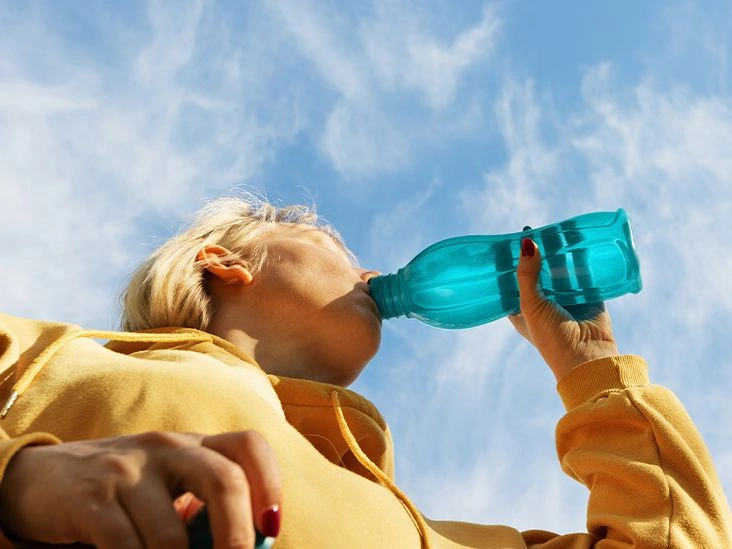
- A new study estimated that, on average, one liter of bottled water contains 240,000 detectable plastic fragments. These are known as nanoplastics.
- Nanoplastics are a cause for concern because they are difficult to detect and can pass through intestinal, tissue, and blood-brain barriers, which can result in serious health implications.
- To make sure your water is safe to drink, you can place water filters on the faucets and/or use them prior to drinking the water to get rid of some of the unwanted particles.
When people ask, How much water is in a plastic water bottle, they are usually thinking about volume—such as 500 mL or one liter. However, recent research suggests there may be more to consider than just the number of ounces or milliliters. Beyond understanding hydration amounts, scientists are increasingly evaluating what microscopic particles might also be present inside bottled water.
Public health specialists have grown progressively more attentive to microplastics and the ways they may affect both human health and the environment. Now, attention is shifting toward nanoplastics, which are even smaller than microplastics and potentially more biologically active. Bottled water has emerged as a significant source of exposure, with investigations revealing thousands of plastic fragments in a single container.
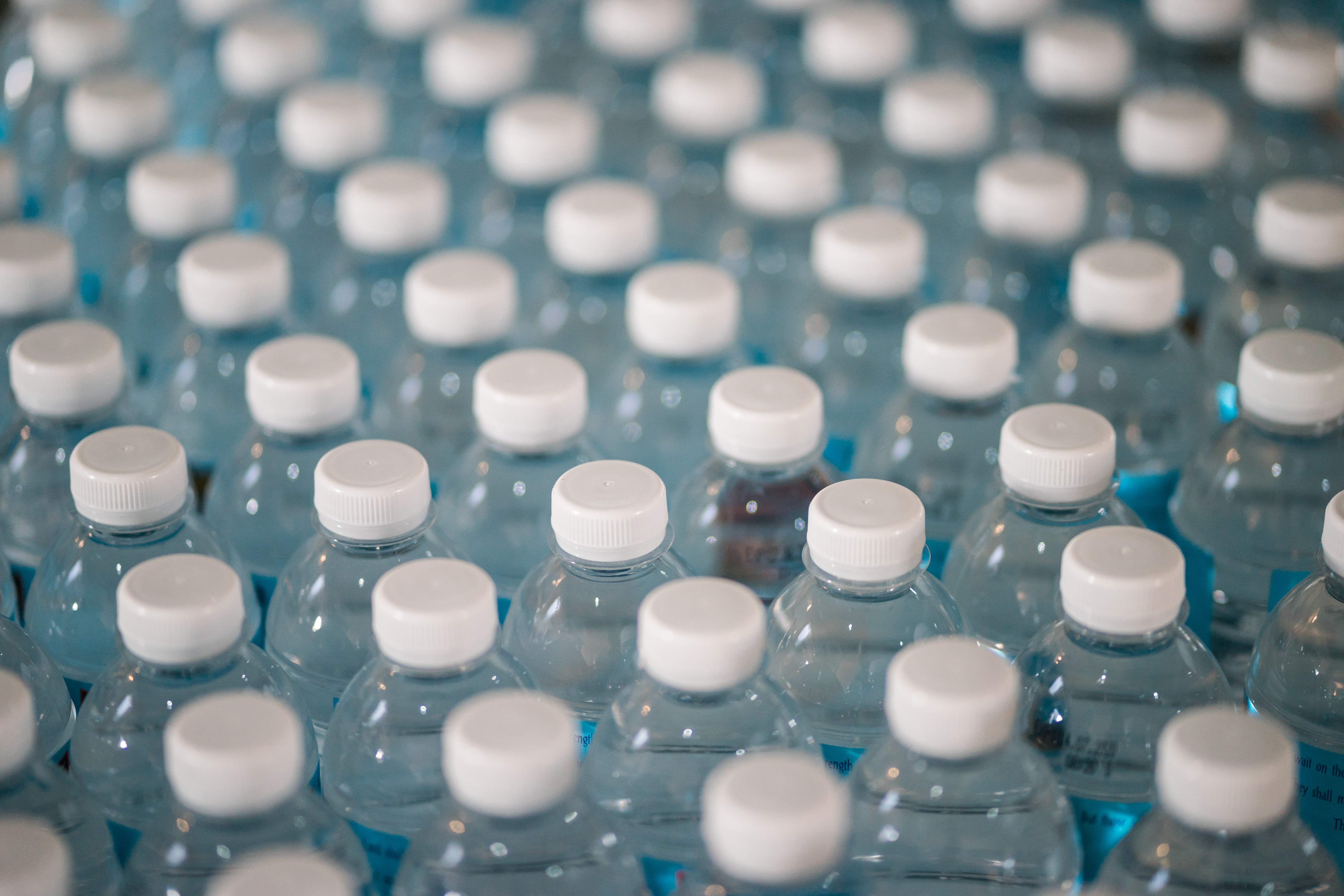
Because nanoplastics are extremely tiny, they can enter the bloodstream directly and potentially travel to various organs and body systems. This raises important questions not only about hydration habits but also about long-term exposure risks.
A study published January 8 in the journal Proceedings of the National Academy of Sciences examined how many nanoplastics may be present in a single plastic bottle of water. The findings add a new dimension to discussions about bottled water safety and daily fluid intake.
“Our previous research has highlighted the widespread presence of microplastics in New York City’s waters and air, and their capacity to transport pollutants like PCBs, pharmaceuticals, and pathogens (Funded by the Hudson River Foundation),” Beizhan Yan, study author and Associate Research Professor at Columbia Climate School Lamont-Doherty Earth Observatory, told HealthEH. “In comparison, nanoplastics are expected to have an even greater ecological and health impact due to their higher partitioning rate and associated nanotoxicity.”
Large amounts of nanoplastics in bottled water
In this latest analysis, Yan and his colleagues screened for seven distinct types of plastic polymers. Notably, these accounted for only about 10% of the total nanoparticles detected in the tested samples, underscoring how complicated it can be to fully characterize particle composition in bottled water.
The researchers calculated that an average liter of bottled water contained 240,000 identifiable plastic fragments. For readers wondering about volume comparisons—such as How much water Is in a water bottle in ml—a standard 1-liter bottle equals 1,000 mL, meaning these fragments are dispersed throughout that entire amount.
Further investigation is still required to clarify whether regularly drinking bottled water with nanoplastics leads to measurable adverse health outcomes. At this stage, the data primarily quantifies exposure rather than proving direct causation of disease.
“If people are concerned about nanoplastics in bottled water, it’s reasonable to consider alternatives like tap water,” said Yan. “However, it’s important to emphasize that staying hydrated is crucial for health. Therefore, we do not advise against drinking bottled water when necessary, as the risk of dehydration can outweigh the potential impacts of nanoplastics exposure.”
Moving forward, the research team intends to broaden their investigative platform to assess additional environmental samples. This includes testing tap water, air samples, and even biological tissues to better understand how widespread nanoplastics may be. Their objective is to gain deeper insight into both environmental distribution and possible health consequences linked to chronic exposure.
Are nanoplastics dangerous?
“Plastics often contain a heterogenous mixture of various chemicals that provide a particular type of plastic its functional and structural capabilities,” Christopher Hine, PhD, of Cleveland Clinic Lerner Research Institute stated. “Many of these types of chemicals, once leached out of the plastic containers in forms of microplastics and nanoplastics can serve as endocrine disrupting chemicals (EDCs).”
Hine was not involved in the study.
Endocrine disrupting chemicals (EDCs) can imitate natural hormones in the body. For instance, bisphenol A (BPA) can mimic estrogen and activate estrogen receptors. This interference may alter normal hormonal signaling, which plays a critical role in metabolism, growth, reproduction, and mood regulation.
In other cases, nanoplastic-associated compounds may disrupt key regulatory systems in the body, including the pituitary and adrenal glands, as well as the thyroid organ. These glands are central to hormone production and stress responses, meaning disruption could theoretically have widespread physiological effects.
“A major concern for nanoplastics is twofold, in that they are: 1) Difficult to detect and filter out of consumer food and drink products; and 2) More readily able to cross intestinal, tissue, and blood-brain barriers thus potentially negatively impacting multiple organ systems,” Hine added.
Why there’s so much plastic in food
“In most consumer goods, be it food, drink or cosmetics, there is a long and complicated production process each encounters from the harvest of raw material to the finishing, packaging and shipping,” said Hine. “At each step, the product can be exposed and contaminated with various plastic-related chemicals. Thus, it is not surprising that with the author’s utilization of new techniques to detect the nanoplastics [found] so many new nanoparticles in consumer goods.”
Additionally, chemicals that were initially considered stable can degrade over time. Exposure to UV radiation, visible light, heat, ozone, and simple aging can chemically and physically transform packaging materials. As these materials break down, they may generate smaller plastic particles that migrate into food and beverages.
For this reason, proper storage of consumer goods—including food, beverages, cosmetics, and pharmaceuticals—is essential. Following storage guidelines and discarding products past their expiration date may help limit unnecessary exposure to degraded materials.
How clean is your water?
The next phase of research will focus on tap water analysis.
“Most municipalities and utilities companies that provide water to their communities follow stringent laws and regulations to ensure the product they deliver is safe for consumption,” Hine stated. “However, sometimes there are disruptions in water supply due to aging pipe and water main infrastructure failures that enable leaching of unwanted chemicals or microorganisms to the taps of consumers. Most of these disruptions are temporary and by following the directions of the municipal utility, such as running the tap or boiling the water, consumption of these unwanted items can be avoided.”
Installing water filters on faucets or using certified filtration systems before drinking may help reduce certain particles and contaminants. These steps can provide an additional layer of protection, particularly in areas with older infrastructure.
“While there usually are less micro- and nanoplastics in tap water compared to commercially bottled water, if consumers end up storing their tap water in plastic containers that are exposed to heat, sunlight, and/or detergents this can increase the plastic contamination of the water,” said Hine. “Homes with well water may also have micro- and nanoplastic contamination due to environmental runoff of plastics pollution from landfills, trash, or soil/watershed pollution.”
For those evaluating storage capacity or empty container measurements, understanding How much water is in a water bottle in ml empty can help clarify how much liquid a container is designed to hold and whether repeated reuse could influence plastic breakdown over time.
The safest way to drink water
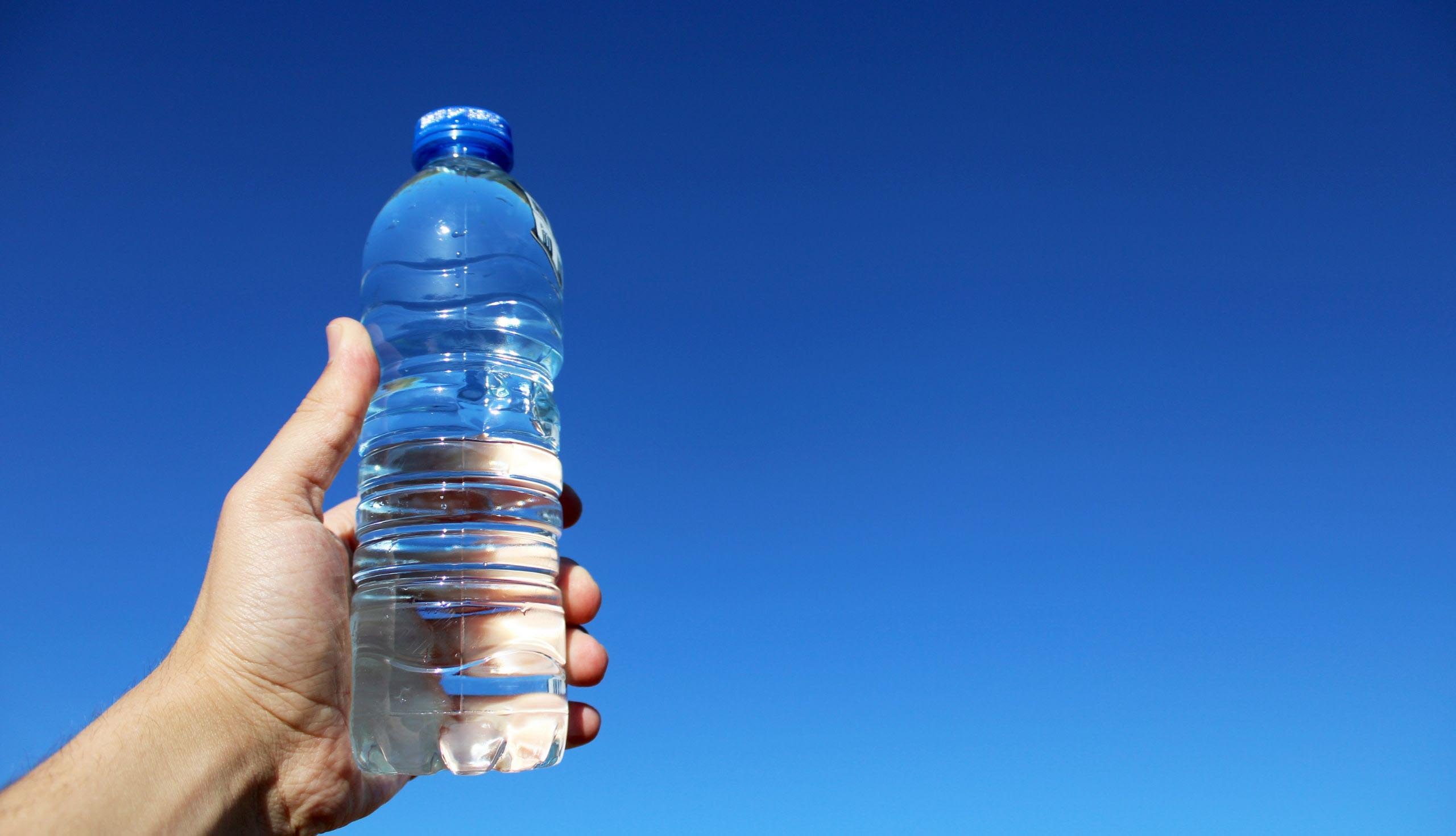
“Water is essential for life, and drinking water should be a part of one’s healthy daily routines. Drinking from the tap, from plastic bottled water, or from filtered devices are all ways we can use reach our water consumption goals,” Hine explained.
Maintaining adequate hydration supports cardiovascular function, kidney health, temperature regulation, and cognitive performance. While concerns about microplastics and nanoplastics are valid, avoiding fluids altogether would pose a far greater immediate health threat.
“While tap, bottled, and filtered water are usually safe methods for consumption, tap water tends to have decreased amounts of these plastics while also providing fluoride as a preventative measure against tooth decay,” said Hine. “Thus, if the local municipality provides clean drinking water via the tap, this can be seen as one of the safest sources for drinking water. If the water is to be stored in plastic containers, then keeping them out of direct sunlight and in cool environments can also diminish plastics leeching into the water.”
Takeaway
A recent study found that an average liter of bottled water contains 240,000 detectable plastic fragments, referred to as nanoplastics.
Because these particles are extremely small, they are challenging to detect and may pass into the bloodstream and various organs. Although more research is needed to determine definitive health outcomes, experts suggest practical steps such as using water filters and storing water properly to reduce potential exposure.
Ultimately, whether you are calculating How much water is in a plastic water bottle for hydration planning or comparing bottled versus tap options, staying adequately hydrated remains essential. Balancing hydration needs with informed choices about water sources can help support overall health and well-being.













Leave a Reply
You must be logged in to post a comment.