

Let’s cut to the chase: you want a reliable way to keep every pill, patch, and inhaler in line so that you (or someone you love) stay healthy, independent, and out of the emergency room. The good news is that with a handful of proven tricks, a bit of organization, and the right tools, you can master medication management without turning it into a daily nightmare.
Why does this matter right now? Because each missed dose, accidental double‑dose, or hidden drug interaction can turn a routine day into a medical crisis. By getting a solid system in place today, you’re investing in more vibrant tomorrows – fewer hospital trips, steadier blood pressure, and the confidence to enjoy the activities you love.
Why It Matters
Benefits of Good Medication Management
When you have a clear, repeatable routine, you’ll notice:
- Better control of chronic conditions (think lower A1C, steadier blood pressure).
- Fewer unnecessary doctor visits and hospital stays.
- More independence – you won’t need a caretaker just to remember pills.
- Peace of mind for you and your family.
Risks of Poor Management
Unfortunately, medication slip‑ups are common in older adults. According to a study from the National Library of Medicine, about 30 % of hospital admissions for seniors are drug‑related. The biggest culprits?
- Poly‑pharmacy (taking five or more meds at once).
- Memory gaps or visual impairments.
- Unnoticed drug‑drug interactions.
- Confusing packaging or similar‑looking pills.
A Real‑World Snapshot
Take Mrs. Lee, 78, who was on seven different medications. One afternoon she missed her blood‑pressure pill because the bottle was hidden behind a pantry box. By night, she experienced a dizzy spell and ended up in the ER. A simple, organized pill box could have prevented that entire ordeal.
Build Your Schedule
Medication Schedule Tips
Start with a “cheat sheet” – a one‑page list that includes every product you take, from prescription drugs to vitamin D gummies. Here’s how to structure it:
- Write it all down. Include name, dose, frequency, and why you’re taking it.
- Group by time of day. Morning, midday, evening, and “as needed”.
- Add food instructions. “Take with food”, “take on an empty stomach”, etc.
- Highlight high‑risk meds. Those that can cause dizziness or low blood sugar.
Print the sheet, laminate it, and keep it on the fridge or near the pill organizer.
Printable Template
Feel free to download a ready‑made template (internal link) and fill it out on your own.
Tech Helpers – Apps & Reminders
If you love a little digital nudging, try one of these free apps:
- Medisafe – visual pill images, refill alerts, and a family‑sharing feature.
- MyTherapy – tracks mood and symptoms alongside meds.
- Google Calendar – set recurring reminders with a gentle “ding”.
Pro Tip from a Geriatric Pharmacist
“Ask your pharmacist to sync refills so you pick up everything on the same day. It cuts down on trips and reduces the chance of missing a dose,” says Dr. Patel, a certified geriatric pharmacist.
Prevent Interactions
Drug Interaction Checklist
Before adding any new medication (prescription or OTC), run through this five‑question list:
| Question | What to Look For |
|---|---|
| 1. Does the new drug share a class with any current drug? | Same mechanism can cause overdose. |
| 2. Is there a known interaction with my heart meds? | Check for QT‑prolongation, potassium loss. |
| 3. Will the new drug affect my blood pressure or sugar? | Watch for hidden diuretics or glucocorticoids. |
| 4. Do I need to adjust timing (with food, separate doses)? | Some absorb better with meals, others on an empty stomach. |
| 5. Have I discussed it with my pharmacist? | Pharmacists can spot hidden interactions instantly. |
Sample Checklist (downloadable)
Print a copy and keep it on your countertop for quick reference.
When to Call the Doctor or Pharmacist
Red‑flag symptoms mean you should pick up the phone right away:
- Severe dizziness or fainting.
- Unexplained bruising or bleeding.
- Sudden confusion or memory loss.
- Any new rash, itching, or swelling.
Authoritative Source
The American Geriatrics Society’s 2023 Beers Criteria lists high‑risk medications to avoid or use with caution in older adults.
Dementia Considerations
Dementia Medication Guide
When memory is unreliable, simplicity becomes the hero. Follow these pointers:
- Prefer once‑daily dosing whenever possible.
- Use colored caps or stickers to differentiate morning vs. evening meds.
- Place pills in clear, labeled containers that are easy to open.
- Pair each medication with a daily habit (e.g., “after breakfast” or “when watching the morning news”).
Communication Tips for Caregivers
Speak slowly, repeat key points, and write everything down in large print. Invite the person with dementia to hold the pill bottle – the act of touching can reinforce memory.
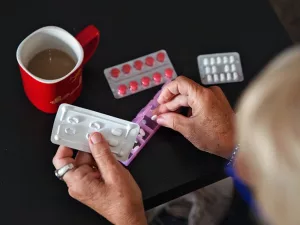
Senior Pill Organizer
Choosing the right organizer can make or break the routine. Here are three top picks (prices are approximate):
| Organizer | Features | Best For |
|---|---|---|
| Weekly Touch‑Free Box | Large compartments, easy‑open lid, audible click | Limited dexterity |
| Daily Alarm Pill Case | Built‑in digital alarm, battery‑backed | Forgetful users |
| Travel‑Size Clear Pods | Compact, transparent, fits in a purse | On‑the‑go seniors |
Caregiver Story
Emily, who cares for her 82‑year‑old dad, switched from a plain weekly box to a “Daily Alarm Pill Case.” The beep reminds him at 8 am and 6 pm, and his missed‑dose rate dropped from 30 % to under 5 % in just two weeks.
Ongoing Review
Monthly Medication Reconciliation
Every month, set aside 15 minutes with a trusted health professional (pharmacist or nurse) to verify:
- All current drugs – prescriptions, OTC, supplements.
- Dosage changes since the last visit.
- Any new side‑effects or concerns.
Suggested Professional Involvement
Medication Therapy Management (MTM) programs, often covered by Medicare, provide a structured review and a personalized action plan. Ask your doctor if you qualify.
Deprescribing Safely
Sometimes “less is more.” Deprescribing means tapering or stopping meds that no longer provide benefit. The AGS Beers Criteria flags many such drugs – for instance, certain sleep aids and anticholinergics that can worsen cognition.
Evidence Snapshot
A 2022 narrative review noted that non‑adherence and inappropriate medications are the most common problems in primary care for older adults (PMCID 9245166).
Everyday Success Tips
| Tip | Why It Helps | Quick Action |
|---|---|---|
| Keep a single master list | Reduces forgotten medications | Write it on a fridge magnet |
| Use alarm‑enabled pill boxes | Combines visual and audible cues | Set alarms for 8 am, 12 pm, 6 pm |
| Pair meds with daily habits | Leverages habit loops | Take blood‑pressure pill after brushing teeth |
| Review meds after any hospital stay | Catch new prescriptions early | Bring your master list to discharge planning |
| Involve a trusted friend for weekly check‑ins | Adds accountability | Schedule a Sunday phone call |
Conclusion
Mastering older adult medication management boils down to three pillars: Plan (a clear schedule and checklist), Protect (watch for interactions and simplify for dementia), and Review (regular reconciliation and deprescribing). You don’t need to overhaul everything at once – start today by writing down every pill you take, set a simple alarm, and share that list with a pharmacist.
Ready to take that first step? Download the free “Senior Medication Planner” PDF, or give your local pharmacy a call to schedule a quick medication‑review chat. You’ve got the tools, the knowledge, and the support—now it’s time to turn those tools into habit. Your health, your independence, and your peace of mind will thank you.





















Leave a Reply
You must be logged in to post a comment.