Arterial and Venous Ulcers: What’s the Difference?


Overview
Arterial and venous ulcers are two varieties of open sores that can appear on the body. They commonly occur on the lower limbs, such as the legs and feet.
Arterial ulcers arise from damage to the arteries caused by inadequate blood flow to the tissue. Venous ulcers develop from harm to the veins due to an insufficient return of blood to the heart.
Unlike many other wounds, these leg sores can take months to heal, and sometimes they may not heal at all. Although they share similarities, they need different approaches to treatment to promote proper healing and a faster recovery.
How do symptoms differ?
Typical signs of ulcer formation include pain and swelling. Other signs can vary between arterial and venous ulcers.
Arterial ulcers
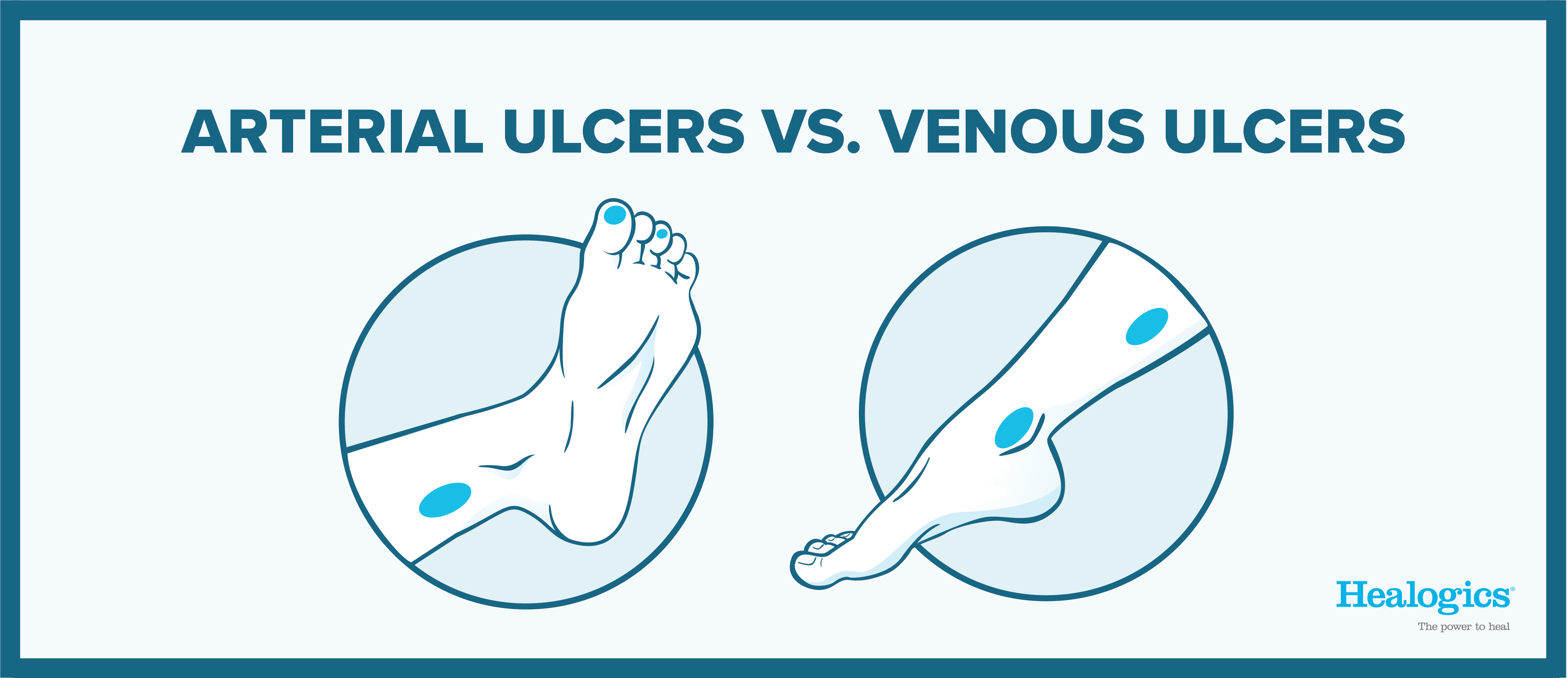
Arterial ulcers frequently appear on the outer ankle, feet, heels, or toes, though they can occur elsewhere. These ulcers are painful and often have a “punched out” look.
Additional features or signs of arterial ulcers include:
- red, yellow, or black lesions
- deep wound depth
- tight, hairless skin
- leg pain at night
- no bleeding
- affected area feels cool or cold due to reduced blood circulation
- leg reddens when lowered and becomes pale when elevated
Venous ulcers
Venous ulcers typically develop below the knee and on the inner ankle. There may be little or no discomfort unless the ulcer becomes infected. In some cases, venous ulcers can be painful.
The affected region may also show these signs:
- inflammation
- swelling
- aching
- itchy, hardened skin
- scabbing or flaking
- brown or dark-stained skin
- discharge
What causes these ulcers?
Poor circulation is often the underlying cause of ulcers. When blood flow is reduced, the skin and tissues in the affected areas are deprived of oxygen and nutrients. These tissues become inflamed and can develop an open wound.
Although ulcers can appear anywhere on the body, arterial and venous ulcers are more frequently found on the legs and feet.
Arterial ulcers
Obstructed arteries are a common reason for arterial ulcers. They are also called ischemic ulcers. Arteries are responsible for delivering oxygen- and nutrient-rich blood to tissues. When arteries are blocked, blood cannot reach the extremities, leading to an open wound.
Other possible contributors to arterial ulcers include:
- age
- diabetes
- smoking
- high blood pressure
- high cholesterol
- kidney failure
- trauma
- atherosclerosis, or arterial thickening
- vasculitis
Venous ulcers
Venous ulcers are the most common form of leg ulcer. They result from damage to the veins. Veins return blood from body parts to the heart using one-way valves that prevent backward flow.
If blood flow is impaired, it can pool in an area. This leads to vein damage and leakage of fluid and blood cells, causing edema, or swelling. This is thought to hinder adequate blood delivery to the leg tissue. Consequently, this tissue can die and ulcers may form.
Other potential contributors to venous ulcers include:
- varicose veins
- high blood pressure
- trauma
- fractures or injuries
- obesity
- blood clotting disorders
- deep vein thrombosis
- heart failure
- pregnancy
For either ulcer type, seek prompt medical care if your symptoms worsen and are accompanied by:
- fever
- a foul odor
- increased discharge
- numbness
In more serious situations, these signs may indicate an infection. If untreated, amputation could become necessary.
How are leg ulcers treated?
Before recommending treatment, your physician needs to determine the underlying cause. Ulcers can be managed with proper wound care and antibiotics, but identifying the root cause helps ensure healing and prevents recurrence.
Some health issues that contribute to ulcers include:
- diabetes
- deep vein thrombosis
- rheumatoid arthritis
- arterial disease
- lupus
- chronic kidney disease
- high blood pressure
- high cholesterol
As with any ulcer, primary treatment aims to improve blood flow to the affected region. Other treatment objectives include:
- reducing pain
- promoting effective wound healing
- speeding up recovery
Treating arterial ulcers
To manage arterial ulcers, doctors will try to reestablish circulation to the affected area. Treating infections with antibiotics can relieve symptoms but won’t fully heal the ulcer alone. Surgical approaches may be used to restore blood flow to tissues and organs in addition to antibiotics.
Various surgical methods exist for arterial ulcers, including angioplasty. This technique uses a balloon to open the narrowed artery and improve blood flow. Once circulation is reestablished, symptoms typically resolve.
If circulation cannot be restored, or if the wound is severely infected, amputation may be advised.
Arterial ulcers should be kept clean, dry, and dressed to prevent infection and extension of the wound. Talk with your doctor about how often to change dressings and any other treatment tips or lifestyle adjustments.
Treating venous ulcers
Venous ulcers can require months to heal and, in rare instances, may never fully close. Like arterial ulcers, treatment concentrates on enhancing blood flow to the injured area.
Your physician may prescribe antibiotics to address underlying infection, prevent complications, and reduce recurrence, but antibiotics alone will not close a venous ulcer.
Your clinician will instruct you on proper wound cleaning and dressing. Compression therapy may be recommended, which involves applying a compression bandage or stocking to the site. This pressure boosts blood return and reduces symptoms.
Your doctor may also offer pain relief medications to ease discomfort and advise keeping the affected leg elevated.
What’s the outlook?
Arterial and venous ulcers stem from abnormal blood flow and circulation. If left without treatment, these ulcers can lead to serious problems. If you notice new or worsening symptoms or pain in your lower limbs, seek care promptly.
Avoid self-diagnosis. Your sore or symptoms may signal a more serious condition. Discuss your concerns and options with your doctor to ensure you receive the most appropriate treatment.
Frequently Asked Questions
Arterial ulcers result from poor arterial blood flow and are often painful, deep, and located on toes, heels, or outer ankles. Venous ulcers stem from poor venous return, commonly occur below the knee or inner ankle, and often present with swelling, skin discoloration, and drainage.
Diagnosis involves a medical exam, patient history, and vascular tests such as ankle-brachial index (ABI), Doppler ultrasound, or other imaging to assess arterial and venous circulation and identify the underlying cause.
Treatment focuses on restoring blood flow, which may include medications, surgical revascularization (like angioplasty), wound care, infection control, and, in severe cases, amputation if circulation cannot be restored.
Venous ulcer care includes wound cleaning and dressing, compression therapy to improve venous return, elevation, pain management, and antibiotics when infection is present. Addressing contributing factors like varicose veins or obesity is also important.
Seek prompt care if you notice fever, increasing pain, foul odor, rising discharge, numbness, or rapid worsening of the wound, as these signs may indicate infection or other serious complications.
Read Next

A Beginner’s Guide to Pegging

Low Sodium Frozen Meals: The Best Brands and 21 Dietitian-Approved Options

Does Excessive Alcohol Use Cause Rhinophyma?

Biktarvy and Cost: What You Need to Know

What Are the Purported Benefits and Uses of PanAway Essential Oil?

When and How Should You End a Relationship with a Person Diagnosed with Bipolar Disorder?
Related Posts

Does Having High Blood Pressure Cause Nosebleeds?
Sep 12, 2026 • 13 min read
Does Medicare Cover Echocardiograms (ECG)?
Sep 11, 2026 • 14 min read
What Is a Thrombotic Stroke?
Aug 7, 2026 • 8 min read
How Many Calories Are in an Egg?
Aug 26, 2026 • 15 min read
What to Do When Your Shoes Are Too Tight
Aug 12, 2026 • 14 min read