How to Stop Itching Down There Immediately: Fast Relief First, Then Find the Cause

- The first 10 minutes: a fast-relief protocol
- What else can help in the first day or two
- A lukewarm sitz bath with nothing added
- An over-the-counter azole antifungal — only when the pattern fits yeast
- Treating dryness-related itching
- What not to do
- Cause triage: match your pattern before you treat
- Why guessing wrong wastes a week
- The decision ladder: how long home care gets
- Red flags: skip home care and get seen promptly
- Making a clinic visit count
- The bottom line
When the itching starts, you do not need a list of twelve remedies — you need the few steps that calm irritated skin in the next ten minutes, and then a way to work out why it is itching, because the right fix depends entirely on the cause. Vulvar and vaginal itching is a symptom, not a diagnosis. It can come from a yeast infection, bacterial vaginosis (BV), a reaction to a scented product, a sexually transmitted infection such as trichomoniasis, or a skin condition such as lichen sclerosus — and those causes do not share a treatment. This guide works in that order: fast relief first, a cause-triage table second, and clear lines for when home care stops and testing starts.
The first 10 minutes: a fast-relief protocol
Do these steps in order. None of them treats an infection, but together they calm the itch–scratch cycle and stop you making the irritation worse while you figure out the cause.

- Remove the likely trigger. Change out of damp underwear, workout clothes or a wet swimsuit. If you used a new soap, wipe, pad, lubricant or laundry detergent today, stop using it now — contact irritation is one of the most common causes of sudden itching, and it will not settle while the product stays on your skin.
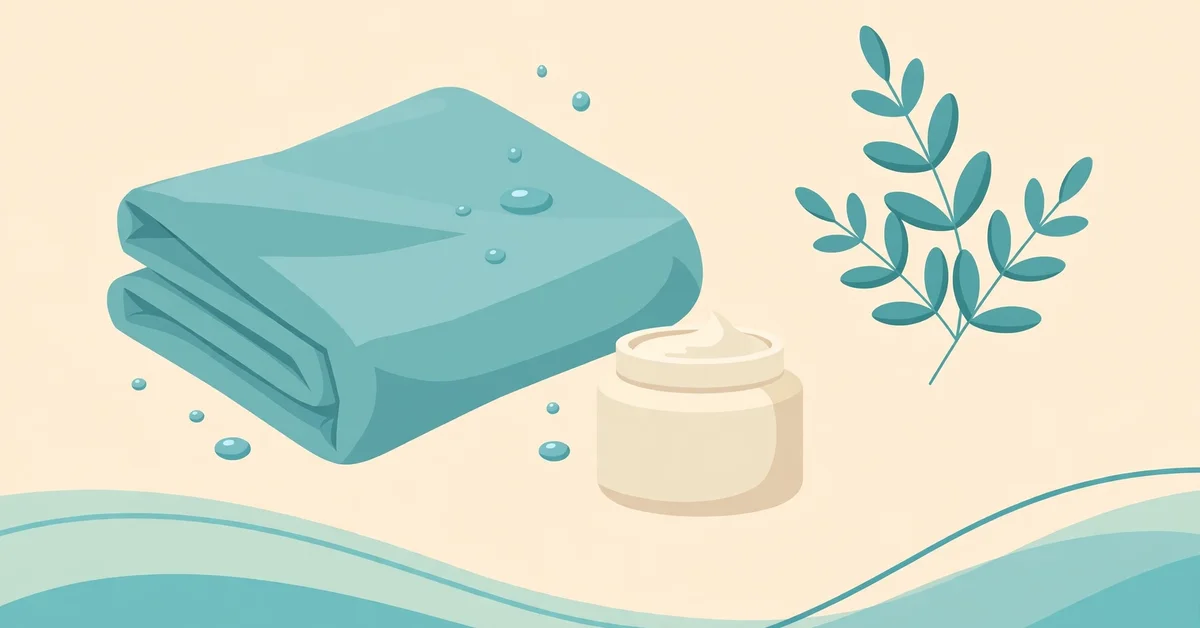
- Apply a cool compress. Soak a clean cloth in cool (not icy) water, wring it out and hold it against the external vulva for about 10 minutes. Cool temperature dulls the nerve signals that carry itch and eases swelling without chemicals or pH changes. Repeat through the day as needed.
- Rinse with plain water only, then pat dry. Wash the vulva — the external skin — gently with lukewarm water and your hand. No soap, no scrubbing, no washcloth friction. Pat dry with a soft towel rather than rubbing; moisture left in skin folds keeps irritation going.
- Add a plain barrier. A thin layer of plain petrolatum or a fragrance-free emollient on the external skin shields raw, irritated skin from urine, sweat and friction. External skin only — nothing goes inside the vagina.
- Switch to loose cotton underwear (or none overnight). Cotton lets moisture evaporate; tight synthetic fabrics trap heat and sweat against already irritated skin.
If the itch eases with these steps and there are no other symptoms — no unusual discharge, no odor change, no sores, no pain — simple irritation moves up the list of likely causes, and the watch-and-wait window in the decision ladder below applies.
What else can help in the first day or two
A lukewarm sitz bath with nothing added
Sitting in a few inches of plain lukewarm water for 10 to 15 minutes can soothe irritated external skin. Keep the water lukewarm — hot water strips natural oils and reliably makes itching worse — and skip bath oils, bubbles and scented salts, which are frequent triggers themselves. Pat dry afterwards and reapply the plain barrier if the skin feels raw.

An over-the-counter azole antifungal — only when the pattern fits yeast
If your symptoms match the yeast pattern in the triage table below — intense itching with thick, white, cottage-cheese-like discharge and no fishy odor — and especially if a clinician has diagnosed a yeast infection for you before with the same pattern, an over-the-counter vaginal azole antifungal (the class that includes miconazole and clotrimazole creams and suppositories) is the label-consistent next step. These products are for uncomplicated yeast infections; follow the package course in full even if the itch fades early, and expect improvement over days, not minutes — the cool compress is what helps tonight. The CDC’s STI Treatment Guidelines support over-the-counter azole treatment for uncomplicated vulvovaginal candidiasis, but recommend a clinical diagnosis when symptoms persist or recur, because other causes look similar. Our guide to yeast infection tests explains what testing can and cannot confirm at home.
Treating dryness-related itching
If the itching comes with dryness — common after menopause, while breastfeeding, or on hormonal contraception — the plain emollient above is the main immediate help, and a water-based, fragrance-free vaginal moisturiser used as directed can help over days. Persistent dryness with itching deserves a clinician visit, because low-estrogen tissue changes and vulvar skin conditions can look alike and are managed differently.
What not to do
- Do not douche. Douching washes out the protective bacteria that keep the vagina’s balance, and the American College of Obstetricians and Gynecologists (ACOG) advises against it; it is also linked with a higher risk of bacterial vaginosis.
- Do not scratch. Scratching tears delicate vulvar skin, releases more itch signals and opens the door to a secondary skin infection. Press the cool compress against the area instead when the urge peaks.
- Do not use scented products — no feminine washes, sprays, wipes, bubble bath or scented pads while you itch. Fragrance is a leading contact-irritation trigger.
- Do not insert food, oils or home-made preparations — yogurt, garlic, vinegar rinses, tea tree oil and similar insertions have no reliable evidence for treating vaginal itching and can burn or irritate inflamed tissue. (If you want the measured version of the home-remedy discussion, our companion guide to itching vagina home remedies covers what is reasonable and what is not.)
- Do not use leftover antibiotics. Antibiotics do not treat yeast or irritation, they can trigger a yeast infection by disturbing vaginal bacteria, and BV or trichomoniasis need specific prescription treatment chosen after testing — not a spare antibiotic from a drawer.
- Do not reach for steroid or combination creams blindly. Hydrocortisone and stronger steroids are sometimes used, externally and briefly, for diagnosed vulvar dermatitis — but a steroid on an undiagnosed fungal infection can mask it and let it spread, and combination antifungal-steroid creams are a common cause of treatment failure. If a clinician has not told you to use one on the vulva, skip it until you have a diagnosis.
- Do not keep layering new products. Every new cream is a new possible trigger. While it itches, the rule is: water, cool compress, plain barrier, cotton — and nothing else new.
Cause triage: match your pattern before you treat
This is the step most remedy lists skip, and it is the step that decides whether home treatment is reasonable at all. Find the row that matches your symptoms most closely. Discharge details, odor and where exactly the itch sits are the most useful clues; MedlinePlus gives a similar symptom-based overview of vaginal itching and discharge.
| Cause | Distinguishing features | Home-treat or get tested? |
|---|---|---|
| Yeast infection (vulvovaginal candidiasis) | Intense itching and burning, mostly at the vulva and vaginal opening; thick, white, lumpy (“cottage cheese”) discharge; little or no odor; redness and soreness. Often follows antibiotics, or occurs with diabetes or pregnancy. | OTC azole is reasonable if the pattern is classic AND you have had a clinician-diagnosed yeast infection before. First-ever episode, pregnancy, or no improvement after the full course → get tested. |
| Bacterial vaginosis (BV) | Thin, gray-white discharge with a fishy odor (often stronger after sex); itching is usually mild; burning when urinating is possible. | Get tested. BV does not respond to antifungals and needs prescription treatment; the CDC’s guidelines describe BV as a diagnosis confirmed by laboratory testing , not by symptoms alone. See our bacterial vaginosis guide for the full picture. |
| Contact dermatitis / irritation | Itching and redness on the external skin where a product touched; starts within hours to a day or two of a new soap, wipe, pad, detergent, lubricant or spermicide; discharge is normal; no odor change. | Home care is reasonable: remove the trigger, use the fast-relief protocol, and expect steady improvement over a few days. No improvement within a week, or blistering/cracking → clinician. |
| Trichomoniasis | Itching and burning with frothy, yellow-green discharge and an unpleasant odor; discomfort when urinating or during sex; a sexually transmitted infection, and partners carry it too, often without symptoms. | Get tested — always. Trichomoniasis needs a laboratory test and prescription treatment for you and your partner(s); the CDC’s guidelines are explicit that it cannot be diagnosed from symptoms alone . More in our article on trichomoniasis and HIV risk. |
| Vulvar skin conditions (lichen sclerosus, lichen planus, eczema, psoriasis) | Itching centred on the external skin, often worse at night; visible skin change — white or pale patches, thinning or thickened skin, scaling, small cracks or splits; symptoms keep returning and antifungals do nothing. | Clinician, and ask for a skin examination, not just a swab. These conditions are commonly mistaken for recurrent yeast; diagnosis may need a close exam or a small skin biopsy, and treatment is prescription-based. |
| Other STIs and other causes (chlamydia, gonorrhea, herpes, genital warts, pubic lice, a forgotten tampon, a urinary infection) | Sores, blisters or warts; pelvic pain; pain or burning when urinating; a sudden foul odor (a retained tampon is a classic cause); visible lice or nits in pubic hair. | Get tested promptly. Sores or pelvic pain move this out of home care entirely — see the red flags below. |
Why guessing wrong wastes a week
Itching feels like one problem, so it is tempting to treat the most famous cause — yeast — and move on. The problem is that self-diagnosis is unreliable: studies of women who bought over-the-counter antifungals for what they believed was a yeast infection have repeatedly found that only a proportion actually had one, with BV, mixed infections, irritation and nothing abnormal accounting for much of the rest. An azole antifungal cannot fix BV or trichomoniasis, and days spent on the wrong treatment are days the real cause goes untreated — and, with an STI, transmissible. Read a failed antifungal course as information: the pattern was probably not simple yeast, and the next step is a test, not a stronger cream. The Office on Women’s Health makes the same point: if symptoms do not clear with treatment, or keep coming back, see a clinician for an actual diagnosis.
The decision ladder: how long home care gets
- Tonight: run the 10-minute protocol. If there is an obvious new-product trigger and no other symptoms, removing the trigger plus barrier care is a reasonable first move.
- 48–72 hours: irritation from a removed trigger should be clearly improving. A classic yeast pattern on an OTC azole should be starting to ease by the end of the course. No improvement at all by 72 hours means the working diagnosis is probably wrong.
- One week: any itching still present after a week of sensible home care needs an examination and, where infection is possible, a swab or laboratory test — regardless of how mild it feels.
- Recurrent: itching that returns within a couple of months of treatment, or episodes that keep repeating across the year, need testing and a skin examination. Recurrence is the pattern of misdiagnosed BV, resistant or non-albicans yeast, and vulvar skin conditions — none of which another home remedy will sort out.
Red flags: skip home care and get seen promptly
- Sores, blisters, ulcers or new lumps or warts on the vulva
- Fever, chills, or pelvic / lower abdominal pain
- Green, yellow or frothy discharge, or a strong foul odor
- Vaginal bleeding that is not your period, or any bleeding after menopause
- White, pale or thinning skin patches, skin splitting, or itching that is destroying sleep
- Pain or difficulty urinating, or pain during sex
- You are pregnant, this is the first episode ever, symptoms are in a child, or you have a weakened immune system or diabetes that is not well controlled
- A new sexual partner or any chance of an STI since symptoms began
MedlinePlus advises medical care on a similar set of triggers — unusual discharge, sores or pain in the area, or itching that does not settle with sensible home care.
Making a clinic visit count
If you do book in, a little preparation makes the visit far more useful. Note when the itching started, any new products, soaps or detergents in the previous week, recent antibiotics or other medicines, changes in discharge or odor, where your cycle is, and any new partner. Avoid applying antifungal or steroid creams in the day or two before the appointment if you can manage with the cool compress and barrier instead, and do not douche before the visit — products and washing can change what a swab or examination shows. Expect that the clinician may test rather than guess: a swab or laboratory test is how BV, trichomoniasis and STIs are actually confirmed, and a close look at the vulvar skin is how the skin conditions in the triage table get caught.

The bottom line
To stop itching down there as fast as safely possible: cool compress, plain water only, a plain emollient barrier, loose cotton, and stop whatever product touched the area last. That calms almost any cause tonight — but it cures none of them. Match your pattern in the triage table before reaching for a treatment: an over-the-counter azole antifungal fits classic yeast and nothing else, BV and trichomoniasis need testing and prescription treatment, and itching that ignores a week of sensible care, keeps coming back, or arrives with any red flag needs a clinician’s examination rather than another remedy. Fast relief and the right diagnosis are not in conflict — do them in that order.
This article is educational information from the HealthEH Team and is not medical advice. It does not replace examination or testing by a qualified clinician, who can diagnose the cause of your symptoms and prescribe treatment where needed.
Frequently Asked Questions
Change out of damp clothing, hold a clean cloth soaked in cool water against the external vulva for about 10 minutes, rinse with plain lukewarm water only, pat dry, and apply a thin layer of plain petrolatum or fragrance-free emollient to the external skin. That combination calms almost any cause tonight — but it treats the itch, not the cause.
Yeast usually causes intense itching with thick, white, lumpy discharge and little or no odor. BV usually causes a thin, gray-white discharge with a fishy odor, and the itching is milder. The distinction matters because an antifungal treats yeast but does nothing for BV, which needs testing and prescription treatment.
It is most reasonable when the pattern is classic for yeast — intense itching, thick white discharge, no fishy odor — and a clinician has diagnosed a yeast infection for you before with the same symptoms. If it is your first episode, you are pregnant, or the full course does not help, get tested instead of buying another cream.
Douching washes out the protective bacteria that keep the vagina’s balance, can push irritation further, and is linked with a higher risk of bacterial vaginosis. ACOG advises against douching; the vulva only needs gentle washing with plain water.
Irritation from a removed trigger should be clearly improving within 48 to 72 hours, and any itching still present after one week of sensible home care needs an examination and, where infection is possible, a test. Go sooner for sores, fever, pelvic pain, unusual discharge, bleeding, or white skin patches.
If you can manage with a cool compress and a plain barrier, avoid antifungal or steroid creams in the day or two before the appointment, and do not douche — products and washing can change what a swab or examination shows. Note new products, recent antibiotics, discharge changes and any new partner to tell the clinician.
Read Next




Related Posts

Tadalafil (Oral Tablet): Side Effects, Dosage, and Review
Sep 22, 2026 • 26 min read
12 Must-Try Threesome Positions for First-Timers and Beyond
Sep 29, 2026 • 22 min read
Cómo lograr un orgasmo anal: 35 consejos para ti y tu pareja
Aug 21, 2026 • 12 min read
Everything You Should Know Before Getting a Fourchette Piercing
Sep 21, 2026 • 32 min read
What Causes Bleeding After Being Fingered?
Aug 14, 2026 • 3 min read