7 Proven Health Benefits of Blueberries

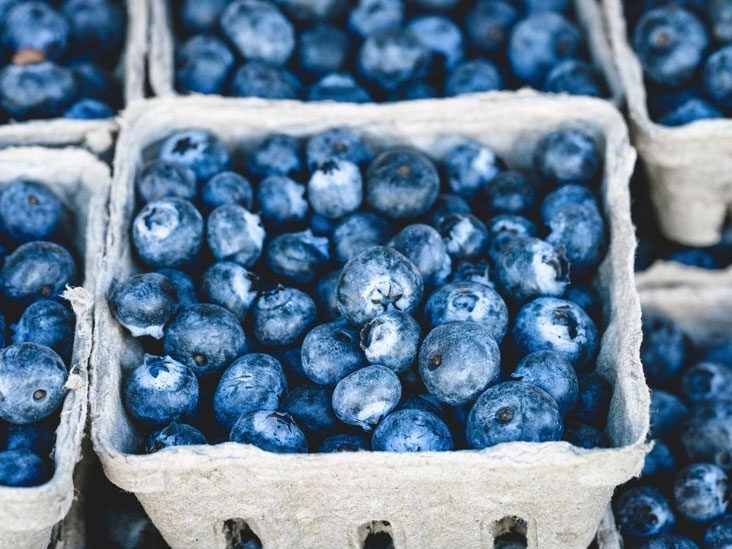
- 1. Low in calories yet rich in nutrients
- 2. Among the top antioxidant-rich foods
- 3. May reduce DNA damage, potentially protecting against aging and cancer
- 4. May help lower blood pressure
- 5. Can support brain health and improve memory
- 6. Anthocyanins may offer anti-diabetic benefits
- 7. May reduce muscle damage after intense exercise
- The bottom line
Blueberries are frequently dubbed a “superfood.” These tiny but powerful berries are packed with nutrients and may help lower blood pressure, support memory, aid exercise recovery, and more.
Sweet, nutritious, and highly favored, blueberries are a popular choice for many.
Often promoted as a “superfood,” they’re low in calories and exceptionally beneficial for health.
They’re so flavorful and handy that lots of people consider them their go-to fruit.
Below are eight researched health benefits of blueberries.
1. Low in calories yet rich in nutrients
The blueberry plant (Vaccinium sect. Cyanococcus) is a flowering shrub that yields berries with a blue to purple tint — commonly known as blueberries.
It’s closely related to other shrubs that produce fruits like cranberries and huckleberries.
Blueberries are small — about 0.2–0.6 inches (5–16 millimeters) across — and have a characteristic flared crown at one end.
They start out green and gradually turn purple and then blue as they mature.
The two main varieties found are:
- Highbush blueberries: The most widely cultivated type in the United States.
- Lowbush or “wild” blueberries: Usually smaller and often higher in certain antioxidants.
Blueberries rank among the most nutrient-dense berries. A single serving supplies:
- Fiber: 13% of the Daily Value (DV)
- Vitamin C: 14% of the DV
- Vitamin K: 24% of the DV
They’re also roughly 85% water, and one cup contains only 84 calories and about 21.5 grams of carbohydrates.
This combination makes them a valuable source of several key nutrients.
:max_bytes(150000):strip_icc()/raw-organic-blueberries-in-a-bowl--top-view--flat-lay--overhead--from-above--1947472183-bb654ebf5a74456d860080219f4fc9f4.jpg)
2. Among the top antioxidant-rich foods
Antioxidants shield your body from free radicals — unstable molecules that can harm cells and contribute to aging and illnesses like cancer.
Blueberries have one of the highest antioxidant contents among common fruits and vegetables. The primary antioxidant compounds in blueberries are polyphenols, especially flavonoids.
A subgroup of flavonoids known as anthocyanins is believed to drive many of the health-promoting effects of these berries.
3. May reduce DNA damage, potentially protecting against aging and cancer
Oxidative DNA damage happens inevitably in daily life. It is reported to occur in every cell of your body each day.
DNA damage contributes to aging and plays a significant role in the development of conditions like cancer.
Because blueberries are rich in antioxidants, they might help neutralize free radicals that harm DNA. Still, more research is necessary to establish this relationship definitively.
4. May help lower blood pressure
Blueberries seem to offer notable advantages for people with high blood pressure, a key risk factor for cardiovascular disease.
A study found that consuming blueberries daily for a month could meaningfully enhance blood flow and widen blood vessels.
5. Can support brain health and improve memory
Oxidative stress can speed up brain aging and negatively impact cognitive function.
A 2023 study reported that taking blueberry powder (equivalent to about 1 cup of fresh blueberries) daily helped preserve brain function and boosted memory in older adults.
However, findings are mixed, and additional studies are needed to clarify the precise effects.
6. Anthocyanins may offer anti-diabetic benefits
Blueberries contain a moderate amount of sugar compared with many other fruits.
holds about 14 grams of sugar, similar to the amount in an orange. The bioactive compounds in blueberries might help regulate blood sugar.
Research indicates that anthocyanins in blueberries improve insulin sensitivity and glucose metabolism. These anti-diabetic benefits have been seen with both fresh and freeze-dried forms.
Better insulin sensitivity may lower the risk of metabolic syndrome and type 2 diabetes, conditions linked to various adverse health outcomes.
7. May reduce muscle damage after intense exercise
Vigorous exercise often leads to muscle soreness and fatigue, driven in part by local inflammation and oxidative stress in muscle tissue.
Blueberry supplements might reduce molecular-level damage, lessening soreness and declines in muscle performance.
In a small 2018 study , blueberries improved exercise performance and lowered certain inflammatory markers, which could support recovery.
That said, study results are inconsistent, and more research is required to confirm the specific effects.
The bottom line
Blueberries make a healthy, nutrient-rich snack.
They offer a range of potential advantages, including benefits for heart health, cognitive function, and other aspects of wellbeing.
Plus, they’re sweet, vibrant, and easy to enjoy fresh or frozen.
Frequently Asked Questions
Eating about one cup (roughly 150 grams) of blueberries most days is commonly used in studies and can provide meaningful amounts of antioxidants, fiber, vitamins, and other beneficial compounds.
Some research suggests regular blueberry consumption may improve blood vessel function and modestly lower blood pressure, especially in people with elevated readings. Results can vary between individuals.
Evidence indicates blueberries — particularly their anthocyanins — may support cognitive function and memory over time, though findings are mixed and more long-term research is needed.
Yes. Frozen blueberries retain most nutrients and antioxidants and are a convenient, affordable way to enjoy their health benefits year-round.
Blueberries are relatively low in sugar compared with many fruits and contain compounds that may improve insulin sensitivity. People with diabetes should still account for portion size and monitor blood glucose responses.
Read Next
What Is Annatto? Uses, Benefits, and Side Effects

Low Sodium Frozen Meals: The Best Brands and 21 Dietitian-Approved Options
9 Powerful Health Benefits of Cumin

Reviews of the Top Diabetes Cookbooks

10 Potential Health Benefits of Bee Pollen

Carbohydrates in Brown, White, and Wild Rice: Whole vs. Refined Carbs
Related Posts

Apretude Injection Price: What You Need to Know
Aug 23, 2026 • 36 min read
Is Coconut Kefir the New Superfood?
Oct 2, 2026 • 28 min read
Low-Carb Alcohol: The Top 10 Drinks
Oct 5, 2026 • 34 min read
All About the Chinese Body Clock
Sep 1, 2026 • 14 min read
Everything You Should Know About Health Benefits of Ginger Oil
Aug 29, 2026 • 32 min read