Are My Teeth Too Big?


Overview
Are you comfortable with your smile? Teeth vary widely in shape and size, and there’s limited scope to alter their basic form.
Some individuals feel their teeth look overly large when they grin. Yet it’s uncommon for someone’s teeth to truly exceed normal proportions. Occasionally, a smaller jaw can make otherwise normal teeth seem disproportionately big.
When a person’s teeth measure more than two standard deviations above the mean for their age and sex, the condition is termed macrodontia. Permanent tooth macrodontia is estimated to affect 0.03 to 1.9 percent of the global population.
Often those with macrodontia have one or two teeth that are unusually large. In some cases two teeth fuse together to form an oversized tooth. In other situations, individual teeth abnormally enlarge.
People with macrodontia may also present with enlarged pituitary glands and asymmetrical enlargement of facial features on one side. Genetic influences, environmental exposures, ethnicity, and hormonal disturbances can contribute to macrodontia. Men and people of Asian descent appear more prone to this condition than others.

Causes
Experts say there’s no single definitive cause of macrodontia. Rather, multiple factors seem to raise the likelihood of developing it. These include:
Genetics and related hereditary conditions
Genetics likely play a major role in macrodontia. Researchers suggest that mutations affecting tooth development can lead to teeth fusing or to prolonged growth periods that result in teeth becoming larger than normal.
Other hereditary conditions commonly associated with macrodontia include:
- insulin-resistantdiabetes
- otodental syndrome
- hemifacial hyperplasia
- KBG syndrome
- Ekman-Westborg-Julin syndrome
- Rabson-Mendenhall syndrome
- XYY syndrome
Childhood factors
Early life experiences may influence the emergence of macrodontia. Diet, exposure to toxins or ionizing radiation, and other environmental aspects during childhood can affect the risk of developing unusually large teeth.
Ethnicity
Studies have found higher rates of macrodontia among Asians, Native Americans, and Alaskan populations compared with some other ethnic groups.
Sex
Research indicates that males are more frequently affected by macrodontia than females.
Hormonal imbalances
Several genetic syndromes linked to macrodontia are also tied to hormonal irregularities. Endocrine issues, particularly those involving the pituitary gland, may disrupt normal tooth growth and size regulation.
Treatment
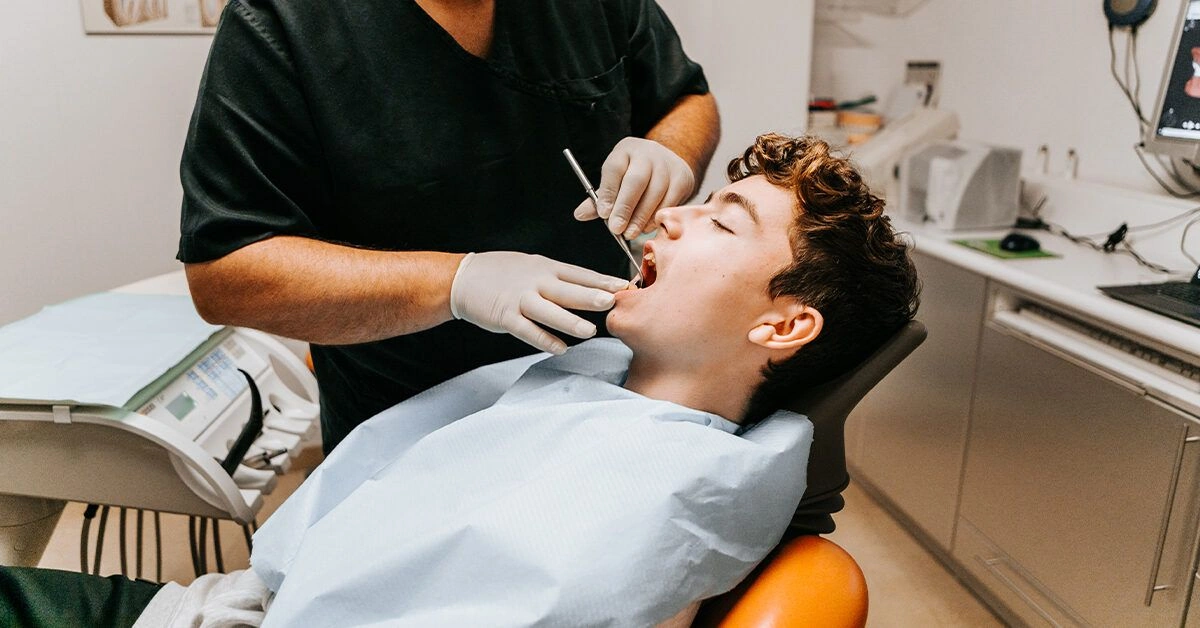
A dentist can detect macrodontia through a clinical dental exam and dental X-rays. Once diagnosed, your dentist will suggest appropriate treatment choices.
If no clear cause for enlarged teeth is found, your dentist might refer you to a cosmetic dentist. A cosmetic dental specialist can outline aesthetic treatments to enhance the appearance of your teeth.
Orthodontics
Orthodontic care can realign teeth and expand the jaw when needed. Devices like palate expanders can widen the jaw so teeth have a better fit.
Braces and retainers can correct crooked teeth. A broader jaw and aligned teeth create more space for each tooth, easing crowding and making teeth look smaller.
If these measures seem appropriate, your dentist may send you to an orthodontist, who specializes in these corrective appliances.
Tooth recontouring
An alternative cosmetic approach is tooth recontouring, often called teeth shaving. In this procedure a cosmetic dentist uses a fine sanding instrument to remove a small amount of the tooth surface to smooth and reshape the teeth.
Trimming a little of the outer tooth structure reduces overall size slightly, making teeth appear less prominent. This method is particularly useful for shortening canine teeth at the sides of the mouth.
While generally safe, tooth recontouring is not suitable for people with weakened teeth. X-rays should be taken beforehand to confirm your teeth are healthy enough for the process.
Sanding down compromised teeth could expose inner structures, causing pain and irreversible harm. If your teeth are healthy, the procedure is usually painless.
Tooth extraction
Removing certain teeth can create space for the remaining teeth, decreasing crowding and making teeth appear smaller. In some cases, the oversized teeth affected by macrodontia may be the ones removed.
Your dentist may refer you to an oral surgeon for extractions. Afterwards, you can replace the missing teeth with prosthetics or dentures to restore the appearance of your smile.
Takeaway
For many, the feeling that their teeth are too large is simply a perception. Although uncommon, macrodontia is a genuine condition that can impact self-image.
If macrodontia is affecting your confidence, there are treatments available to improve how your teeth look. Consult a dentist to explore your options and determine which treatment path is right for you.
Frequently Asked Questions
Medically, teeth are considered unusually large when they measure more than two standard deviations above the average for a person’s age and sex; this is called macrodontia.
Causes include genetic mutations, certain syndromes, hormonal imbalances, childhood environmental factors, and ethnic or sex-related tendencies that affect tooth development.
A dentist diagnoses enlarged teeth via a clinical exam and dental X-rays; measurements compared to population norms or signs of fused teeth help confirm macrodontia.
Treatment may include orthodontics to expand the jaw and realign teeth, tooth recontouring (shaving), extractions with prosthetic replacement, or cosmetic procedures depending on cause and severity.
If your teeth cause pain, bite problems, difficulty cleaning, or affect your self-confidence, schedule a dental evaluation to discuss causes and personalized treatment options.
Read Next

What You Need to Know About Snap-In Dentures
Hyperdontia: Do I Need to Have My Extra Teeth Removed?

What Exactly Is a Tooth Piercing?
The 9 Best Mouthwashes For Whitening, Cavities, Gums, Breath, and More
Debunking the Myth of Tooth Worms and Other Cavity Causes

Everything You Need to Know About Mini Dental Implants
Related Posts

Everything You Need to Know About Fever Blister Remedies, Causes, and More
Sep 6, 2026 • 4 min read
How Does Drinking Soda Affect Your Dental Health?
Aug 26, 2026 • 18 min read
What Are the Effects of Thumb Sucking on the Teeth and Mouth?
Aug 11, 2026 • 33 min read
How to Remove Nicotine Stains from Your Teeth
Aug 14, 2026 • 36 min read
Veneers vs. Lumineers: What’s the Difference?
Sep 11, 2026 • 29 min read