
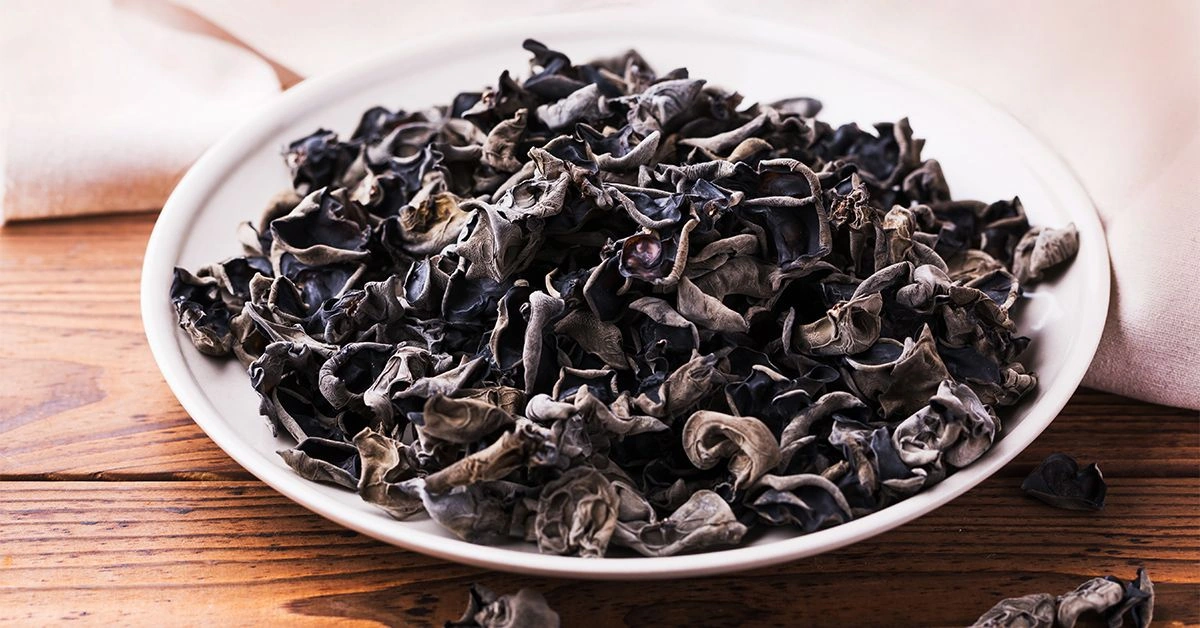
Black fungus (Auricularia polytricha) is an edible wild mushroom often called tree ear or cloud ear fungus, named for its dark, ear-like appearance.

Although it is most commonly found in China, it also grows well in tropical regions such as the Pacific Islands, Nigeria, Hawaii, and India. In the wild it grows on trunks and fallen logs, but it can also be cultivated (1).
Recognized for its jelly-like texture and distinctive chewiness, black fungus is a favored ingredient in a variety of Asian recipes. It has also been part of traditional Chinese medicine for centuries (2).
This piece examines how black fungus is used, its nutritional make-up, potential advantages, and safety considerations.
How is black fungus used?
Black fungus is most often available dried. Before consuming, rehydrate it in warm water for at least an hour.
While soaking, the mushrooms swell to roughly 3–4 times their original size. Remember this when cooking, as a small amount can yield a substantial volume.
Although black fungus goes by several common names, it is botanically distinct from the wood ear mushroom (Auricularia auricula-judae), a close relative. Still, their nutrient profiles and culinary uses are similar, and the names are sometimes used interchangeably (1).
Black fungus is commonly featured in Malaysian, Chinese, and Maori dishes.
It tends to be slightly coarser than the wood ear and is frequently incorporated into soups. Because its flavor is fairly neutral, it is even used in some Cantonese sweets. Like tofu, it readily soaks up the flavors of the dish it accompanies.
Since the 1800s, black fungus has been used in traditional Chinese medicine to help relieve symptoms of various ailments, including jaundice and sore throats (2).
Summary: Black fungus has a mild taste and takes on surrounding flavors. It is widely used in Asian cooking, particularly in soups, and has a long history in traditional Chinese medicine.
Nutritional profile
One-quarter cup (7 grams) of dried black fungus supplies (3):
- Calories: 20
- Carbs: 5 grams
- Protein: less than 1 gram
- Fat: 0 grams
- Fiber: 5 grams
- Sodium: 2 mg
- Cholesterol: 0 grams
As shown, this mushroom is very low in calories and fat but particularly rich in fiber (3).
The same portion contains modest amounts of potassium, calcium, phosphorus, folate, and magnesium. These micronutrients play important roles in heart, brain, and bone health (3, 4, 5, 6).
Summary: Black fungus is low in fat, high in fiber, and supplies several essential vitamins and minerals.
Potential benefits of black fungus
Although black fungus has many uses in traditional Chinese medicine, scientific investigation is still at an early stage.
Nevertheless, this mushroom has been recognized for possible immune-boosting and antimicrobial effects (7, 8).
Keep in mind that human studies are limited and additional research is required.
Packs powerful antioxidants
Mushrooms, including species of Auricularia, are typically rich in antioxidants.
These plant-derived compounds help reduce oxidative stress in the body, which is associated with inflammation and various diseases (9, 10).
Moreover, mushrooms often contain potent polyphenol antioxidants. Diets high in polyphenols are linked with a lower risk of cancer and chronic illnesses, including cardiovascular disease (9, 10, 11, 12, 13, 14).
May promote gut and immune health
Like many other mushrooms, black fungus contains prebiotic compounds — notably beta glucan (15, 16, 17).
Prebiotics are types of fiber that nourish the gut microbiome — the beneficial bacteria in your digestive tract. They support digestive health and regular bowel movements (15, 16, 17).
Interestingly, the gut microbiome is tightly connected to immune function. Prebiotics like those in black fungus may help strengthen the immune response against harmful pathogens (16).
May lower your cholesterol
Polyphenols in mushrooms might contribute to reducing LDL (bad) cholesterol (18).
Lowering LDL cholesterol could, in turn, reduce cardiovascular risk.
One animal study in rabbits fed wood ear mushrooms reported notable decreases in total and LDL cholesterol (19).
However, the mechanism was unclear, and findings from a single animal study on wood ear mushrooms don’t automatically translate to humans consuming black fungus.
May promote brain health
Mushrooms are believed to help maintain healthy brain function (17, 20).
An in vitro study showed that wood ear mushrooms and other fungi inhibited beta secretase, an enzyme involved in producing beta amyloid proteins (21).
Beta amyloid proteins can be toxic to neural tissue and have been associated with degenerative conditions like Alzheimer’s disease (21).
While these results are encouraging, studies in humans are necessary.
May protect your liver
Black fungus might help protect the liver from damage caused by certain agents.
In a rat experiment, a water solution containing powdered black fungus helped reverse and prevent liver injury after an overdose of acetaminophen (commonly sold as Tylenol in the U.S.) (22).
Investigators attributed this protective effect to the mushroom’s strong antioxidant activity (22).
Nevertheless, more research is required.
Summary: Black fungus contains potent antioxidants and prebiotic fibers that support gut health. It may help lower cholesterol and offer liver and brain protection, but further research is needed.
Precautions for use
Commercially sold black fungus is associated with few — if any — adverse effects.
Because most black fungus is sold dried, always rehydrate it before use due to its compact and brittle nature.
Additionally, it should be cooked thoroughly to eliminate bacteria and any residues. Some research indicates that boiling may even boost its antioxidant capacity (23, 24).
Foraging for black fungus is generally not advised because of the risk of misidentification or contamination. Wild mushrooms can absorb environmental pollutants, and consuming the wrong species can be toxic or fatal.
Instead, obtain this distinctive mushroom from specialty retailers or online.
Summary: Although side effects are rare, always soak dried black fungus and cook it well to remove bacteria. Buying the product rather than foraging is the safer choice.
The bottom line
Black fungus is an edible mushroom commonly used in Chinese cuisine.
Sold primarily in dried form under names like cloud ear or tree ear fungus, it should be soaked and thoroughly cooked before eating.
Emerging research suggests black fungus may provide benefits such as liver protection, cholesterol reduction, and improved gut health. It is also rich in fiber and antioxidants.
While it has a long history in traditional Chinese medicine, more clinical studies are needed to confirm its effects.






















Leave a Reply
You must be logged in to post a comment.