
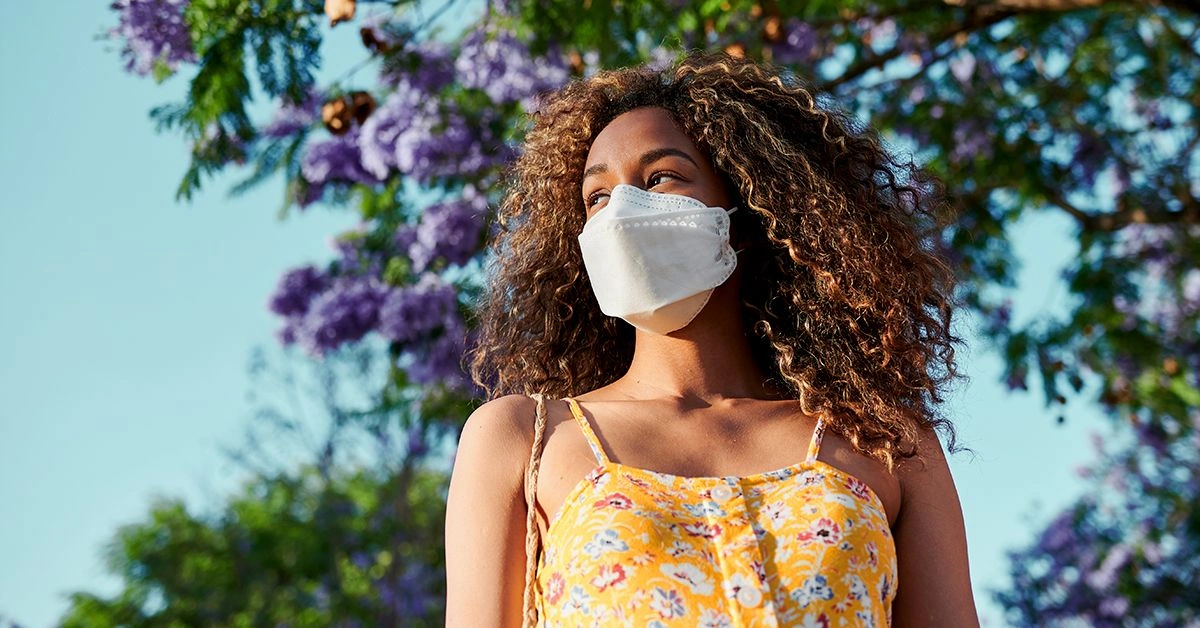
While not helpful for every allergen or symptom, face coverings can filter out many of the irritants you encounter.
Since the COVID-19 pandemic, face masks have become commonplace in Western countries, and many people still choose to wear them when they’re sick and must be around others.
Recent studies indicate that masks do more than just lower COVID-19 transmission—they can also decrease allergy exposure by trapping allergen particles.
If you react to pollen, mold, dust, pets, or similar substances, wearing a mask could be advantageous.

Do face coverings prevent or lessen allergy symptoms?
Research indicates that masks can help diminish some allergy symptoms. Pollen grains measure roughly 10 to 100 microns (µm). Standard surgical masks filter particles down to about 3 µm.
N95 respirators and other medical-grade masks can trap particles as small as 0.004 µm. That means the common masks widely used during the height of the pandemic are capable of blocking pollen.
Masks are effective against many other frequent allergens as well. For example, mold spores typically range from 3 to 13 µm, mold fragments from 10 to 30 µm, and dust mite debris from 100 to 300 µm.
Some allergens include very small particles, such as pet dander, which spans from 0.5 to 100 µm, but masks still intercept most of these particles.
However, masks don’t address every allergy issue. For example, there’s no proof they help with ocular allergy symptoms.
Optum Now is operated by RVO Health. By clicking on this link, we may receive a commission. Learn more.
Which mask is best for allergies?
Any mask can offer some allergy relief. Even cloth coverings can block certain particles and ease symptoms. Still, N95 respirators are often the top choice for many individuals.
Although N95s provide superior filtration, disposable surgical masks have been shown to filter allergens effectively. They’re easy to find and can be thrown away after use, ensuring you wear a fresh mask without accumulated allergens.
Other advantages of wearing masks
Masks protect against infections like COVID-19 and can reduce exposure to allergens. Additional benefits include:
- Filtering pollution: Masks can screen out smoke, smog, and other airborne pollutants. Long-term exposure to polluted air has been linked to various adverse health outcomes. Breathing fewer pollutants can help lower those risks.
- Protecting immunocompromised individuals: People with weakened immune systems gain from mask use because it reduces contact with bacteria, viruses, and other potentially harmful agents. For them, wearing a mask year-round can be a sensible precaution, even when there isn’t an outbreak locally.
- Preventing transmission to others: You might carry bacteria or other agents without showing symptoms, but vulnerable people—children, those with impaired immunity, or people already ill—could become sick if exposed. Masks help reduce the spread of infections transmitted via airborne particles and respiratory droplets.
Other nontraditional allergy approaches
Masks aren’t the only unconventional ways to manage allergies. See these resources for more ideas on treating allergy symptoms.
- 15 Home Remedies for Allergies
- These 7 Foods Might Help Alleviate Seasonal Allergies
- Vitamin C for Allergies: Effectiveness, Uses, and Precautions
- What Can You Do to Manage and Get Rid of Allergies?
- Skin Allergy Home Remedies
Takeaway
Face coverings can block the particles and triggers that provoke irritation and allergy symptoms.
Masks provide sufficient filtration to intercept common allergens such as pollen, dust mites, and mold, though they aren’t effective for every type of seasonal or other allergy.
Any mask can help lessen allergy symptoms, but N95 respirators are generally the preferred option, followed by surgical masks. Consult your healthcare provider to determine whether routinely wearing a face mask might help control your symptoms.


















Leave a Reply
You must be logged in to post a comment.