
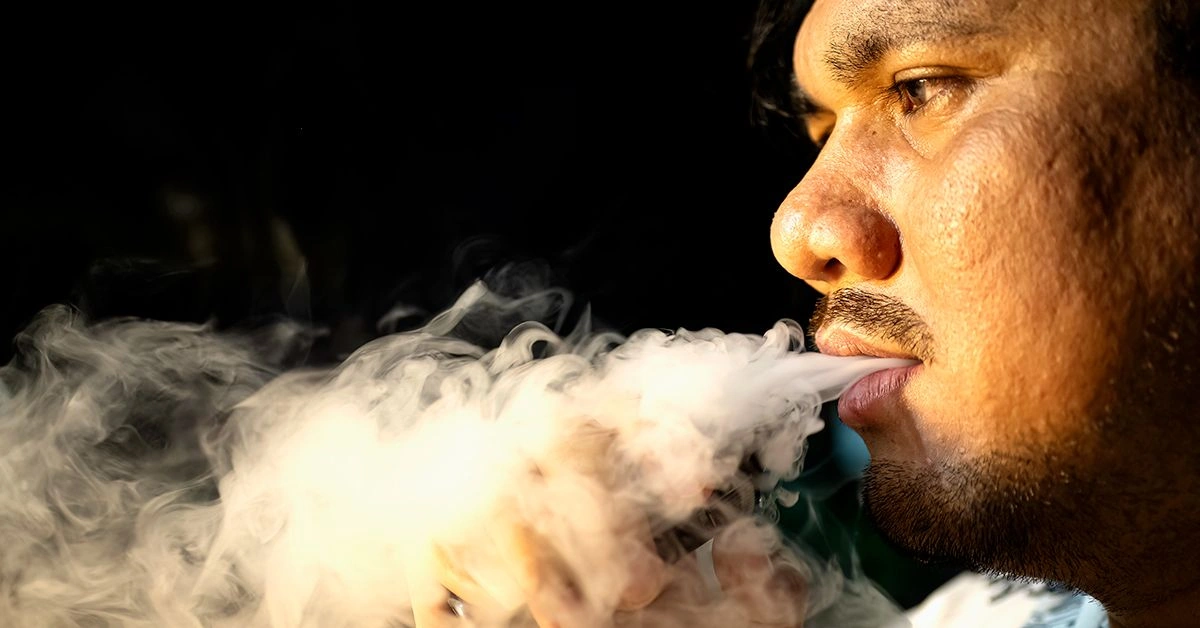
The duration nicotine remains in your body varies with how long and how often you’re exposed, and whether you smoked it, chewed it, or inhaled it secondhand.
Whenever you smoke cigarettes, use a vape, chew tobacco, or breathe in secondhand smoke, nicotine enters your bloodstream.

Once in circulation, liver enzymes metabolize most nicotine into cotinine. The more nicotine you take in, the greater the cotinine concentration in your urine. These compounds are ultimately removed by the kidneys and expelled in urine.
Cotinine serves as a useful indicator of nicotine exposure because it’s highly sensitive and has a longer half-life than other nicotine metabolites.
Testing for cotinine can usually distinguish active smoking or vaping from passive exposure. How long it stays detectable depends on the method of intake and frequency of use.
Read on to find out how long nicotine can be found in urine, blood, saliva, and hair.
How long do nicotine traces remain in urine?
Cotinine is commonly used to indicate nicotine exposure. Because cotinine levels are higher in urine than in blood or saliva, urine tests are often preferred.
A 2019 study reported that urine cotinine testing could confirm smoking for at least 3 days after use. A 2020 study suggested cotinine might remain detectable in urine for up to 8 weeks in some cases.
Individual metabolism differs, so genetic variations can influence how long cotinine is detectable.
Your cotinine readings also depend on how long it’s been since you last used nicotine.
Active smokers may have urine cotinine concentrations around 1,000 to 8,000 nanograms per milliliter (ng/mL). If a smoker abstains for 2 weeks before testing, urine cotinine can fall below 50 ng/mL.
Laboratories may use different cutoffs for a positive result, so discuss results with a clinician or lab specialist.
Heavy exposure to secondhand smoke can also produce detectable urine cotinine levels, often in the range of 0.5 to 10 ng/mL.
How long are nicotine traces present in blood and saliva?
Cotinine can be measured in blood and saliva to indicate nicotine exposure.
However, cotinine concentrations are typically lower in saliva and blood than in urine, so they may become undetectable sooner than urine levels.
The period cotinine can be detected in blood varies with genetics and the amount of nicotine exposure.
Blood assays can be less sensitive than urine tests, which may lead to false negatives or positives.
Nicotine blood tests can identify the presence of nicotine (qualitative) and measure how much is present (quantitative).
Some tests also check for another metabolite called anabasine.
How long does nicotine remain in hair follicles?
Nicotine residues can often be detected in hair follicles for weeks, months, or even years after the last exposure, according to a 2021 review.
Detection times depend on the type of hair test used and individual genetic factors.
Review authors note that hair results may not align with blood testing and can reflect passive or environmental exposure to tobacco smoke.
Although hair testing is feasible, it’s used less commonly than urine, saliva, or blood testing.
How can you rid your body of nicotine?
The most effective way to remove nicotine is to stop using tobacco and nicotine products altogether.
If you smoke, vape, or use other nicotine items, reducing use or quitting allows your body to focus on metabolizing and eliminating nicotine.
To help accelerate the process, you might try:
- Drink water: Increased fluid intake helps flush nicotine from the body via urine.
- Exercise: Physical activity raises metabolic rate, which may aid faster nicotine clearance.
- Eat antioxidant-rich foods: Antioxidants can support metabolic processes. Fruits and vegetables like oranges and carrots are good examples.
Do withdrawal symptoms occur as nicotine clears?
Nicotine is the main addictive ingredient in cigarettes, vapes, and other tobacco products.
Cutting back or stopping completely can trigger withdrawal symptoms, including strong cravings, irritability, and trouble sleeping.
Symptoms are often most intense within the first several hours after the last use and typically ease after the first 3 days.
The severity and duration of withdrawal depend on factors such as how long and how frequently you used nicotine and the daily dose.
Nicotine replacement treatments (NRTs), like patches, can reduce withdrawal discomfort.
According to Smokefree.gov, an initiative of the National Cancer Institute, using an NRT roughly doubles the likelihood of quitting successfully.
Be aware that using NRTs will keep some nicotine detectable in your system.
Frequently asked questions
Why might someone need a nicotine test?
Nicotine testing may be required by employers or insurance companies, or used as part of a smoking cessation program.
How can you flush nicotine out quickly?
Staying well hydrated and maintaining regular physical activity can boost metabolism and may help clear nicotine faster. Consuming antioxidant-rich foods may also be beneficial.
How long does a single puff of nicotine stay in your system?
There’s no simple answer. It depends on the nicotine product—whether it was a cigarette, cigar, spliff, or vape.
A drug is often considered eliminated after about 4 to 5 half-lives. If a cotinine half-life ranges from 16 to 40 hours, that suggests elimination could occur within roughly 8 to 9 days.
Can a doctor tell if you vape?
A clinician usually can’t tell you vape—or what you vape—without specific testing.
During a physical exam, a provider may assess lung function. Both vaping and smoking can affect respiratory health, and clinicians may ask about tobacco and nicotine use when evaluating decreased lung capacity or breathing issues.
Can blood tests reveal smoking?
Routine blood work won’t typically indicate cigarette or tobacco use. But if a clinician orders testing specifically for nicotine, the results can reveal use.
The bottom line
If you use tobacco, nicotine traces can be detected in hair, blood, urine, and saliva. Urine testing can identify cotinine for at least 3 days after exposure and hair testing can show exposure for weeks or longer.
The most reliable way to eliminate nicotine from your body is to stop using tobacco products completely.
For inspiration from famous people who successfully quit, see celebrities who quit smoking.


















Leave a Reply
You must be logged in to post a comment.