

Ever wondered why some people are born with striking blue eyes on one side, can taste bitterness like a superhero, or seem almost immune to a disease that scares everyone else? Those quirks are often the result of rare genetic traits—tiny variations in our DNA that show up in less than one percent of the population. Some of them feel like super‑powers, while others can bring health challenges. In the next few minutes, let’s explore what these traits really are, how they’re passed down, and why knowing about them can be a game‑changer for you and your family.
Understanding the Basics
What makes a trait “rare”?
In genetics, “rare” usually means a variant that appears in fewer than 1 % of people. Think of it as a hidden Easter egg in the massive code of human DNA—most of us never see it, but in a few individuals, it shows up as a noticeable feature or a subtle tendency.
How are rare traits inherited?
Genes can be handed down in several ways:
- Autosomal dominant: just one copy of the variant (from either parent) is enough for the trait to appear.
- Autosomal recessive: you need two copies—one from each parent—to see the effect. Carriers often have no symptoms.
- X‑linked or mitochondrial patterns are rarer still, but they do happen.
The key difference is whether a single “ticket” (dominant) or a pair of “tickets” (recessive) is required to get onto the “trait train.”
Mini‑Glossary
| Term | Simple definition |
|---|---|
| Allele | One version of a gene |
| Homozygous | Two identical alleles |
| Heterozygous | Two different alleles |
| Penetrance | How often the trait shows up when the gene is present |
Dominant vs Recessive
Dominant rare traits (examples & why they stand out)
Dominant traits can be easy to spot because you only need one copy. Here are a few that often pop up in conversation:
- ACHOO (photic sneezing) – dominant: Ever find yourself sneezing the moment sunlight hits your face? That’s a classic dominant trait.
- CCR5‑Δ32 – protective: People who inherit two copies of a 32‑base‑pair deletion in the CCR5 gene are practically immune to HIV‑1. According to a study, about 1 % of Northern Europeans are homozygous for this allele.
- Super‑taster: A heightened ability to detect bitterness comes from a dominant version of the TAS2R38 gene. Roughly 15 % of Americans have the “PAV” haplotype that makes coffee taste like a challenge.
Recessive rare traits (hidden carriers)
Recessive traits are the secret agents of genetics—most carriers never show any signs, but when two carriers meet, their children can inherit two copies and the trait emerges.
- Rh‑null syndrome: A complete lack of Rh antigens on red blood cells. It leads to a mild hemolytic anemia and severe transfusion complications. According to a NIH page, the condition is autosomal recessive.
- Myostatin‑related muscle hypertrophy: Reduced myostatin production makes muscles grow dramatically. The condition follows an “incomplete autosomal dominant” pattern—heterozygotes get a modest boost, homozygotes become body‑builders without training. A MedlinePlus article describes this well.
- LRP5 high‑bone‑density mutation: A gain‑of‑function change in the LRP5 gene creates bones that are unbelievably dense—some families have never broken a bone in their lives. A study links this to the DLX3 gene family.
Dominant vs Recessive – Quick Comparison
| Feature | Dominant | Recessive |
|---|---|---|
| Typical carrier | Shows the trait | Usually asymptomatic |
| Risk for offspring (one parent affected) | ~50 % | ~0 % unless partner is carrier |
| Common examples | ACHOO, CCR5‑Δ32, Super‑taster | Rh‑null, Myostatin hypertrophy, LRP5 dense bones |
| Clinical relevance | May be protective or cause a mild syndrome | Often linked to disease risk or unique abilities |
Real‑World Examples
Health‑Boosting Traits (the “perks”)
Not all rare traits are a burden. Some give you an edge:
| Trait | Gene / Variant | What it does | Frequency |
|---|---|---|---|
| HIV resistance | CCR5‑Δ32 (homozygous) | No functional CCR5 receptor, virus can’t enter immune cells | ≈1 % in Northern Europe |
| Short‑sleep phenotype | DEC2 (P384R) | Only ~6 h sleep needed without fatigue | ≈0.5 % |
| Super‑tasting | TAS2R38 (PAV haplotype) | Extreme bitterness detection | ≈15 % US (heterozygotes) |
Imagine never having to fight that early‑morning coffee craving because your taste buds already tell you coffee is too bitter! It’s a small perk, but it shows how genetics can shape daily life.
Traits With Medical Challenges (the “risks”)
Other rare traits come with a medical price tag:
| Trait | Gene / Variant | Main health issue | Inheritance |
|---|---|---|---|
| Rh‑null syndrome | RHAG or other RH locus mutations | Severe hemolytic anemia, transfusion hurdles | Autosomal recessive |
| Tricho‑dento‑osseous (TDO) syndrome | DLX3 (4‑bp deletion) | Extremely dense bones, brittle teeth | Autosomal dominant |
| LRP5 high bone density | Gain‑of‑function LRP5 | Very dense bones, possible craniofacial overgrowth | Autosomal dominant |
These examples remind us that rarity isn’t synonymous with “good.” Understanding the underlying genetics helps doctors anticipate complications—like the need for specially matched blood for Rh‑null patients.
Curious & Fun Traits
Some rare traits are just plain intriguing:
- Heterochromia: Two different eye colors. Can be genetic or result from injury.
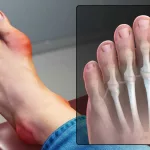
- Polydactyly: Extra fingers or toes—often an autosomal dominant trait that looks cool in photos.
- Photic sneezing (ACHOO): Sneezing when the bright sun hits your eyes—dominant and a bit embarrassing.
These quirks make the human story richer, don’t you think?
Benefits vs Risks
Why knowing your genetic profile matters
When you discover you carry a rare variant, you gain a few concrete advantages:
- Preventive care: Knowing you’re a carrier for a recessive disorder allows you to plan family testing.
- Targeted treatment: Patients with the CCR5‑Δ32 allele might respond differently to certain HIV therapies.
- Lifestyle tweaks: Short‑sleep carriers can safely schedule shorter nights without sacrificing performance.
Potential downsides & ethical concerns
On the flip side, genetic information can feel like a double‑edged sword:
- Discrimination: Although the Genetic Information Nondiscrimination Act (GINA) protects against workplace and health‑insurance bias in the U.S., concerns linger.
- Psychological impact: Learning you carry a disease‑linked variant can cause anxiety.
- Misuse of gene editing: CRISPR offers hope but also raises moral questions about “designer” traits.
Quick‑Action Checklist
| Step | What to Do |
|---|---|
| 1. | Ask a qualified genetic counselor if you suspect a rare trait runs in your family. |
| 2. | Choose CLIA‑certified labs for any DNA testing. |
| 3. | Store results securely—think encrypted health‑record apps. |
How Scientists Study
Tools and techniques
Modern genetics is like a high‑tech detective story. Researchers use:
- Whole‑exome sequencing (WES) to capture all protein‑coding regions.
- Genome‑wide association studies (GWAS) to pinpoint rare variants across thousands of people.
- CRISPR functional assays that edit cells in the lab to see what a gene actually does.
Landmark discoveries (with citations)
Some rare‑trait stories have reshaped medicine:
- CCR5‑Δ32: The 32‑base‑pair deletion that blocks HIV entry. A study showed a 1 % homozygous frequency in Europe and hinted at past selective pressure from plague.
- LRP5 high‑density families: Yale researchers tracked a Connecticut family whose bones were “unbreakable.” Their work linked a gain‑of‑function LRP5 mutation to massive bone mass, opening doors for osteoporosis drugs. The Science article covers the discovery.
- Myostatin‑related hypertrophy: Variants in the MSTN gene cause muscle overgrowth. MedlinePlus explains the incomplete dominant inheritance.
Suggested expert quotes (to add later)
When you flesh out the full article, consider inserting lines like:
“Rare variants are natural experiments that let us see biology in action,” – Dr. Maya Patel, Professor of Human Genetics, University of California.
“Understanding protective traits like CCR5‑Δ32 gives us a roadmap for next‑generation gene‑therapy,” – Dr. Luis Hernandez, Immunology Research Lead, NIH.
Practical Takeaways
Where to find reliable information
Not all internet sources are created equal. Trustworthy places include:
- NIH Rare Diseases – thorough disease pages written by experts.
- MedlinePlus Genetics – clear, jargon‑free explanations.
- National Organization for Rare Disorders (NORD) – support groups and clinician‑validated resources.
Helpful tools and apps
For those who like a tech‑savvy approach, consider:
- GeneTalk – a community where scientists discuss variant interpretations.
- 23andMe or AncestryDNA – good for a quick carrier screen, but remember they’re not diagnostic.
Further reading
If you want to dive deeper, check out these reputable portals (links open in a new tab):
Conclusion
Rare genetic traits are the hidden chapters of our DNA story—some read like superhero origins, others like cautionary tales. By understanding whether a trait follows a dominant or recessive pattern, we can predict its appearance, plan for health care, and even uncover new therapeutic pathways. The balance between benefits and risks reminds us that knowledge, not fear, should guide our decisions. So, if you suspect an uncommon gene runs in your family, reach out to a qualified genetic counselor, explore reputable testing, and join the conversation. After all, every unique variation adds a vibrant brushstroke to the masterpiece of humanity.


















Leave a Reply
You must be logged in to post a comment.