
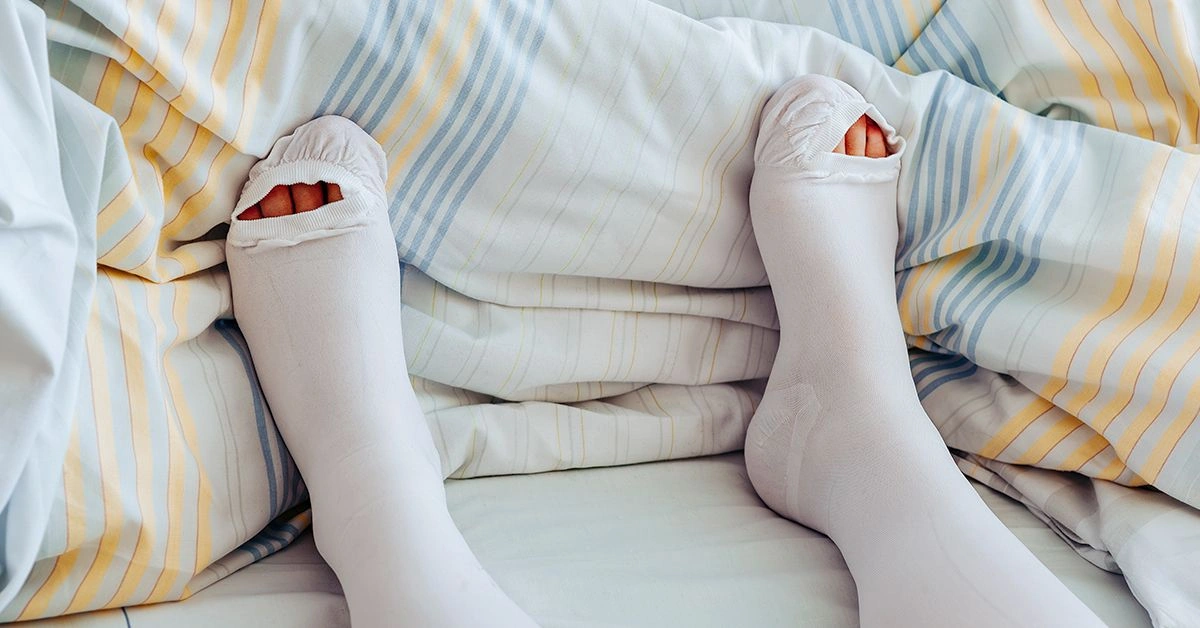
In most situations, clinicians advise taking off compression socks before sleep. However, they may suggest wearing them overnight if you have venous ulcers or are healing after venous surgery.
Compression socks are a form of compression therapy that deliver graduated pressure to the legs, which can support improved blood flow and circulation.
They’re commonly used to manage conditions such as varicose veins, lymphedema, and deep vein thrombosis.
Healthcare professionals typically recommend wearing compression socks during waking hours and removing them at night. In certain cases, they might advise short-term overnight use.
It’s worth noting that only a small amount of research has explored the effects of wearing compression socks during sleep. A medical professional can advise if nighttime use is suitable for you.
Keep reading to find out more about potential advantages and drawbacks of sleeping with compression socks on.

Why are compression socks generally advised for daytime use?
Your body’s posture while awake versus asleep can influence how blood circulates through your body.
During the day, you spend more time upright—standing or sitting—so gravity pulls blood down into the legs.
If you have an underlying issue like varicose veins, blood may struggle to return to the heart normally. This can lead to pooling in the legs, resulting in swelling, aching, heaviness, and potential complications.
Compression socks provide graduated pressure along the leg, strongest at the ankle. This steady, progressive pressure helps encourage blood to move back toward the heart.
At night, when you’re lying flat, gravity’s effect is reduced and venous return to the heart is typically improved.
Because of this, many people don’t require the extra support from compression socks while sleeping, even if conditions like varicose veins are present.
Can wearing compression socks overnight be beneficial?
Research on wearing compression socks at night is sparse, but there may be short-term benefits in particular situations.
A 2023 review reported that nighttime use was primarily recommended briefly for people with venous ulcers or following certain invasive procedures, such as:
- radiofrequency ablation
- varicose vein stripping
- phlebectomy
In many studies, people wore compression socks both day and night. Nighttime use lasted from 1 week up to 13 weeks, with 1 week being the most common period before switching to daytime-only wear.
Other evidence indicates that a two-layer ulcer stocking system can assist in treating venous ulcers. These systems typically include:
- Understocking: the inner layer, which offers mild pressure, secures the bandage and helps the outer layer glide on. The understocking may be left on overnight.
- Overstocking: the outer layer, which provides extra compression and should be taken off at night.

Some studies don’t support overnight use
Despite these potential benefits, not all studies back the practice of wearing compression socks during sleep.
A small 2022 trial with 20 participants compared daytime versus nighttime compression for reducing edema (swelling due to fluid retention in legs, ankles, and feet).
The researchers found minimal benefit from overnight wear. While sleeping in them slightly reduced swelling, the effect largely disappeared within 10 minutes after getting up.
A 2024 study of 60 patients who had endovenous ablation compared continuous 7-day compression with wearing socks only at night over 12 weeks.
After 12 weeks, there was no meaningful difference between the groups.
A healthcare professional can help you determine whether overnight compression stockings are suitable for your situation.
Can daytime compression reduce symptoms at night?
Typically, compression socks are intended for daytime use. Wearing them during the day may help control symptoms that could bother you at night or interrupt sleep.
Conditions that might benefit include:
- restless legs syndrome, particularly in pregnancy
- obstructive sleep apnea
- asthma
- venous insufficiency
For those also interested in adjunctive approaches, there is helpful information about essential oils for varicose veins that may complement symptom management, though you should discuss alternatives with your clinician before use.
What are the risks of sleeping in compression socks?
When they fit well, compression socks are generally a safe, noninvasive treatment for venous and lymphatic problems.
Research on adverse effects from wearing them at night specifically is limited, but known side effects and complications from general use include:
The most common skin-related issues are:
- irritation
- dry skin
- itching
- pain
- discomfort
- skin discoloration
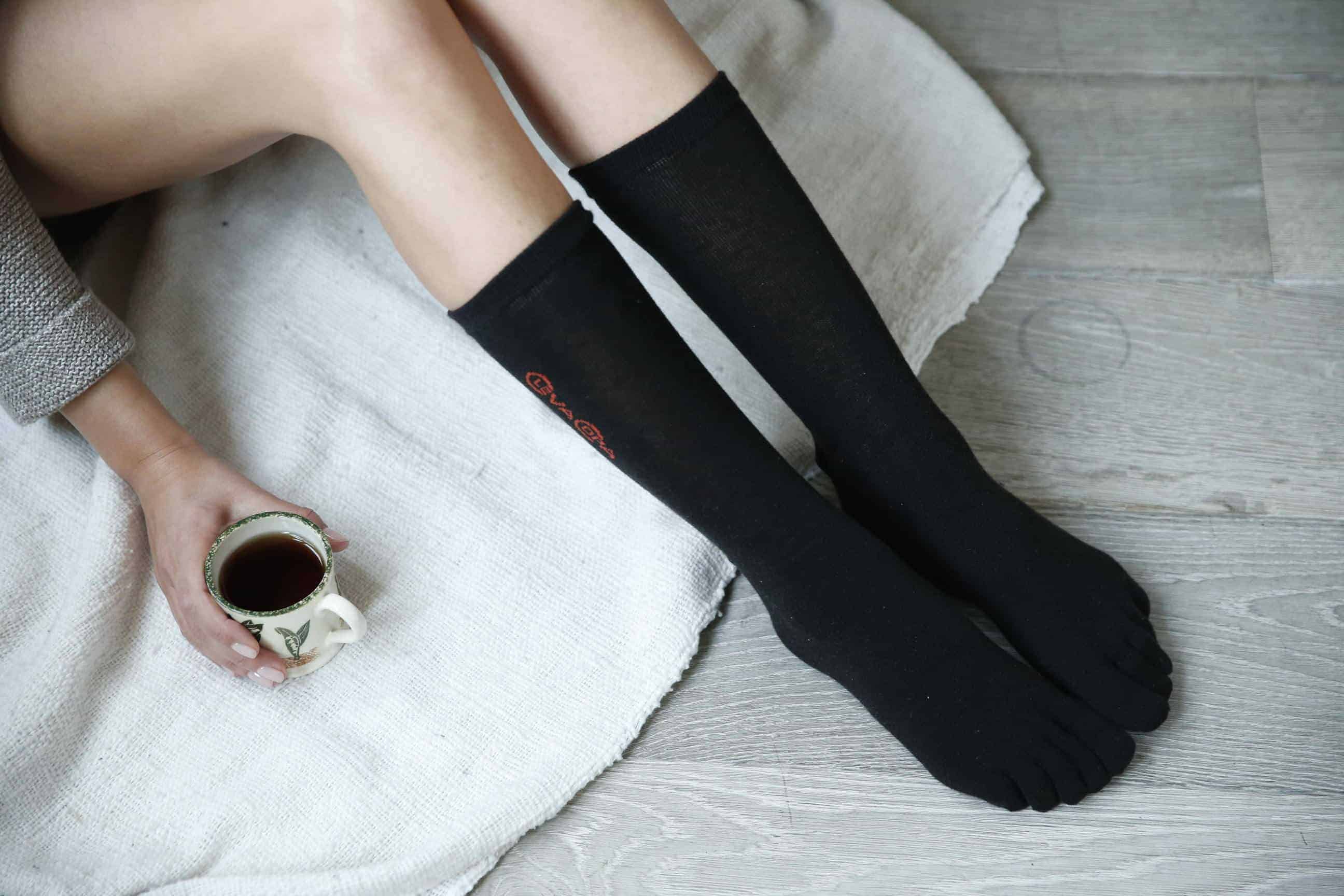
Less commonly, compression socks can cause more serious problems, such as:
- allergic reactions to the material
- swelling in the forefoot and toes
- infections
- tissue damage or necrosis
- nerve injury
- impaired arterial circulation
- blood clots
- cardiac complications
Ensuring a correct fit and avoiding overly tight garments is essential. A clinician can help you select the right size and type.
Alternatives to sleeping in compression socks
If you wear compression socks as directed during the day, it’s usually safe to remove them before bedtime. If you have discomfort, you might consider:
- using a fragrance-free moisturizer to soothe skin issues
- elevating your legs above heart level to aid venous return
- taking a brief walk to stimulate circulation
- avoiding crossing your legs or ankles, which can impede blood flow
Your healthcare provider can suggest other measures tailored to your needs.
Frequently asked questions
How many hours a day should you wear compression stockings?
Healthcare professionals generally advise wearing compression stockings from the time you wake until you go to bed, though exact timing depends on your specific condition.
Where does the fluid go when wearing compression stockings?
Compression stockings help push fluid and blood from the legs back toward the heart.
Should you elevate your legs when wearing compression socks?
Raising your legs while wearing compression socks can further enhance circulation and relieve symptoms such as swelling, pain, and heaviness.
How long does it take for compression socks to reduce swelling?
Compression begins to work immediately after the socks are put on. The time to achieve full effect varies depending on how much fluid accumulation exists in the legs.
The bottom line
Compression socks are a noninvasive therapy that can support circulation and help control swelling and discomfort in the lower limbs.
Most people only need to wear them during daytime hours. Nonetheless, a clinician may recommend overnight compression if you have venous ulcers or are recovering from procedures such as radiofrequency ablation.
A healthcare professional can advise whether wearing compression socks at night is suitable for you.


















Leave a Reply
You must be logged in to post a comment.