Cold Sore vs Canker Sore vs Fever Blister: How to Tell Them Apart

- What is a cold sore (fever blister)?
- What is a canker sore?
- Cold sore vs canker sore vs fever blister: side-by-side comparison
- How to tell them apart in 30 seconds
- What triggers each one
- How long does each one last?
- How to treat a cold sore
- How to treat a canker sore
- Which sore is it? Quick checker
- Can you spread it to someone else?
- When to see a doctor
- Other sores that get mixed up with these two
- Sources
You wake up, glance in the mirror, and there it is: a sore, angry spot on your lip. Or maybe it is inside your mouth, stinging every time you sip coffee. What is this thing, and did you catch it from someone?
Here is the short version. There are three names in the question, but only two conditions. A cold sore and a fever blister are the same thing: a cluster of fluid-filled blisters on or around the lips, caused by the herpes simplex virus, and yes, contagious. A canker sore is something else entirely: a shallow ulcer inside the mouth, nothing to do with herpes, and not contagious at all.
That one fact clears up most of the confusion. The rest of this guide walks through what each sore looks like, where it shows up, why it appears, how long it hangs around, and what actually helps — plus a quick checker for the next time you are not sure which one you are looking at.
What is a cold sore (fever blister)?
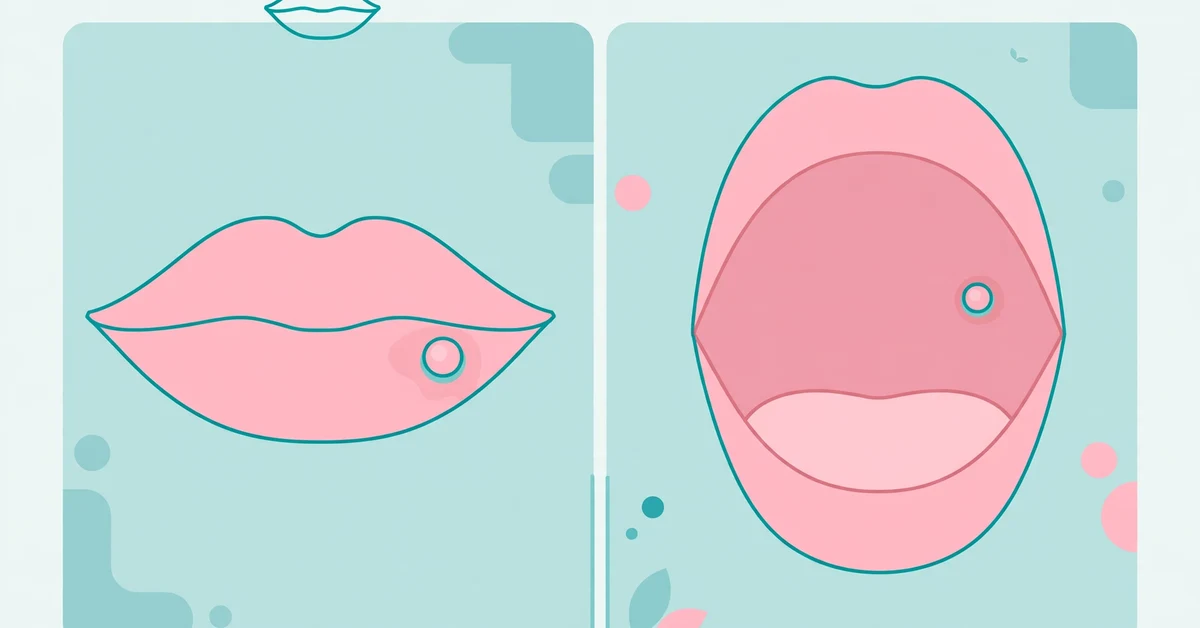
A cold sore, also called a fever blister or herpes labialis, is a small cluster of fluid-filled blisters that usually appears on the border of the lips. Sometimes it shows up under the nose, on the chin, or on the cheek. The blisters break open, weep a little, then dry into a scab before healing.

Cold sores are caused by the herpes simplex virus, most often type 1 (HSV-1). The virus is extremely common — the World Health Organization estimates that about two in three people under 50 carry HSV-1 worldwide. Once you have it, the virus stays in your body for life, hiding in nerve cells and waking up from time to time. That is why cold sores keep coming back in the same spot.
An outbreak runs through a few stages. First comes a tingling, itching, or burning feeling a day or so before anything is visible. Then small blisters appear, fill with fluid, and merge into a patch. The blisters break, ooze, and crust over, and finally the scab falls off. The whole process takes about 7 to 10 days for a repeat outbreak. A first outbreak can also bring fever, a sore throat, and swollen glands — part of where the name “fever blister” comes from.
Cold sores are most contagious while the blisters are open and weeping, but the virus can spread even when no sore is visible. It passes through saliva and close skin contact — kissing, sharing a drink, or using someone else’s lip balm. If you touch a cold sore, wash your hands right away.
What is a canker sore?
A canker sore, also called an aphthous ulcer, is a small, shallow, painful ulcer inside the mouth. It usually looks like a round or oval spot with a white or yellow center and a red border. There is no blister stage. It simply appears as an open sore, hurts for a while, and then heals.

Canker sores form on the soft, movable lining of the mouth: the inside of the lips and cheeks, the tongue, the floor of the mouth, and the soft palate. They do not form on the outer lips, and almost never on the gums or the hard roof of the mouth — those firm surfaces are where herpes sores tend to show up instead.
Nobody knows exactly what causes canker sores. They are not caused by a virus, and they are not contagious. Research points to a mix of triggers: biting your cheek or lip, irritation from braces or a sharp tooth, stress, hormonal shifts, and shortages of iron, vitamin B12, or folate. Some people get them after eating acidic foods, and some toothpastes with sodium lauryl sulfate seem to set them off. They also show up more often in people with celiac disease or Crohn’s disease.
Most canker sores are small, under a centimeter across, and heal on their own in 7 to 14 days without leaving a scar. Larger ones hurt more and take several weeks.
Cold sore vs canker sore vs fever blister: side-by-side comparison
The cold sore and fever blister columns are the same condition — the table lists them together so you can see why the names get mixed up.
| Feature | Cold sore / fever blister | Canker sore |
|---|---|---|
| Also called | Herpes labialis, oral herpes | Aphthous ulcer |
| Cause | Herpes simplex virus, usually HSV-1 | Unknown; injury, stress, vitamin shortages, immune response |
| Where it appears | Outside the mouth: lip border, corners of the mouth, under the nose, chin | Inside the mouth only: inner lips and cheeks, tongue, floor of mouth, soft palate |
| What it looks like | Cluster of small fluid-filled blisters that break, ooze, and crust over | Single round or oval ulcer, white or yellow center with a red border; no blisters |
| Warning sign before it appears | Tingling, itching, or burning a day before the blisters | Sometimes a mild burning feeling; often no warning at all |
| Contagious? | Yes, especially while blistering and weeping | No |
| How long it lasts | 7 to 10 days for repeat outbreaks; up to 2 weeks for a first outbreak | 7 to 14 days for small sores; large ones can take several weeks |
| Comes back? | Yes, the virus stays for life and reactivates | Yes, some people get them repeatedly, but each sore is a new one |
| Main treatment | Antiviral pills or cream, started early; pain relief and cool compresses | Comfort care, numbing gels, salt-water rinses; steroid paste for severe cases |
How to tell them apart in 30 seconds
Three quick checks usually settle it.
Check 1: location. Outside the lips means cold sore. Inside the mouth means canker sore. This single check is right most of the time, and it is the one the National Institute of Dental and Craniofacial Research points to first. The exception is a cold sore inside the mouth — when that happens, it sits on firm tissue like the gums or hard palate, not on the soft lining where canker sores live.
Check 2: blisters or ulcer. A patch of several tiny blisters filled with clear fluid is a cold sore. A single shallow crater with a white or yellow floor and a red rim is a canker sore. Canker sores never blister and never scab.
Check 3: tingling first, or pain first. A cold sore usually announces itself with tingling, itching, or burning a day before the blisters show. A canker sore usually just appears and starts hurting, often noticed while eating or brushing your teeth.
What triggers each one
Cold sores wake up when the immune system is busy or the skin is stressed: a cold or flu, fever, strong sun on the lips, cold wind, stress, lack of sleep, or hormonal changes. Once you know your own pattern, you can often spot an outbreak coming a day early from the tingle alone. Our guide to cold sore triggers goes through each one in more detail.
Canker sores have a different trigger list. The most common is a small injury — biting your cheek, a toothbrush slipping, a sharp chip, or braces rubbing the lining of your mouth. Stress is a well-known trigger too, and so are shortages of iron, vitamin B12, or folate. Some people notice sores after eating very acidic foods, and some find that a toothpaste without sodium lauryl sulfate cuts down how often they appear.
How long does each one last?
A repeat cold sore usually heals in 7 to 10 days without treatment. The blister stage lasts a couple of days, then the sore weeps, crusts, and dries. Picking at the scab slows healing and raises the chance of a bacterial infection, so leave it alone. A first outbreak takes longer, sometimes two to three weeks.
A small canker sore usually stops hurting within a few days and heals fully in one to two weeks. Large canker sores can take three to six weeks and may leave a scar. Neither sore should still be there after two weeks without improving — a sore that hangs around longer, keeps coming back in the same spot, or grows larger instead of shrinking deserves a look from a clinician.
How to treat a cold sore
There is no cure for the herpes virus, but treatment can shorten an outbreak and ease the pain. The key is starting early.
- Antiviral pills: Prescription antivirals such as valacyclovir or acyclovir work best when started at the first tingle, before blisters appear. They can shave a day or two off the outbreak.
- Docosanol cream: The over-the-counter cream sold as Abreva helps a little if you start it early and apply it several times a day.
- Pain relief: Acetaminophen or ibuprofen as the label directs can take the edge off, and a cool, damp cloth on the sore feels good and may calm swelling.
- Keep it moist: A thin layer of petroleum jelly stops the scab from cracking and splitting, which hurts and slows healing.
- Hands off: Do not pick, squeeze, or try to pop the blisters. The fluid carries the virus, and picking spreads it to nearby skin.
While you have an active cold sore, skip kissing, oral sex, and sharing drinks, utensils, towels, or lip products. If you wear contact lenses, do not touch your eyes after touching your mouth — herpes in the eye is serious. For more home care ideas, see our fever blister remedies guide.
How to treat a canker sore
Most canker sores heal on their own, so treatment is mostly about comfort.
- Salt-water rinse: A teaspoon of salt in a cup of warm water, swished a few times a day, keeps the sore clean and can ease the sting.
- Numbing gels: Over-the-counter gels with benzocaine or lidocaine dull the pain for a while, which helps at mealtimes.
- Protective pastes: Products that coat the ulcer shield it from food and drink while it heals.
- Avoid irritants: Skip hot, spicy, salty, and acidic foods, and crunchy foods like chips, until the sore closes. Alcohol-based mouthwash stings too.
- Prescription help for bad cases: If sores are large, very painful, or keep coming back, a clinician may prescribe a steroid paste or rinse, or check iron, B12, and folate.
Antivirals do nothing for canker sores, so do not borrow a partner’s cold sore medicine.
Which sore is it? Quick checker
Answer four quick questions. The checker adds up your answers and gives you the most likely match, plus what to do next. It is a guide only, not a diagnosis.
Which sore is it?
Tap one answer per question. Your result appears after the fourth.
1. Where is the sore?
2. What does it look like?
3. Did you feel tingling or burning before it appeared?
4. Has this same kind of sore appeared in the same spot before?
Your result will show here.
General information only, not a diagnosis. See a clinician if the sore is large, very painful, keeps returning, or has not healed in two weeks.
Can you spread it to someone else?
A cold sore can spread. The herpes virus passes through saliva and direct contact, most easily while blisters are open, but also when no sore is visible, since the virus sheds from the skin from time to time without symptoms. Kissing, oral sex, and sharing drinks or lip balm are the usual routes. That is also how most people pick up HSV-1 in the first place, often in childhood.
A canker sore cannot spread at all. It is not an infection, so kissing, sharing a drink, or eating from the same plate carries no risk.
If you get cold sores, a few habits cut down how often they return. Use lip balm with sun protection, since sun on the lips is a known trigger. During an outbreak, do not share towels, razors, or lip products. If outbreaks are frequent, ask a clinician about daily preventive antiviral treatment.
When to see a doctor
Most cold sores and canker sores are a nuisance, not an emergency. See a clinician if:
- The sore has not healed after two weeks, or it keeps getting bigger.
- Sores keep coming back very often, or several appear at once.
- The sore is so painful you cannot eat or drink properly.
- You have a weakened immune system, for example from chemotherapy, an organ transplant, or HIV.
- The infection seems to have spread to your eyes — eye pain, redness, or any change in vision needs urgent care.
- A newborn baby has been exposed to someone with an active cold sore — herpes can be serious in newborns, so get medical advice fast.
A clinician can confirm a cold sore with a swab test if the diagnosis is unclear, and can prescribe stronger antivirals or steroid rinses when needed.
Other sores that get mixed up with these two
They are not the only sores that appear around the mouth. Impetigo, a bacterial skin infection, can look like a cold sore at first, then forms a golden-yellow crust — see our guide to impetigo vs cold sore. Hand, foot, and mouth disease causes small blisters inside the mouth along with spots on the hands and feet, mostly in young children. If your sore matches neither picture here, our overview of mouth sores covers the wider range of causes.
Sources
- NIDCR — Fever Blisters and Canker Sores
- Mayo Clinic — Cold sore: Symptoms and causes
- Mayo Clinic — Canker sore: Symptoms and causes
- NHS — Cold sores
- MedlinePlus — Herpes labialis (cold sores)
- WHO — Herpes simplex virus fact sheet
Disclaimer: This article is for general education only, not medical advice. If you are unsure what kind of sore you have, or it is not healing, talk to a qualified healthcare professional.
Frequently Asked Questions
Yes. Cold sore and fever blister are two names for the same condition, herpes labialis, caused by the herpes simplex virus, usually HSV-1. The name fever blister comes from the fact that outbreaks often appear during a fever or illness.
No. A canker sore is a shallow ulcer inside the mouth with no known viral cause, and it is not contagious. A cold sore is a cluster of fluid-filled blisters on or around the lips caused by HSV-1, and it is contagious.
No. Canker sores are not caused by a virus or bacteria, so you cannot catch one from kissing, sharing food, or sharing a drink, and you cannot pass one to anyone else.
Yes. Cold sores spread through saliva and close skin contact, most easily while the blisters are open and weeping, but the virus can also spread when no sore is visible. Avoid kissing and sharing cups, towels, or lip products until the sore has fully healed.
A repeat cold sore usually heals in 7 to 10 days, and a first outbreak can take up to two weeks. A small canker sore usually heals in 7 to 14 days. Any sore that has not improved after two weeks should be checked by a clinician.
Start a prescription antiviral such as valacyclovir at the first tingle, before blisters appear, or use over-the-counter docosanol cream early. Keep the sore moist with petroleum jelly, use a cool compress and pain relief as the label directs, and do not pick at the scab.
Read Next
The Skin Benefits of Palmarosa Oil, Plus Recipes and Safety Tips

How to Get Perky Breasts Without Surgery
How to Build a Skincare Routine That Fits a Busy Day

The Ultimate Skin Care Routine for Combination Skin
Natural Treatment for Seborrheic Dermatitis: What Works?
Derma Roller for Hair Growth: Here’s What You Need to Know
Related Posts
The 8 Best Eco-friendly Razors for a More Sustainable Shave
Sep 21, 2026 • 36 min read
Valtrex Dosage for Cold Sores in Adults: the Exact Dose, Kidney Adjustments, and Timing
Nov 24, 2026 • 29 min read
Pimple on Lip: Causes, Treatment, and How to Tell It From a Cold Sore
Nov 23, 2026 • 17 min read
Simple Daily Habits for Healthy Skin
Nov 20, 2026 • 15 min read
Pictures of Skin Rashes: 10 Common Types, Causes, and When to Worry
Nov 24, 2026 • 29 min read