

Measuring muscle mass precisely is challenging because it’s influenced by many variables. Although research is somewhat limited, available studies offer useful perspectives.
Your total body weight is composed of two main parts: body fat and lean body mass.
People frequently conflate “lean body mass” with “muscle mass,” but they aren’t identical. Lean body mass encompasses muscle tissue as well as skin, bone, water, and organs.
Muscle mass denotes the weight and volume of muscular tissue in the body. It covers skeletal, smooth, and cardiac muscle, though when most people mention muscle mass they mean skeletal muscle.
Skeletal muscle is responsible for movement and posture. It’s central to mobility, balance, and strength, and preserving muscle mass becomes increasingly crucial with age.
Continue reading to find out typical muscle mass percentages, target ranges, and strategies for increasing muscle mass.
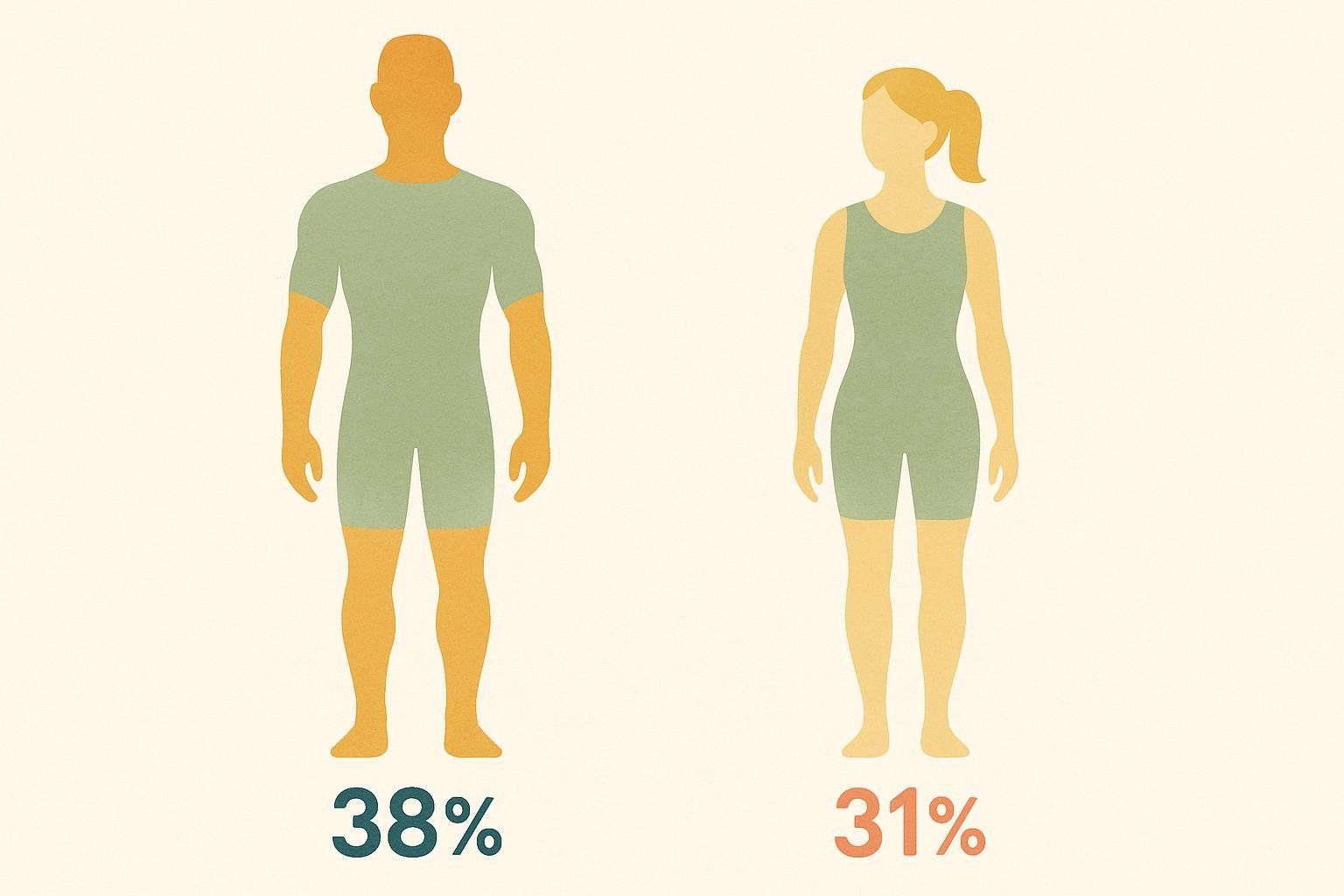
Muscle mass percentage chart
Isolating muscle mass is tricky because it varies with height, diet, ethnicity, fitness, and other factors.
There aren’t established guidelines for ideal muscle mass, but on average skeletal muscle composes about 40% of total body weight.
A 2000 study assessed muscle mass percentages in 468 adults across age groups. The tables below are derived from that research. While newer work is needed, these figures provide a sense of muscle mass percentiles by age.
Muscle mass percentage averages for men
| Age (years) | Muscle mass percentage |
|---|---|
| 18 to 35 | 40% to 44% |
| 36 to 55 | 36% to 40% |
| 56 to 75 | 32% to 35% |
| 76 to 85 | less than 31% |
Muscle mass percentage averages for women
| Age (years) | Muscle mass percentage |
|---|---|
| 18 to 35 | 31% to 33% |
| 36 to 55 | 29% to 31% |
| 56 to 75 | 27% to 30% |
| 76 to 85 | less than 26% |
How muscle mass percentage is calculated
Determining your exact muscle mass percentage typically requires costly equipment. Some methods used to measure it include:
- magnetic resonance imaging (MRI)
- dual-energy X-ray absorptiometry (DEXA)
- computed tomography (CT)
- ultrasound
- bioelectrical impedance analysis
- D3-creatinine dilution
A 2020 review indicates imaging modalities are considered the “gold standard” for muscle mass assessment.
Keep in mind different tools can produce different values for the same individual. In a 2023 study comparing D3-creatinine dilution with MRI, D3-creatinine results ranged from 0.62 kilograms lower to 13.47 kilograms higher than MRI estimates.
Are there other ways to measure muscle mass?
Clinicians often assess body composition to estimate muscle mass. Body composition evaluates the relative amounts of muscle, fat, bone, and water in the body.
Various simpler methods, formulas, scales, and online tools can approximate body composition at home, in a gym, or in clinics. Examples include:
- hydrostatic weighing
- body fat scales
- waist and hip measurements
- skinfold calipers
- online calculators
These approaches are less precise than clinical imaging, but they can indicate how much skeletal muscle you have relative to fat and other tissues.
If you want an estimate of your muscle mass, consult a healthcare provider. They can advise on measurement options that suit your budget and needs.
Is it better to have a higher or lower muscle mass?
Generally, clinicians encourage preserving a higher muscle mass.
With aging, muscle mass naturally declines in a process called sarcopenia. This age-related loss often begins around age 40, with up to an 8% decline per decade possible.
Sarcopenia is defined by reductions in muscle mass, quality, function, and strength. It can impair physical abilities and raise the risk of falls, injuries, metabolic disorders, and premature death.
Low skeletal muscle mass is linked to many health problems, including:
- diabetes
- cardiovascular disease
- chronic liver disease
- kidney failure
- obesity
- osteoporosis
- postoperative complications
- higher risk of early death
Building and maintaining muscle mass supports metabolic health, preserves function, and can enhance longevity and life quality.
Some evidence suggests keeping greater muscle mass, strength, and function may benefit mental and cognitive health as well, although more studies are needed.
What are the downsides of having higher muscle mass?
Having more muscle than average can make it harder to find clothing that fits. It also often requires a higher calorie intake to feel satisfied, which can be inconvenient or costly.
Some individuals notice reduced flexibility or reduced ability to perform explosive movements like jumping or sprinting. These limitations can usually be improved with targeted training, either on your own or with a coach or personal trainer.
How to gain muscle mass
Regular exercise and proper nutrition are essential for developing and preserving muscle as you age.
Exercise
Strength training — also called resistance or weight training — is among the most effective approaches for increasing muscle mass. This form of exercise challenges muscles by working them against resistance.
Options include:
- bodyweight movements such as push-ups
- resistance band workouts
- lifting free weights, like dumbbells
- using weight machines
- high-intensity interval training (HIIT)
- Pilates
The Physical Activity Guidelines for Americans advise adults to perform strength training at least twice weekly, working all major muscle groups.
If you’re unsure how to start, consult a physician or certified trainer to build a suitable program.
Diet
A nutrient-rich, balanced diet is critical for gaining and sustaining muscle. Proper nutrition fuels workouts and supports recovery.
Protein is especially important because it helps build and repair muscle. Your protein needs vary with activity level, but about 10% to 35% of daily calories should come from protein sources.
High-protein foods include:
- red meat
- poultry
- fish
- eggs
- legumes
- nuts
Carbohydrates also help fuel muscles, particularly if you perform more than 10 sets per muscle group in a session. Favor complex, fiber-rich carbs over refined or ultra-processed choices.
Adequate fats, vitamins, and minerals are also necessary for muscle development.
Limiting ultra-processed foods and prioritizing whole foods like vegetables, eggs, and lean proteins supports muscle health and recovery.
For those interested in optimizing composition — for example reducing fat while increasing muscle — consider strategies like body recomposition that blend diet and training approaches.
The bottom line
Muscle mass is part of your lean body mass. Generally, having more muscle reduces the risk of injury, chronic illness, and early death, and it reflects functional ability such as mobility and balance.
Accurately measuring lean body mass or muscle mass is difficult and often costly, and the evidence on measurement accuracy is limited.
To better evaluate your fitness and health, tracking body fat percentage and functional performance can be more practical measures.





















Leave a Reply
You must be logged in to post a comment.