

Bananas are highly nutritious and provide several essential nutrients. An average medium banana has only about 105 calories. Still, over 90% of its composition is carbohydrates.
Many people recognize that bananas are nutritious, but they often ask exactly how many calories and carbs are in them.
This piece addresses those questions.
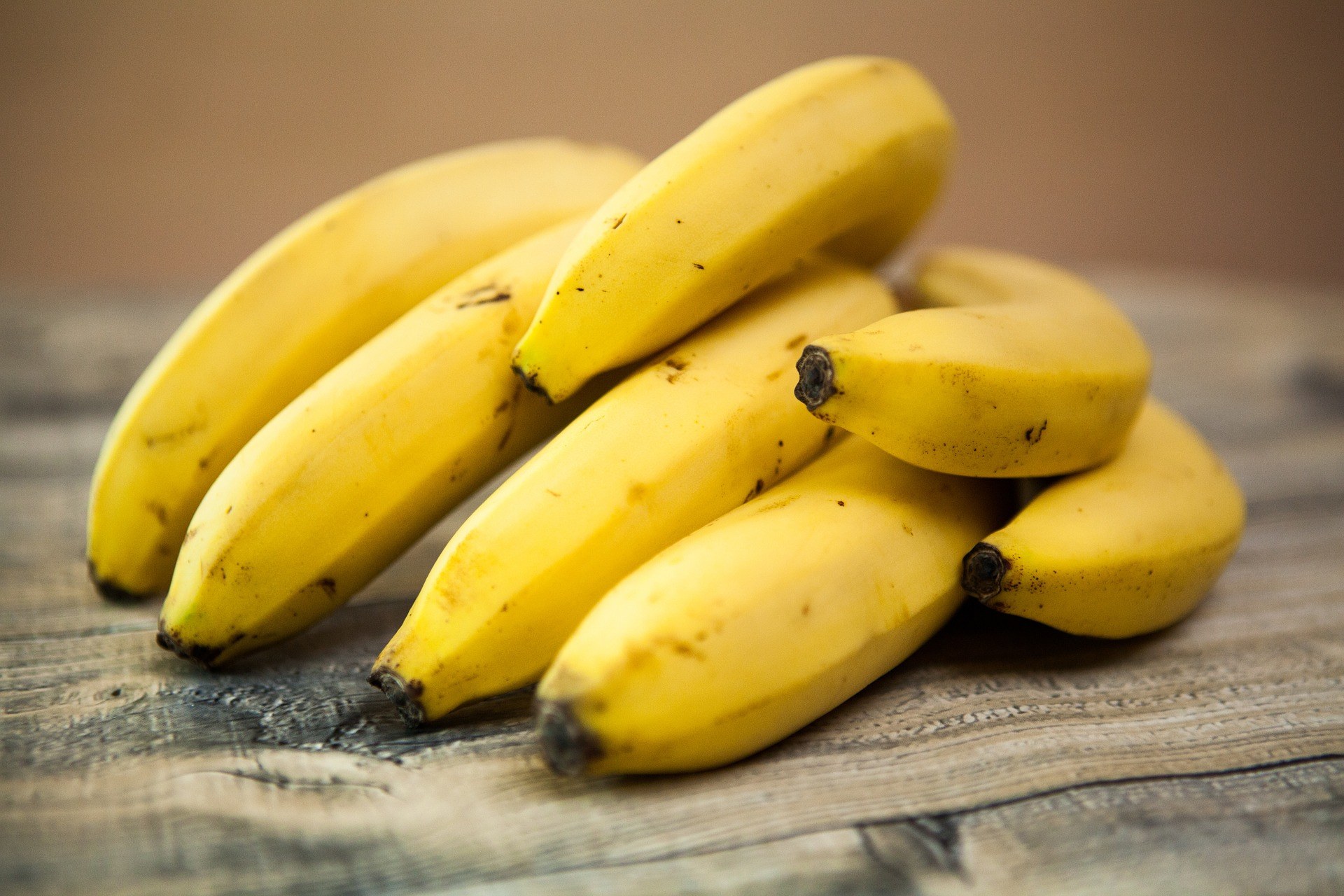
Calorie counts for different banana sizes
Bananas typically have close to 100 calories, though this varies by size and how the fruit is prepared. Below are the calorie values for common banana sizes:
- Extra small (under 6 inches, 81 grams): 72 calories
- Small (6–7 inches, 101 grams): 90 calories
- Medium (7–8 inches, 118 grams): 105 calories
- Large (8–9 inches, 136 grams): 121 calories
- Extra large (9 inches or more, 152 grams): 135 calories
- Sliced (1 cup, 150 grams): 134 calories
- Mashed (1 cup, 225 grams): 200 calories
If you don’t know the exact size, assume a typical banana has roughly 100 calories.
Approximately 93% of a banana’s calories come from carbohydrates, about 4% from protein, and roughly 3% from fat.
Learn more: Are bananas fattening or weight-loss friendly?
How many carbs does a banana contain?
Bananas are mostly water and carbohydrates.
Those tracking carbohydrate intake often want to know the carb amount in common foods.
Here’s the carbohydrate breakdown for typical banana sizes:
- Extra small (under 6 inches, 81 grams): 19 grams
- Small (6–7 inches, 101 grams): 23 grams
- Medium (7–8 inches, 118 grams): 27 grams
- Large (8–9 inches, 136 grams): 31 grams
- Extra large (9 inches or more, 152 grams): 35 grams
- Sliced (1 cup, 150 grams): 34 grams
- Mashed (1 cup, 225 grams): 51 grams
A banana typically provides 2–4 grams of fiber depending on its size. To estimate “net” carbs, subtract 2–4 grams (net carbs = total carbs – fiber).
Ripeness also alters a banana’s carbohydrate profile.
Generally, greener, less ripe bananas contain fewer digestible carbs than fully ripe ones.
Learn more: How bananas affect diabetes and blood sugar levels.
Unripe (green) bananas are richer in resistant starch
Carbohydrates are the dominant nutrient in bananas, but their makeup shifts considerably as the fruit ripens.
Unripe bananas are high in starch, including a substantial amount of resistant starch.
During ripening that starch converts into sugars, so yellow bananas have far less resistant starch than green ones.
Resistant starch is a form of carbohydrate that resists digestion and acts similarly to fiber in the body.
It passes to the colon intact, where it serves as food for beneficial gut microbes.
When these microbes ferment resistant starch, they produce gases and short-chain fatty acids (SCFAs), which support digestive health.
About 95% of these SCFAs are quickly taken up by colon cells and used as fuel by the body.
So, although resistant starches yield fewer calories during initial digestion compared with digestible carbs, they can be converted into SCFAs that supply energy later.
As a result, green and ripe bananas may end up delivering similar caloric amounts overall.
Learn more about incorporating green bananas into your meals.
Bananas provide several other beneficial nutrients
Bananas are a good source of various vitamins and minerals.
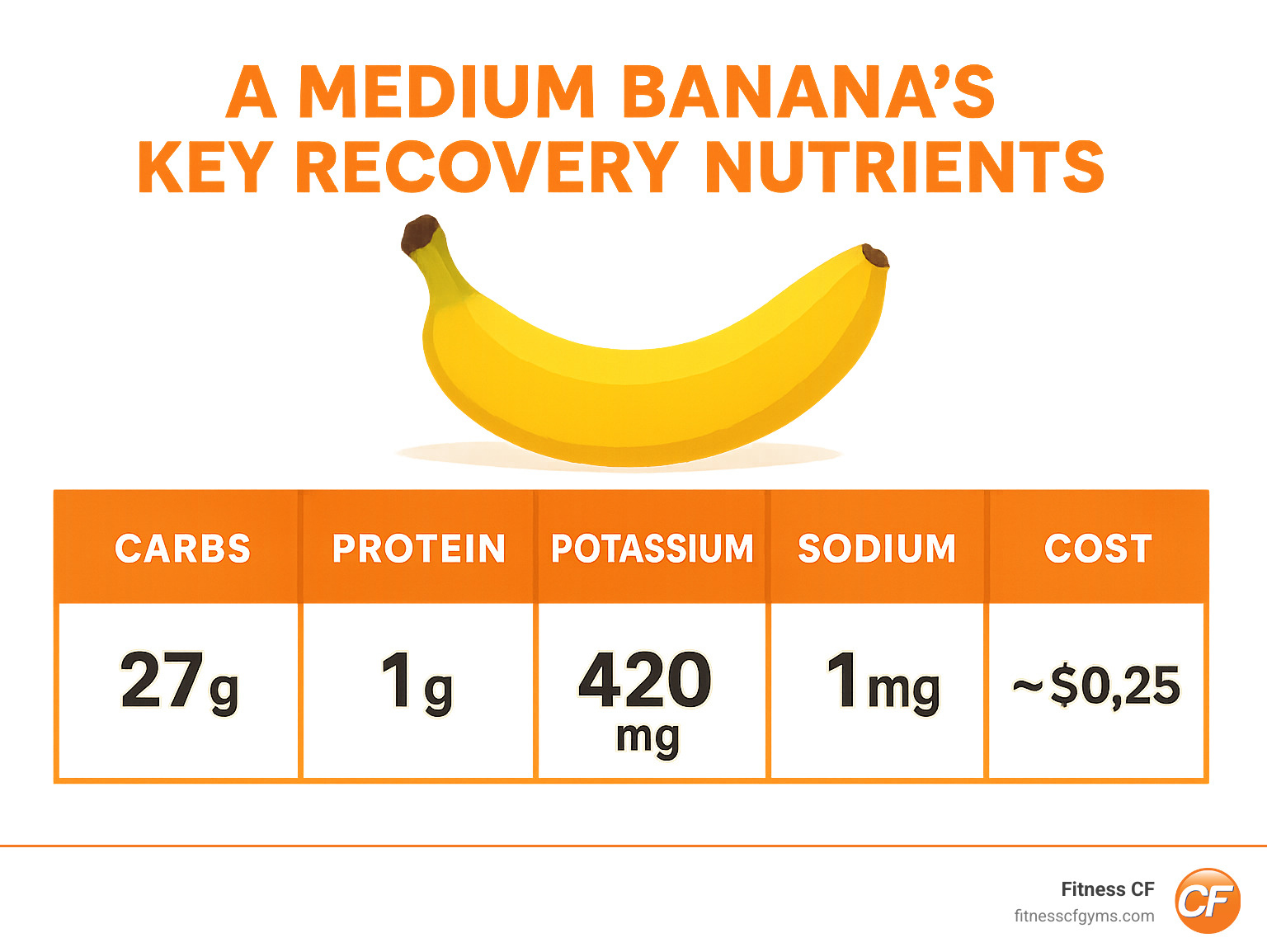
One medium banana supplies:
- Fiber: 3.1 grams
- Vitamin B6: 25% of the DV
- Vitamin C: 11% of the DV
- Manganese: 14% of the DV
- Potassium: 12% of the DV
- Folate: 6% of the DV
- Riboflavin (vitamin B2): 7% of the DV
FAQ
Are bananas a good source of carbs?
Bananas contain both natural sugars and fiber, with amounts varying by ripeness. That makes them a convenient energy source before workouts, but they may require moderation if you’re cutting carbs or sugars.
Do bananas help you feel full?
The soluble fiber and resistant starch in bananas help promote satiety, so a banana can keep you feeling fuller longer than many other high-carb options.
Do bananas raise blood sugar?
A medium banana has about 27 grams of carbs, including roughly 14 grams of sugars and 6 grams of starch, so bananas can increase blood glucose. That said, their fiber helps blunt rapid spikes. If you have diabetes, monitor your blood sugar before and after eating bananas to see how they affect you.
The bottom line
Depending on size, bananas usually contain 72–135 calories and 19–35 grams of carbohydrates. A typical banana provides around 100 calories and about 25 grams of carbs.
Bananas are flavorful and nutritious, making them a convenient, low-calorie snack option.






















Leave a Reply
You must be logged in to post a comment.