
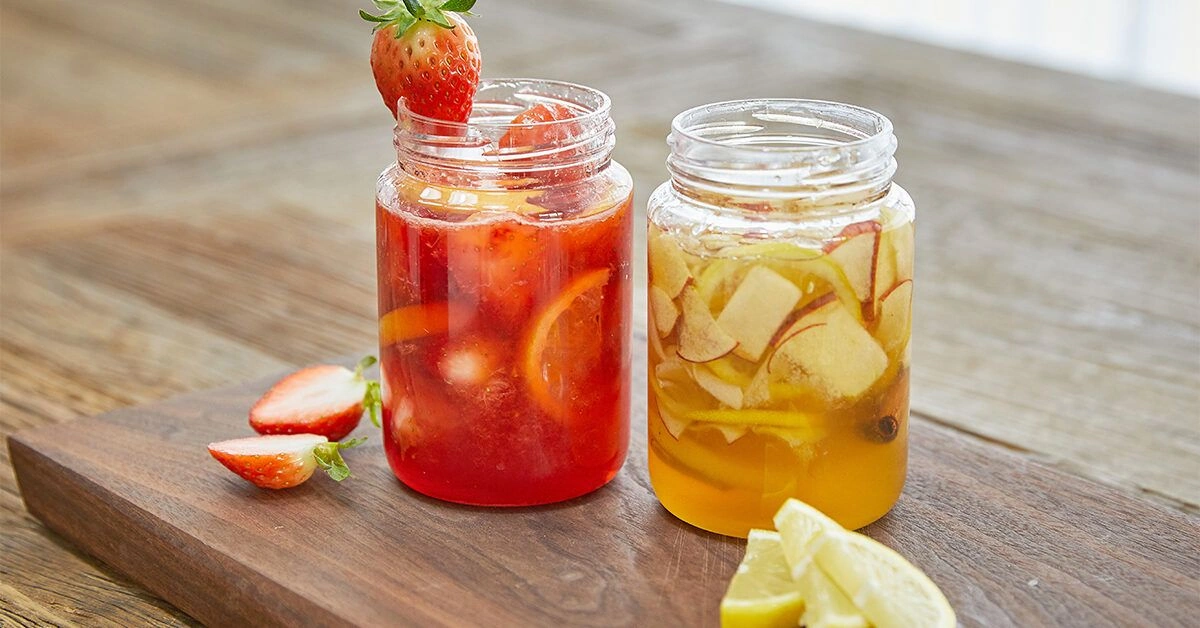
You can ferment fruit juices as well as peels, cores, or even whole fruits to produce fruit vinegar. Apple cider vinegar is a familiar example, but vinegars can be crafted from many fruits, including oranges, papayas, and mangoes.
Fruit vinegar results from the fermentation of fruit juice.
It’s commonly promoted as a wellness beverage and has become trendy due to claimed effects on weight loss, blood sugar control, and antimicrobial properties (1).
Extremely acidic with a pronounced aroma and tartness, it’s often consumed raw or used in dressings and marinades. You can prepare it at home or purchase it commercially.
This article covers what fruit vinegar is, how it’s produced, its potential advantages and drawbacks, and various ways to use it.
What is fruit vinegar?
Fruit vinegar is a vinegar variety created by fermenting the juices of fruits.
Apple cider vinegar is perhaps the most recognized, but vinegars can be made from mangoes, plums, berries, papaya, grapes, peaches, citrus (like oranges), and many other fruits.
Producers may use ripe whole fruit or leftovers such as peels, cores, and pits that still contain flesh. Overripe fruit that isn’t heavily molded can also be utilized.
Indeed, one study recommends using overripe mangoes and papayas to make vinegar as a way to reduce food waste (2).
Fruit vinegar’s strong acidity and sharp flavor come mainly from acetic acid produced during fermentation. It also inherits some flavor compounds and nutrients from the fruit used (3).
Summary: Fruit vinegar is produced by fermenting the juices of apples, mangoes, plums, citrus fruits, grapes, berries, or other fruits. The entire fruit or fruit remnants may be used.
Potential health benefits of fruit vinegar
Many claimed health effects of fruit vinegars—such as apple cider vinegar—are linked to their acetic acid content. Acetic acid naturally occurs in some foods (1, 2, 3, 4).
Most vinegars contain roughly 4–8% acetic acid, and fruit vinegars additionally supply polyphenols, antioxidants, and other organic acids such as butyric acid (1, 3, 4).
Although much of the research focuses on apple cider vinegar, these outcomes might extend to other fruit-based vinegars.
May improve blood sugar
Animal studies indicate that adding apple cider vinegar to a high-fat diet may reduce insulin resistance, boost insulin sensitivity, and lower blood glucose (3, 4, 5, 6).
Insulin is the hormone that regulates blood glucose. Insulin resistance arises when the body becomes less responsive to insulin’s actions (7).
Human studies also show that consuming 2/3–2 tablespoons (10–30 mL) of apple cider vinegar with a meal high in carbohydrates may acutely improve blood glucose responses (6).
Bear in mind that much of the evidence is from animals and short-term human trials; long-term effects remain unclear, so more research in people is needed.
May help lower cholesterol
Studies in mice report that apple cider vinegar improved triglyceride levels, total cholesterol, and LDL (bad) cholesterol (3, 4, 5, 8).
These studies also observed reduced liver fat accumulation and lower VLDL cholesterol — the particles that transport dietary cholesterol from the gut to the liver (3, 4, 5, 8).
These results imply that apple cider vinegar — and possibly other fruit vinegars — might lower the risk of metabolic syndrome, a condition linked to increased heart disease and type 2 diabetes risk (9).
May reduce your appetite
Research indicates acetate — a short-chain fatty acid derived from the acetic acid in vinegar — can influence gut hormones and may suppress appetite (4, 10).
A 12-week trial reported meaningful reductions in body weight and fat in people with obesity who consumed vinegar. Rodent studies likewise show weight loss after 30 days of apple cider vinegar intake (4, 11).
While further research is necessary, fruit vinegars such as apple cider vinegar have been promoted for weight management due to their potential effects on appetite and body fat (4, 11).
Summary: The acetic acid in fruit vinegar may offer health advantages, including lowering blood sugar, cholesterol, and appetite.
Does fruit vinegar have any downsides?
There’s limited long-term human research on the health impacts of fruit vinegars.
One study argues that many of the claimed benefits of apple cider vinegar are not well-supported and that even low concentrations (around 0.7%) may be toxic; typical vinegars contain about 5% acetic acid (12).
Most studies focus on vinegar’s effects on tooth enamel.
For example, research indicates a higher rate of enamel erosion among vegetarians and others who frequently eat vinegar-containing foods like dressings (13, 14).
In laboratory tests, dressings based on balsamic vinegar caused more enamel erosion than cream- or milk-based dressings (14).
These data suggest that consuming large amounts of fruit vinegar could be harmful to dental health.
Summary: Long-term human data on fruit vinegars are scarce; some evidence points to possible toxicity and tooth enamel erosion.
How to make fruit vinegar
You can buy raw fruit vinegar containing the “mother” — live fermenting yeast and bacteria — or craft your own at home.
Make it from 100% fruit juice or from fruit suspended in unchlorinated water. In both methods, the extracted juice passes through alcoholic fermentation and then acetic fermentation to become vinegar.
Below is a simple guide to homemade fruit vinegar.
1. Obtain fruit juice or make an infusion
Buy cold-pressed or 100% fruit juice without additives at the store.
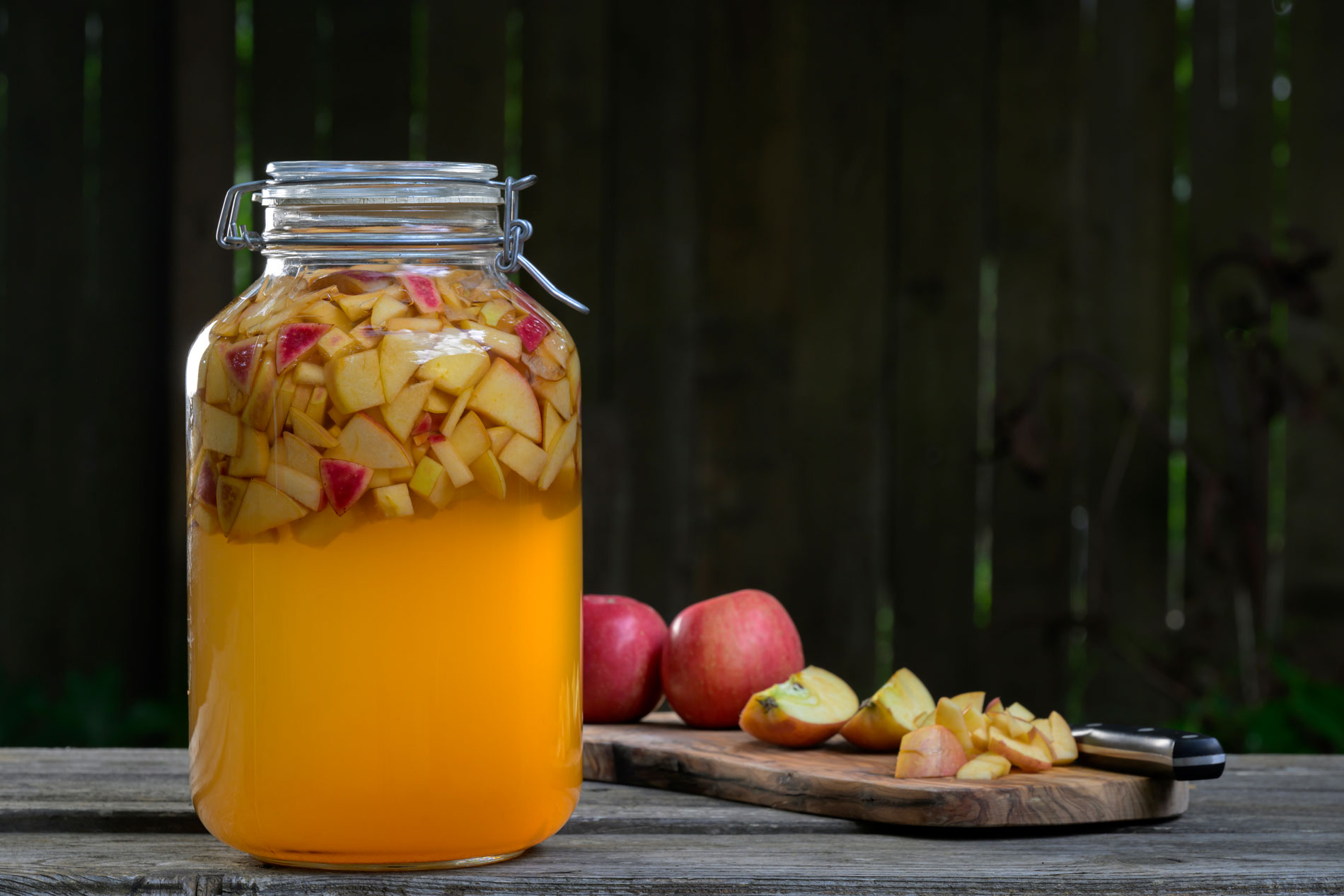
Or, create an infusion by soaking fruit in a clear, airtight container such as a Mason jar filled with unchlorinated water for 1–2 weeks. The water will slowly take on flavor and nutrients from the fruit.
2. Fermentation
Strain the homemade infusion through a sieve into a food-grade container such as a canning jar. If you purchased juice, pour it straight into the jar.
Cover the jar with a breathable cloth to allow natural fermentation. Do not seal it tightly, since trapped gas could cause the jar to break.
Fruit yeasts like Saccharomyces cerevisiae consume the fruit’s sugars and produce alcohol and carbon dioxide as byproducts (15).
Saccharomyces cerevisiae activity is temperature-dependent and prefers warmer conditions around 54–90°F (12–32°C). Keep your juice within this range for 1–3 months (16).
3. Test and store
When fermentation is complete, check readiness by pouring some vinegar into a jar, sealing it, and leaving it overnight. If it “pops” when opened the next day, yeast activity continues and you should retest after a week.
If there’s no pop, the vinegar is done. Skim any foamy surface and store the vinegar at room temperature away from direct sunlight, or refrigerate. Properly stored, it can last 6–12 months.
Discard any batch that develops mold.
Summary: To make fruit vinegar, ferment 100% fruit juice or fruit-infused water for 1–3 months in a food-safe jar with a breathable cover. Remove foamy residue once fermentation finishes and store the vinegar for 6–12 months.
Ways to use fruit vinegar
Here are several ways to use fruit vinegar:
- Raw.Consume 1/2–1 tablespoon (8–15 mL) with a carbohydrate-rich meal to help moderate blood sugar.
- Diluted.Mix 1 tablespoon (15 mL) of fruit vinegar with 2–3 tablespoons (30–45 mL) of water to make it easier to drink.
- Salad dressing.Dress salads with 1–2 tablespoons (15–30 mL) of a homemade vinaigrette made from fruit vinegar.
- Marinade.Use fruit vinegar to marinate meats or fish.
- Switchel.Enjoy a traditional beverage made with fruit vinegar, ginger, water, and maple syrup.
Because it can erode tooth enamel, use fruit vinegar sparingly and maintain good oral hygiene.
Summary: You can drink fruit vinegar raw or diluted, or use it in marinades, dressings, or drinks like switchel.
The bottom line
Fruit vinegar is produced by fermenting juices from many fruits, including apples, mangoes, plums, berries, papaya, grapes, peaches, and oranges.
Buy it ready-made or make your own by fermenting fruit juice for 1–3 months in a food-grade jar covered with a breathable cloth.
Fruit vinegars contain acetic acid, which may help lower blood sugar, reduce cholesterol, and aid weight management.
Just one thing
Try this today:Whisk up a fruit vinegar dressing by combining 1/4 cup (60 mL) extra virgin olive oil with 1 tablespoon (15 mL) each of fruit vinegar and honey for a simple vinaigrette. Add Dijon mustard and minced garlic to taste.



















Leave a Reply
You must be logged in to post a comment.