
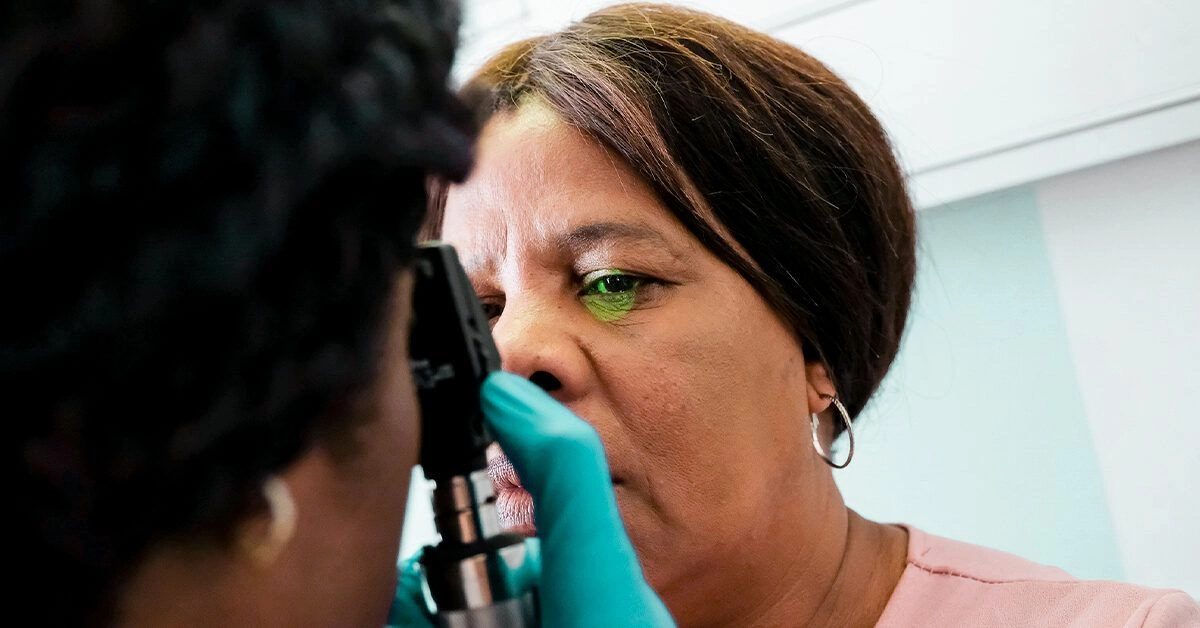
Black individuals can develop a yellow tint to the skin as a sign of jaundice, but depending on skin pigmentation it may be harder to notice initially. The yellowing of the sclera (the white part of the eye) is often easier to detect, though that change can sometimes have a harmless explanation.
Jaundice describes a yellow discoloration of the skin and eyes. It usually indicates an issue with the liver or another underlying medical problem.
Jaundice happens when there is an excess of bilirubin, a yellow-colored pigment, in the bloodstream. Subcutaneous fat absorbs this surplus bilirubin, producing a yellow hue of the skin. The same pigment can also cause the sclera of the eye to look yellow.
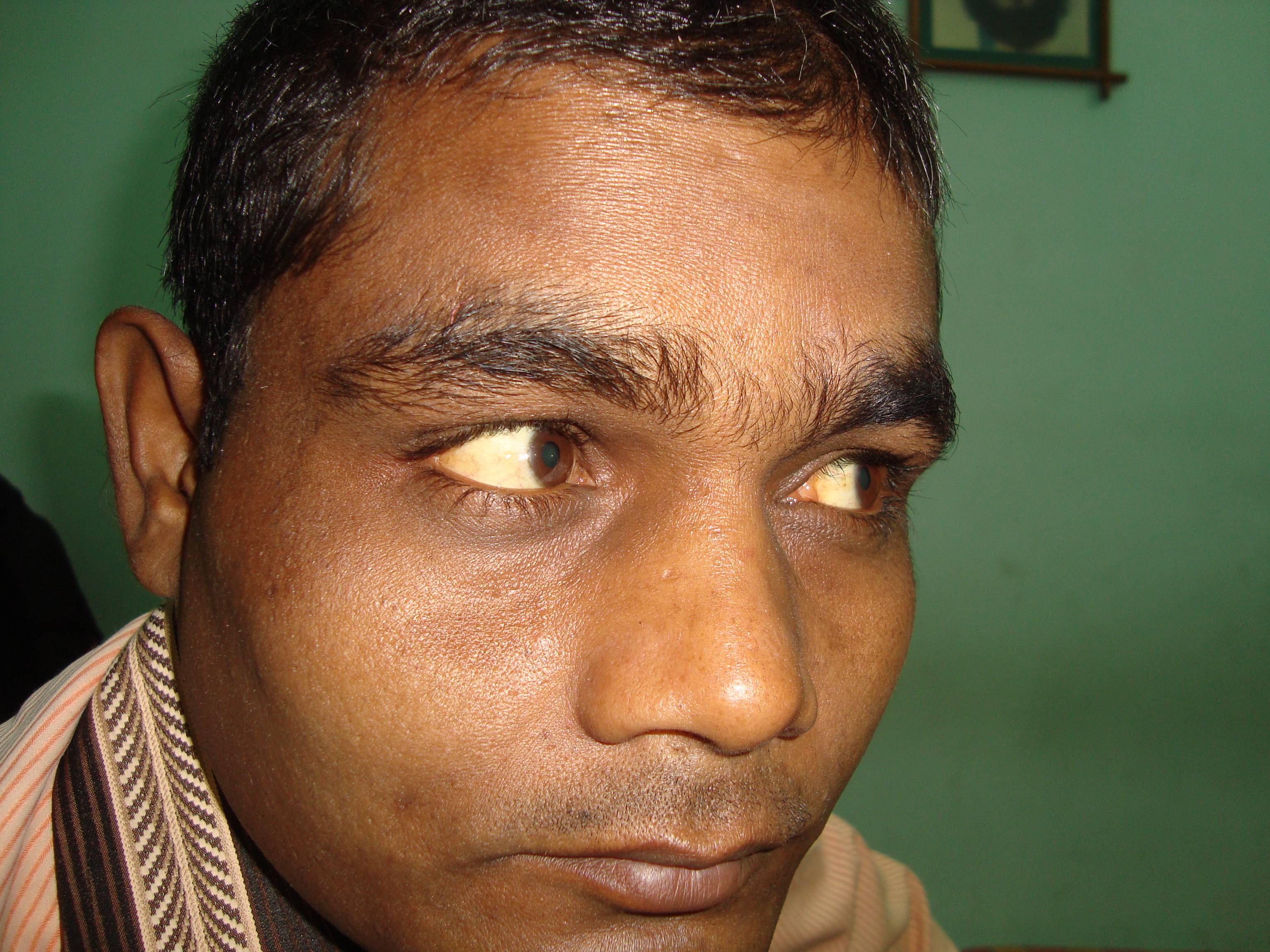
Recognizing a yellowish skin tone can be more difficult depending on a person’s natural skin color. Black people span a wide range of skin tones, and when skin is darker, jaundice can be less obvious. Often, the first clue you’ll notice is yellowing of the whites of the eyes.

However, darker-skinned people can experience other reasons for yellow eyes. Continue reading to learn how to identify jaundice in those with black or brown skin and how to tell it apart from other conditions.
What are the symptoms of jaundice in Black people?
Across all skin tones, the hallmark signs of jaundice are yellowing of:
- the skin
- the whites of the eyes (sclera)
- bodily secretions
With a darker complexion, visible yellowing may be subtle. In many cases the first noticeable signs are a yellow sclera or discolored bodily fluids.
Because jaundice is a manifestation of multiple possible illnesses, additional symptoms often reflect the underlying cause. Common associated symptoms include:
- abdominal pain
- tiredness
- dizziness
- confusion
- fever
- nausea
- vomiting
- reduced appetite
- weight loss
- itchiness
- dark or brown urine
- pale-colored stools
Yellow eyes aren’t always jaundice
The sclera is covered by a thin protective membrane called the conjunctiva. Degeneration of the conjunctiva (from wear or age) can make the sclera seem yellowish or even brown. This occurrence is more frequent among people with higher melanin levels, such as those of African or Asian ancestry.
This change is benign, meaning it doesn’t harm your health. Still, see a primary care provider or eye specialist if you’re worried about yellow eyes, especially if other symptoms are present.
Pictures of jaundice in Black people
The images below illustrate common signs to look for, especially yellowing of the sclera in people with darker skin tones.
When to contact a doctor
The American Academy of Family Physicians advises adults to seek medical attention promptly if they notice yellowing of the skin.
A clinician can request blood or urine testing to measure bilirubin. They may also use imaging—such as an ultrasound or CT scan—to examine the liver and biliary system.
Jaundice in Black babies
Newborn jaundice is common because a baby’s liver may not yet be fully efficient at clearing bilirubin.
The Centers for Disease Control and Prevention (CDC) reports that about 3 in 5 infants develop jaundice. If jaundice doesn’t resolve within 2 to 3 weeks, it could signal an underlying problem.
Seek same-day medical attention if your baby shows any of the following additional signs:
- excessive fussiness
- difficulty waking or sleeping
- trouble feeding
- insufficient bowel movements or urination
The CDC also notes that jaundice can be harder to spot in infants with darker skin. Check the gums and upper lip for discoloration, and press gently on the skin to look for a yellowish tint.

Older studies suggested Black infants are less likely to develop jaundice, but more recent research indicates this belief can lead healthcare providers to miss signs in this group.
Consequently, Black infants at higher risk for markedly elevated bilirubin levels may not be diagnosed quickly enough, increasing the chance of complications such as kernicterus. The reasons aren’t fully understood, though genetics likely contribute.
Some Black infants at increased risk for high bilirubin may carry genetic conditions that aren’t routinely screened at birth (see below). Further research is necessary to clarify rates of severe hyperbilirubinemia in Black infants and refine screening recommendations.
Emergency jaundice symptoms in babiesSeek urgent medical care if your baby has any of the following:persistent high-pitched crying arched back with head and neck thrown backward limp or rigid body abnormal eye movements
What causes jaundice in Black people?
Jaundice can affect anyone, regardless of skin color. The disorders that lead to jaundice occur across races, but Black people may face higher risk for certain conditions due in part to social and environmental determinants.
Some of the conditions that can cause jaundice include:
Fatty liver disease
Roughly one-quarter of adults in the U.S. have nonalcoholic fatty liver disease (NAFLD). Many people with NAFLD don’t have symptoms, but jaundice can occur if the disease advances to cirrhosis, meaning severe scarring of the liver.
Black adults in the U.S. have been reported to have lower overall rates of chronic liver disease than other racial groups, yet they experience higher rates of overweight and obesity—key risk factors for NAFLD.
Hepatitis
Hepatitis refers to liver inflammation, most commonly from viral infection. Not every person with hepatitis will develop jaundice, but it can appear as the disease progresses.
Although African American people make up about 12% of the U.S. population, they represent 31% of chronic hepatitis B cases and 23% of hepatitis C infections.
Sickle cell anemia
Bilirubin is produced when red blood cells are broken down. In sickle cell anemia, red cells have a shorter lifespan and break down more readily, which leads to increased bilirubin and possible jaundice.
The American Red Cross states that 98% of people in the U.S. with some form of sickle cell disease are African American.
Gallstones
Gallstones are solid collections of cholesterol or bilirubin that can sometimes obstruct the bile ducts. Blocked bile flow causes bile to back up into the liver, which can result in jaundice.
Although overall gallstone risk seems lower in Black people than in other groups, they do have higher prevalence of certain risk factors. You’re more prone to gallstones if you have obesity, type 2 diabetes, or sickle cell disease.
Liver, bile duct, or pancreatic cancer
Cancers of the liver, bile ducts, or pancreas can obstruct bile flow or impair liver function, leading to bile accumulation and jaundice.
The Office of Minority Health reports that Black or African American individuals are more likely than non-Hispanic white people to develop cancers in these organs.
Glucose-6-phosphate dehydrogenase (G6PD) deficiency
G6PD deficiency is an inherited disorder that reduces levels of the G6PD enzyme. Without adequate enzyme activity, red blood cells are more prone to premature breakdown, causing bilirubin accumulation.
The condition is common in parts of Africa, affecting 15% to 26% of people in some regions. In the U.S., it affects about 1 in 10 African American males.
Despite how prevalent it is, newborn screening does not always include G6PD testing.
As of 2022, New York became only the third state or district (after Pennsylvania and D.C.) to mandate newborn screening for G6PD deficiency.
More study is needed into this inherited enzyme deficiency.
Other causes
Jaundice isn’t always due to chronic illness. Excessive alcohol use and certain medications can lead to jaundice, including:
- acetaminophen (Tylenol)
- some antibiotics, such as amoxicillin-clavulanate and isoniazid
- nonsteroidal anti-inflammatory drugs (NSAIDs)
- statin medications
- dietary supplements
- anabolic steroids
What is the treatment for jaundice?
Because jaundice is a sign rather than a disease itself, management focuses on treating the underlying cause.
Jaundice usually improves once the root condition is addressed. However, if you have long-standing liver disease, jaundice may persist.
For newborns, doctors may recommend phototherapy. This treatment uses a special light to break down excess bilirubin, helping the baby’s liver remove it from the bloodstream.
Will jaundice resolve on its own?
In infants, jaundice should fade within about 2 weeks. Consult a clinician if it lasts longer.
In adults, resolving jaundice generally requires identifying and treating the underlying medical issue.
Takeaway
In adults, jaundice often signals a significant underlying problem. Detecting skin yellowing can be more difficult for people with darker complexion.
Noticing a yellow tint in the whites of the eyes may be the clearest sign, but remember that age-related or benign conjunctival changes can also make the sclera appear yellow in those with melanin-rich skin. Always consult a healthcare professional to determine the cause of yellow eyes.
Newborn jaundice is common. While earlier research suggested lower rates among Black infants, they may actually face higher risk for very elevated bilirubin and complications like kernicterus due to underrecognition. Pediatricians typically monitor newborns for jaundice during the first few days of life.














Leave a Reply
You must be logged in to post a comment.