

The Feingold Diet attempts to reduce behavioral problems in children by removing food preservatives, artificial colors, sweeteners, and foods high in salicylates.
Promoted in the 1970s as a way to address symptoms of attention deficit hyperactivity disorder (ADHD) and autism, the Feingold Diet gained popularity among some parents and practitioners.
Developed by Dr. Benjamin Feingold, a pediatrician and allergist from California, the diet began as a treatment for allergy-related symptoms in children.
Dr. Feingold originally used the regimen for youngsters who suffered from hives, asthma, and eczema. After observing improvements in behavior in some patients, he expanded its use to children with ADHD, autism, dyslexia, and other behavioral concerns.
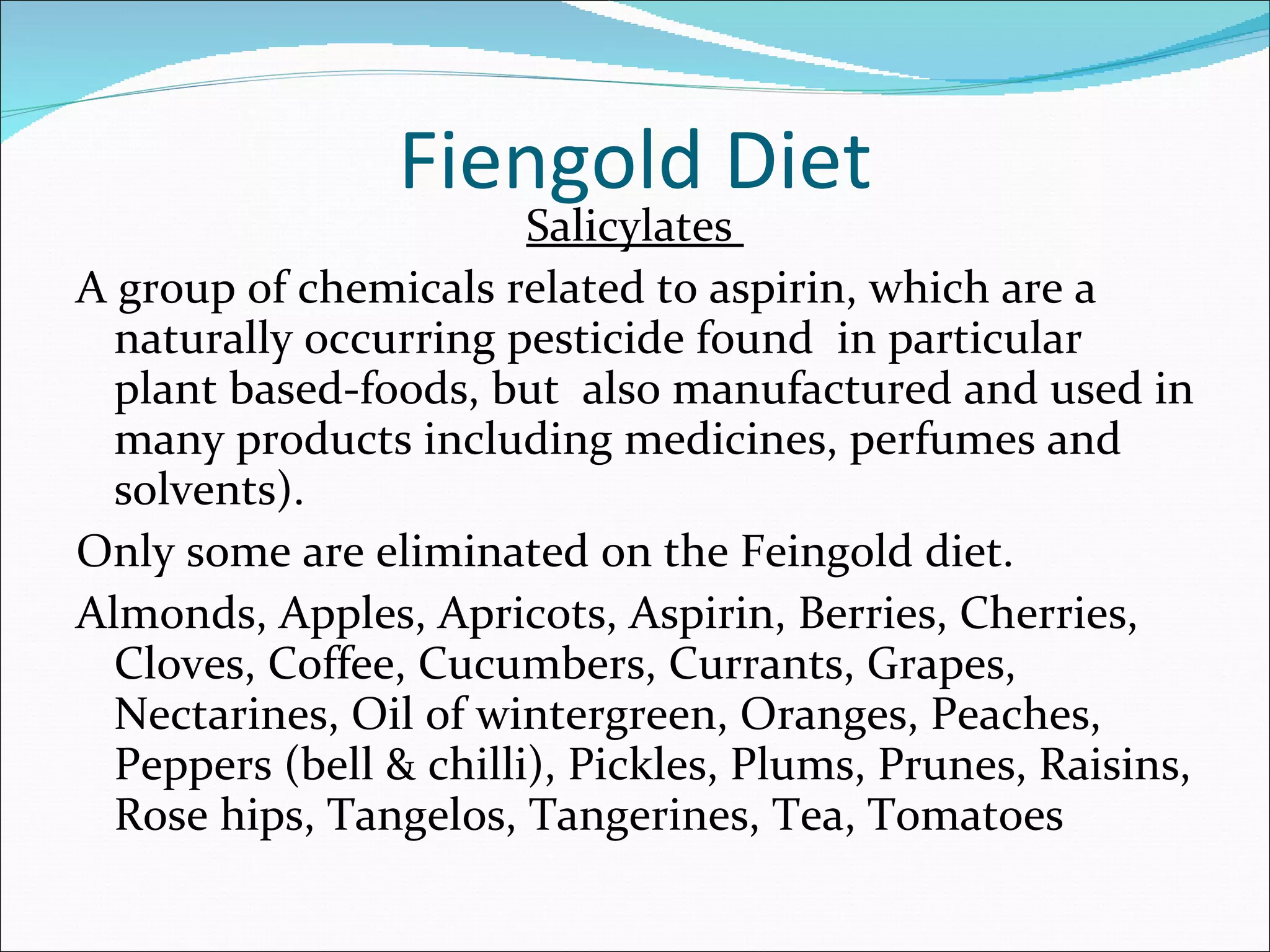
The program removes artificial colors and sweeteners, substances called salicylates, and three specific preservatives — butylated hydroxyanisole (BHA), butylated hydroxytoluene (BHT), and tert-Butylhydroquinone (TBHQ).
Feingold proposed that avoiding these components, along with certain foods, could enhance attention and behavior.
Salicylates are naturally occurring compounds in many foods and are the active ingredient in aspirin. Feingold suggested that people who are sensitive or allergic to aspirin might also react to salicylate-rich foods.
Although salicylate sensitivity is a documented phenomenon, there is no solid evidence linking it directly to behavioral problems.
Despite many anecdotal reports from supporters, robust evidence is lacking that the diet reliably improves behavioral symptoms in children with ADHD or similar conditions. Likewise, no research has firmly tied the listed ingredients to worsening behavior.
How the diet is structured
The diet requires your child to consume only items from a strict approved list while completely avoiding excluded foods. After an elimination period, you gradually reintroduce certain items to observe whether symptoms reappear.
The approach typically has two primary stages:
- Remove possible triggers. Eliminate foods and ingredients that might provoke behavioral changes, including artificial colors and flavors, preservatives, sweeteners, and salicylate-containing foods.
- Challenge with salicylates. After the exclusion period, reintroduce salicylates to see if behavioral problems return. If symptoms reemerge, revert to the elimination phase.
Feingold suggested that improvements could appear within 1–6 weeks, though no strict timeline is universally specified.
According to Feingold, some people may gradually tolerate salicylate-containing foods again, while others might need to remain on the restricted phase indefinitely. Artificial colors, flavors, preservatives, and sweeteners are to be avoided permanently.
He advised preparing meals from scratch to prevent accidental exposure to banned ingredients, arguing that food labels can be misleading or inaccurate.
However, food labeling is now tightly regulated and generally reliable.
Keep in mind that many of the diet’s restrictions are intended as long-term changes. Severely limiting a child’s food choices raises ethical and medical concerns and should only be done under the guidance of a qualified health professional.
Items typically excluded
The Feingold Diet removes a broad array of foods and substances, at least for an initial trial period.
Substances to avoid
- medicines containing salicylates (for example, aspirin)
- preservatives such as butylated hydroxytoluene (BHT), butylated hydroxyanisole (BHA), and tert-Butylhydroquinone (TBHQ)
- all artificial food colors, including blue 1 (Brilliant Blue), blue 2 (Indigotine), green 3 (Green S/Fast Green), orange B, red 2 (Citrus Red), red 3 (Erythrosine), red 40 (Allura Red AC), yellow 5 (Tartrazine), and yellow 6 (Sunset Yellow)
- artificial flavorings, such as some vanilla, peppermint (including mint toothpaste and mouthwash), strawberry, and raspberry flavorings
- artificial sweeteners like aspartame (Equal, NutraSweet), sucralose (Splenda), saccharin (Sweet’N Low), and acesulfame-K (Ace-K)
- synthetic pesticides
- perfumes and synthetic fragrances
Foods to avoid
The following foods tend to be high in salicylates, colorings, or additives and are typically removed during the diet’s first phase:
- Fruits: apples, applesauce, apricots, berries, cherries, currants, grapes, nectarines, oranges, peaches, plums, prunes, raisins, tangerines, and tomatoes
- Vegetables: alfalfa sprouts, broccoli, chicory, cucumbers, eggplant, endives, okra, peppers, pickles, radishes, squash, sweet potatoes, spinach, watercress, and zucchini
- Nuts and seeds: almonds, chestnuts, and other nuts and seeds
- Grains: many breakfast cereals (unless certified free of preservatives and colorings) and processed crackers
- Spices: allspice, anise seeds, cayenne, cinnamon, cloves, curry, cumin, dill, ginger, mustard, oregano, pimento, rosemary, tarragon, thyme, and turmeric
- Drinks: coffee, tea, diet sodas, and fruit juices
- Other: jams, jellies, mint flavoring, chewing gum, and any items with artificial colorings or additives
In some cases, gluten-containing foods or the milk protein casein might also be removed, but Feingold recommended consulting an allergist before eliminating these substances from a child’s diet.
Foods that are allowed
Other than the banned items, the diet permits most foods.
Feingold advised limiting added sugars but did not advocate total sugar avoidance. Natural sweeteners such as stevia and certain sugar alcohols like xylitol and sorbitol are allowed.
Stevia is a plant-derived sweetener, while sugar alcohols are molecules that resemble both sugars and alcohols chemically; they do not contain ethanol and do not cause inebriation.
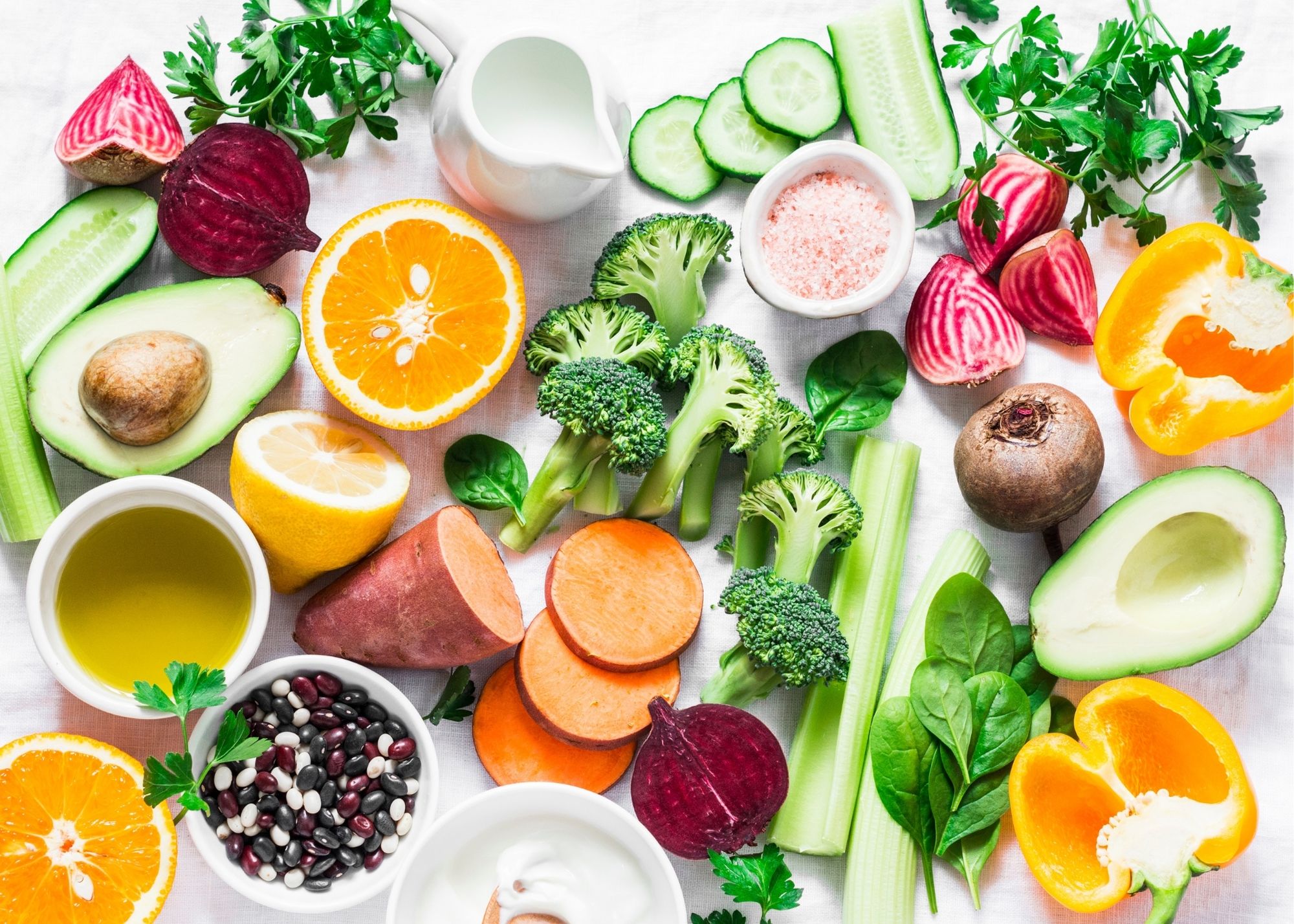
The plan emphasizes fresh whole foods that are low in salicylates, for example:
- Fruits: bananas, cantaloupe, dates, grapefruit, honeydew, kiwi, lemons, mangoes, papaya, pears, pineapple, and watermelon
- Vegetables: bean sprouts, beets, Brussels sprouts, cabbage, carrots, cauliflower, celery, kale, lettuce, mushrooms, onions, peas, potatoes (excluding sweet potatoes), and sweet corn
- Protein sources: beans and lentils
Does the Feingold Diet work?
Despite many individual reports of benefit, most research from the 1970s and 1980s has not confirmed the diet’s effectiveness.
Consequently, the diet has received limited funding and study in recent decades. Some researchers have criticized the design of older trials and urged further investigation. Additionally, the diet’s highly restrictive nature likely discouraged more studies, since strict diets can produce nutritional shortfalls, especially in children.
Studies on food additives
Current research about diet and hyperactivity largely focuses on artificial additives and dyes. Although natural colorants exist, most commercial color additives are synthetic because they offer more consistent color, brightness, and cost advantages.
Recent reviews have found little support for a direct role of salicylates or artificial additives in causing or worsening hyperactivity, ADHD, or autism in children or adults.
More research is requested
Many experts advocate for additional research into food additives and behavior because existing studies often suffer from methodological limitations or inconsistent methods.
For instance, some investigations assessed behavior in young children while others examined adolescents.
Behavioral disorders like hyperactivity and autism are multifaceted and individualized; triggers for one person may not affect another. Therefore, management should be tailored on an individual basis.
Safety of additives
The U.S. Food and Drug Administration (FDA) deems approved food additives and colors safe to eat based on current evidence. Only nine synthetic food dyes are allowed, and none have been conclusively shown to cause hyperactivity or behavioral disorders.
If a child is suspected of having sensitivities, an elimination trial overseen by a qualified professional such as a registered dietitian can help identify triggers while preserving nutritional adequacy.
Although artificial dyes and additives are not clearly linked to hyperactivity, parents should still aim for a balanced diet built on whole, minimally processed foods.
Potential harms and drawbacks
Beyond the lack of strong supportive evidence, the Feingold Diet has several notable downsides.
Highly restrictive
The diet excludes many otherwise healthy foods, including particular nuts, fruits, and vegetables, and bans anything with synthetic additives or dyes.
These limitations can complicate grocery shopping and family meal planning, and may stigmatize certain foods early in life, potentially fostering unhealthy attitudes toward food later on.
Hard to maintain
Many packaged foods contain additives to prolong shelf life, improve taste or appearance, and maintain quality. The Feingold Diet permits none of these, not even as occasional treats.
It also requires considerable homemade meal preparation to avoid inadvertent exposure to banned ingredients, which can be costly and time-consuming—especially when other family members eat differently.
The regimen may also heighten food-related anxiety in social settings like restaurants, schools, or parties where acceptable choices are limited.
Risk of nutrient shortfalls
By banning a range of nutritious foods—certain fruits, vegetables, nuts, and seeds—the diet raises the risk of vitamin and mineral deficiencies.
While careful meal planning can supply adequate nutrition on the diet, this places a heavy burden on caregivers to create meals that meet restrictions, provide necessary nutrients, and remain appealing to the child.
Picky eating, which is more common among children with hyperactivity, further increases the likelihood of deficiencies.
Bottom line
There’s no convincing evidence that the Feingold Diet prevents or treats ADHD, autism, or other behavioral disorders in kids or adults. Moreover, it’s very restrictive, labor-intensive, and could lead to nutritional gaps.
That said, a small subset of children with hyperactivity may respond positively to removing specific food additives.
If you suspect your child is sensitive to additives or particular foods, consult a healthcare professional who can supervise a safe elimination trial and ensure adequate nutrition.
Importantly, do not substitute dietary changes for established medical treatments without professional advice.






















Leave a Reply
You must be logged in to post a comment.