
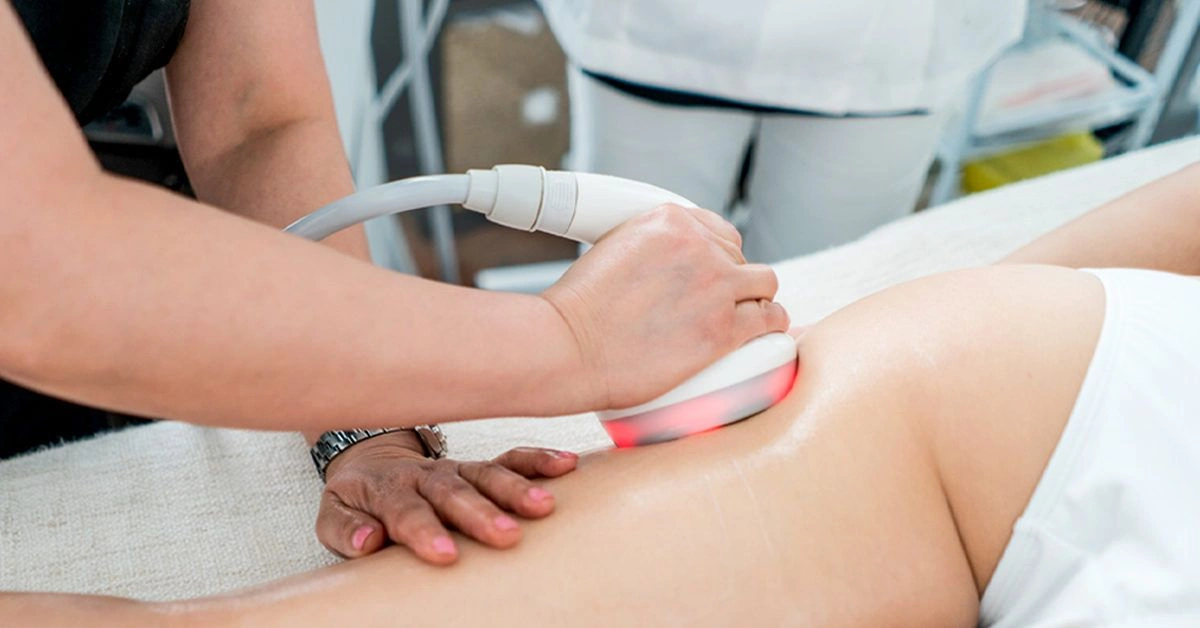
Ultrasonic cavitation is a non-surgical method designed to disrupt fat deposits. It’s promoted as a less costly alternative to liposuction and other invasive procedures.

Fast facts
About
Ultrasonic cavitation, also known as ultrasound cavitation, is a cosmetic technique aimed at fragmenting fat pockets beneath the skin. The procedure is marketed as a less invasive substitute for surgical liposuction.
Safety
While the risks tied to this procedure are minimal, that does not mean side effects are absent.
Short-term effects such as bruising and discomfort are common. Some people experience loose skin or irregularities like dimples and waves in the treated area after healing.
Convenience
Ultrasonic cavitation is touted for its convenience because recovery is brief and serious side effects are uncommon.
The most time-consuming element may be locating and consulting with a licensed, experienced provider who regularly performs the treatment.
Cost
Ultrasonic cavitation typically costs much less than conventional liposuction. Prices vary depending on the treated area and whether multiple sessions are needed, but average sessions run about $250–$350 each.
Effectiveness
Effectiveness varies, and additional clinical research is required to fully determine how well it works.
There is some evidence from studies suggesting ultrasonic cavitation can be a less invasive option compared with surgical liposuction.
What is ultrasonic cavitation treatment?
Ultrasonic cavitation, sometimes called ultrasonic lipolysis, is a body-contouring approach used to reduce fat deposits beneath the skin. It’s also sold under brand names like Liponix or Ultrashape.
This method presents a safer choice compared with surgical procedures like liposuction. It employs ultrasonic radio waves to fragment fat cells, which are then processed and cleared by the lymphatic system.
Ultrasonic cavitation differs from procedures such as ultrasound-assisted liposuction because it doesn’t require incisions. That makes recovery simpler, though results may be less dramatic.
The ideal candidate for ultrasonic cavitation:
- is generally healthy
- does not smoke
- has realistic expectations
- is within roughly 15 pounds of their target weight
This treatment is intended to target localized fat and contour the body, not to achieve large-scale weight loss.
Evidence on ultrasound cavitation’s effectiveness is still evolving, but findings so far are encouraging for body-contouring purposes.
If you’re thinking about this procedure, continue reading to learn about costs, potential side effects, the treatment process, recovery, and more.
How much does ultrasonic cavitation cost?
Ultrasonic cavitation is typically an elective cosmetic procedure, meaning patients pay out of pocket for the treatment and any related expenses. Health insurance generally does not cover body-contouring procedures like ultrasound cavitation.
Price can differ widely and depends on factors such as:
- the specific device used
- the provider’s experience
- the number of sessions required
The average cost of nonsurgical fat-reduction procedures hovers around $1,300.
There are few extra fees beyond the provider’s charge; anesthesia is generally not needed.
Many people are drawn to ultrasonic cavitation because recovery time is short.
This treatment is often described as a “lunch break” procedure, meaning appointments can usually be finished in under an hour. You can drive yourself home and often return to work immediately afterward.
How does ultrasonic cavitation work?
The procedure uses ultrasound technology to fragment fat cells.
Ultrasound waves are delivered into the deeper layers of the skin, creating disruptive vibrations. Fat cells separate from one another and detach from the dermal layers.
Over the following days, those fat cells are taken up by the lymphatic system and eliminated as waste from the body.
Measuring the exact effectiveness of the treatment is challenging, but contemporary research offers hopeful results.
A small 2019 study assessed ultrasonic cavitation in 50 women classified as medically overweight.
Half followed a reduced-calorie diet alone, while the other half combined the diet with radiofrequency and ultrasound body-contouring treatments.
After five weeks, the group receiving ultrasonic cavitation showed a decline in body fat mass. Notably, they did not lose more total weight than the diet-only group — they lost body fat specifically.
An earlier 2007 study of 30 participants who received ultrasonic cavitation reported reductions in body fat mass after three treatments.
The treated areas decreased by about one to three centimeters by the study’s end.
That study likewise found participants did not lose overall body weight, but did lose fat.
What happens during an ultrasonic cavitation session?
The ultrasonic cavitation session is straightforward.
On the day of treatment, your clinician may ask you to change into a paper gown, depending on which body area will be treated.
The provider may clean the treatment area with alcohol. Using a handheld ultrasound device, they will move it slowly over the target area.
You might feel warmth and hear a buzzing noise from the machine. Sessions usually last about 40 minutes to an hour.
Targeted areas for ultrasonic cavitation
Some research indicates the technique can be effective for reducing fat in fibrotic regions, such as the back and chest.
Ultrasonic cavitation is also commonly used on the:
- abdomen
- hips
- face
- neck
- upper arms
- thighs
Ultrasonic cavitation side effects
For most individuals, ultrasonic cavitation is low risk. Common side effects include:
- redness
- bruising
- headache
In some cases, fat isn’t reabsorbed evenly after breakdown, which can lead to lumps, bumps, or uneven contours in the skin following treatment.
These irregularities may improve with additional follow-up sessions.
What to expect after ultrasonic cavitation
After the procedure you should be able to stand and drive home on your own.
Discomfort and bruising tend to be mild. You’ll be advised to drink plenty of water to help flush the disrupted fat cells through the lymphatic system.
Don’t expect immediate visible changes. Immediately following treatment you may notice puffiness or swelling. It takes time for the body to metabolize and eliminate the dislodged fat cells.
Multiple sessions may be necessary to achieve noticeable results. Many patients see final results within 6 to 12 weeks. Typically, 1 to 3 visits are needed for visible change.
Results can be long-lasting if you maintain healthy diet and exercise habits. With a sedentary lifestyle, treated areas may accumulate fat again.
Before and after pictures
Preparing for ultrasonic cavitation
Your provider will supply preparation instructions that you should follow closely.
Be sure to inform your clinician about the following before treatment:
- any current medical conditions
- any herbal supplements you take
- any prescription medications you use
Avoid alcohol for at least 48 hours before your appointment.
You may also be advised to refrain from nonsteroidal anti-inflammatory drugs (NSAIDs) like ibuprofen for up to two weeks before the procedure.
Hydrate well before and after treatment to aid in flushing out fat deposits.
Ultrasonic cavitation vs. CoolSculpting
Both ultrasonic cavitation and CoolSculpting are noninvasive body-contouring techniques.
They share the same objective: reducing localized fat to create a slimmer appearance.
Neither is intended for major weight loss, and both are safer and less invasive than surgical liposuction.
Ultrasonic cavitation uses ultrasound frequencies to break down fat cells, whereas CoolSculpting exploits the body’s reaction to controlled cold to eliminate fat.
CoolSculpting generally costs more than ultrasonic cavitation and typically requires longer time spent in the clinic during each session.
Ultrasonic cavitation at home
There are consumer ultrasonic cavitation devices available for home use. While pricier than many small appliances, they often cost less than in-office procedures.
Effectiveness varies. Devices delivering roughly 4.4–7.5 megahertz (MHz) of ultrasound for 20–50 minutes per session may yield skin-tightening effects similar to some clinical treatments.
Trying these products is likely safe, but their value may be limited and you might not get results comparable to professional treatments.
How to find a provider
A reputable provider will offer a consultation to review your options and show before-and-after examples of their work.
Selecting a licensed, experienced professional trained in ultrasonic cavitation will substantially influence your outcomes.
For safety, choose a provider certified in ultrasonic cavitation. You can start your search using the American Society of Plastic Surgeons’ search tool.
















Leave a Reply
You must be logged in to post a comment.