
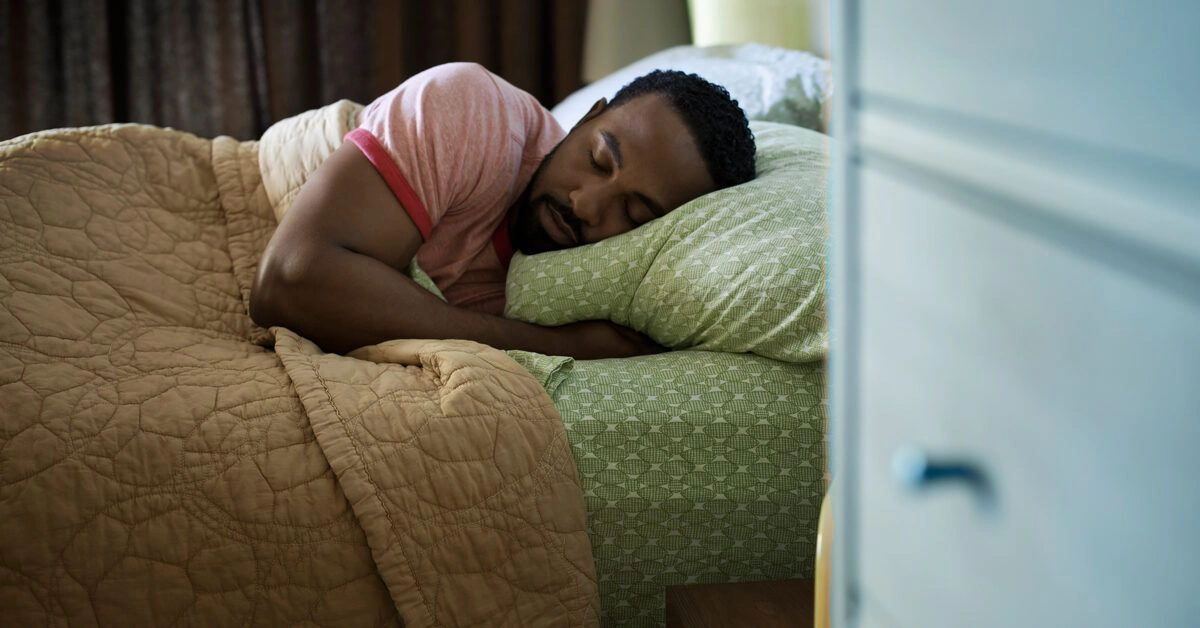
Your sciatic nerve is the largest nerve in the body. It originates in the spinal cord, travels through the hips and buttocks, and extends down the back of each leg.
Sciatica occurs when this sciatic nerve becomes compressed or irritated. It is most commonly triggered by a herniated disc in the lower back. The defining symptom is sharp, radiating pain that follows the path of the nerve. This discomfort can range from mild to severe and usually affects one side of the body.
For many people, learning How to sleep through nerve pain is one of the biggest challenges of living with sciatica. Certain sleeping positions can place added pressure on the irritated nerve, leading to nighttime flare-ups. Fortunately, adjusting your posture in bed may significantly reduce discomfort and improve sleep quality.
Below, we explore practical strategies and evidence-based positioning tips to help you rest more comfortably with sciatica and better understand How to sleep through nerve pain without worsening symptoms.
Best positions for sleeping with sciatica
Sciatica and other forms of low back pain can severely disrupt sleep. Research suggests that up to 55 percent of individuals with chronic lower back pain experience sleep disturbances. Poor sleep, in turn, can heighten pain sensitivity and slow recovery, creating a frustrating cycle.
Finding the most comfortable sleep position may require some experimentation. However, a key principle for those wondering How to sleep through nerve pain is maintaining the natural alignment of the spine. Positions that keep the spine neutral and reduce pressure on the lower back are generally most helpful.
On your side
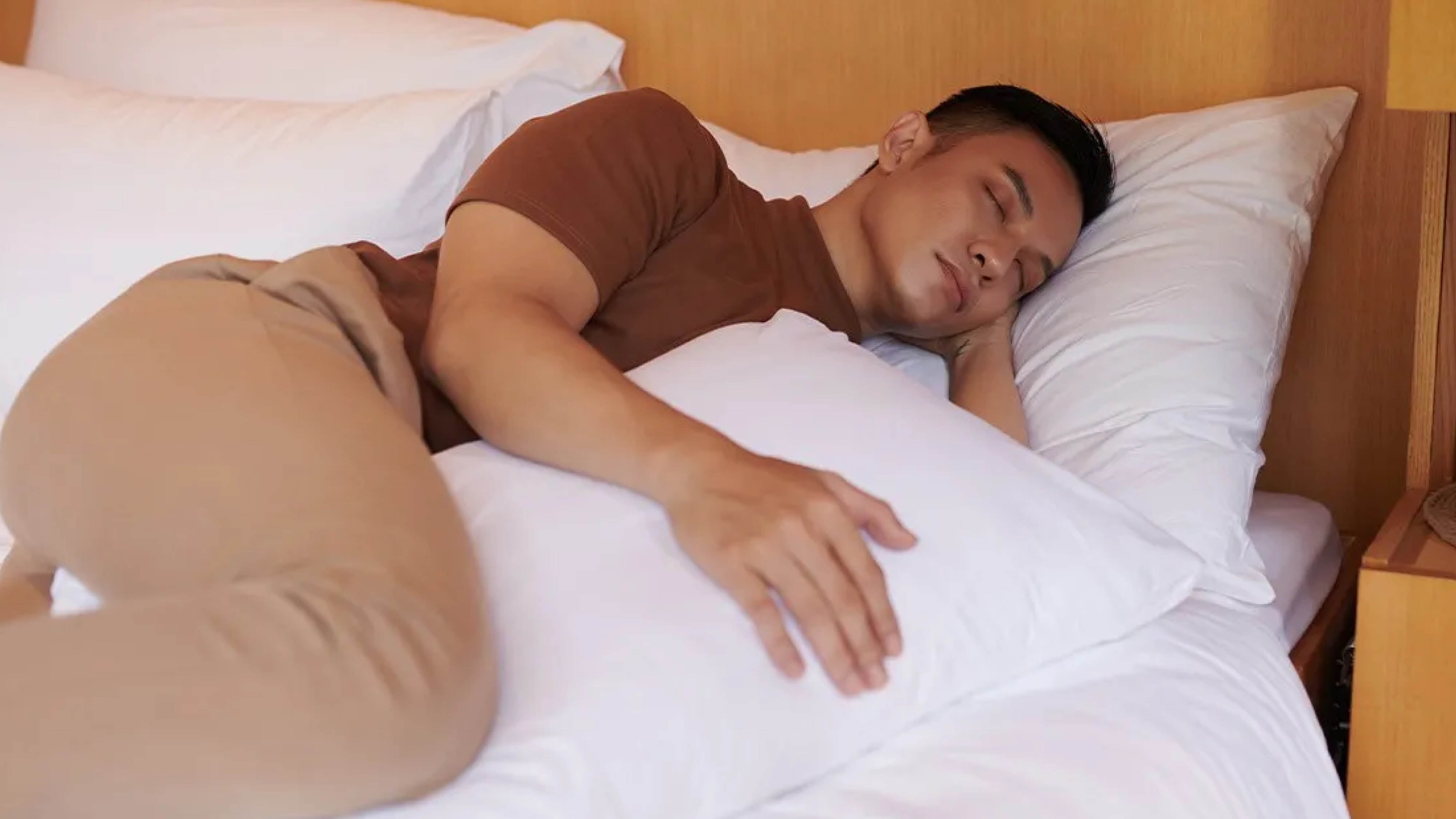
Side sleeping can ease tension on the lower back and may reduce pressure on the inflamed sciatic nerve.
How to set up:
- Lie on your mattress with the affected side facing upward.
- If there’s space between your waist and the mattress, place a small pillow there to minimize side bending and maintain spinal alignment.
This position is often recommended for individuals searching for practical ways to manage nighttime nerve discomfort. For additional guidance on side sleeping strategies, you may find How to sleep with peripheral neuropathy helpful, as many positioning principles overlap.
Place a pillow between your knees
Adding a pillow between your knees helps keep your pelvis, hips, and spine properly aligned. It also prevents your upper leg from rotating forward during the night, which can strain the lower back.
How to set up:
- Rest your shoulder against the mattress first, then gently roll the rest of your body into position.
- Slightly bend your knees and insert a thin pillow between them.
- If there is a gap between your waist and the mattress, consider adding a small pillow there as well.
This small adjustment can make a significant difference when trying to sleep through nerve pain caused by spinal misalignment.
Fetal position
The fetal position may create additional space between the vertebrae, potentially easing back pain related to a herniated disc. However, some individuals report increased discomfort in this posture.
If you notice worsening symptoms, try an alternative position from this list.
How to set up:
- Lie on your side and gently draw your knees toward your chest so your body forms a “C” shape.
- You may place a pillow between your knees or beneath your waist for added support.
On your back with a pillow under your knees
Sleeping on your back distributes body weight more evenly and reduces concentrated pressure points. Placing a firm pillow beneath your knees can help preserve the natural curve of your spine by relaxing tight hip flexors.
How to set up:
- Lie flat on your back with a supportive pillow under your head.
- Position one or two pillows under your knees, allowing your heels to rest comfortably on the mattress.

This posture is frequently recommended by healthcare providers when discussing How to sleep through nerve pain linked to lower back issues.
With a towel or pillow under your lower back
Placing a rolled towel or slim pillow under your lower back can reduce the space between your lumbar spine and the mattress, helping maintain a neutral spinal position.
How to set up:
- Lie on your back with a comfortable pillow supporting your head.
- Slide a thin towel or pillow under your lower back to keep your pelvis aligned.
- For extra comfort, combine this with a pillow under your knees.
Sleep on the floor
Very soft mattresses can allow the spine to sag out of alignment. Some individuals find that resting on a firm surface, such as the floor, improves spinal support.
How to set up:
- Place a thin mat, such as a yoga mat or camping mat, on the floor.
- Lie down in one of the supportive positions described above.
While this approach is not suitable for everyone, it may offer relief for those whose mattresses contribute to nighttime nerve irritation.
Best sleeping position for sciatica in pregnancy
During pregnancy, healthcare professionals typically advise sleeping on your side.
Sleeping on the left side is often labeled ideal because it is believed to optimize blood flow through the inferior vena cava. However, a 2019 review of studies concluded that resting on either the left or right side is equally safe for both mother and baby.
If you’re pregnant and dealing with sciatica, lying on the non-affected side may help reduce symptoms. Placing a pillow between your knees or between your waist and the mattress can further decrease pressure on the sciatic nerve and support pelvic alignment.
Avoid these sciatica pain sleeping positions
Sleeping on your stomach is generally discouraged if you have sciatica or chronic lower back pain.
When lying on your stomach, your spine naturally arches toward the mattress. This excessive curvature can strain muscles and joints, particularly on a soft mattress, and may intensify nerve compression.
Regardless of your preferred position, try to avoid twisting your hips or spine. Rotational strain can aggravate sciatic nerve irritation. If you’ve ever wondered Why is my neuropathy worse when I lay down, spinal alignment and mattress support often play a major role.
Tips to relieve sciatic pain when sleeping
Beyond positioning, several practical strategies can support your efforts to sleep more comfortably.
- Avoid overly soft mattresses. A mattress that is too plush can cause your body to sink, disrupting spinal alignment and increasing nerve pressure.
- Choose a medium to firm mattress. A 2015 review of studies found that mattresses described as medium-firm were most effective for improving sleep quality and spinal alignment. Mattresses designed for lower back pain or sciatica may offer additional support.
- Place plywood under your mattress. If replacing your mattress isn’t feasible, try inserting a plywood board between the mattress and box spring to increase firmness. You may also experiment with placing your mattress directly on the floor.
- Use a body pillow. A full-length body pillow can help maintain side-sleeping posture and prevent rolling onto your stomach during the night.
- Incorporate stretching or yoga. Gentle stretching or yoga before bed may loosen tight muscles, decrease inflammation, and reduce pressure on the sciatic nerve.
- Take a warm bath. Warm water can relax muscles and temporarily soothe lower back pain before bedtime.
- Practice good sleep hygiene. Maintain a consistent bedtime, keep your bedroom at a comfortable temperature, and avoid caffeine in the evening to enhance overall sleep quality.

Combining these habits with supportive positioning can make it easier to understand and apply How to sleep through nerve pain effectively.
What makes sciatic nerve pain worse in bed?
Some people notice their sciatica symptoms intensify at night. Lying down may increase pressure on the irritated nerve, especially if your mattress allows your spine to bend unnaturally.
Reduced daytime distractions can also make pain feel more noticeable. Additionally, inflammation may become more apparent when muscles relax in bed, contributing to heightened discomfort.
When to see a doctor
If your sciatica pain lasts longer than a week or progressively worsens, consult a doctor for an accurate diagnosis. Identifying whether a herniated disc or another condition is causing the nerve compression is essential for determining appropriate treatment options.
Seek immediate medical care if you experience severe weakness, loss of bladder or bowel control, or worsening neurological symptoms.
Takeaway
Sciatica can make lying down uncomfortable, but strategic positioning can help. In general, sleeping on your side or back is preferable to sleeping on your stomach.
Side sleepers often benefit from placing a pillow between their knees and possibly under their waist. Back sleepers may find relief by adding support under their knees and lower back.
With the right mattress, proper alignment, and thoughtful nighttime habits, it is possible to improve sleep quality and better manage sciatic discomfort—bringing you closer to truly learning How to sleep through nerve pain with greater comfort and consistency.





















Leave a Reply
You must be logged in to post a comment.