
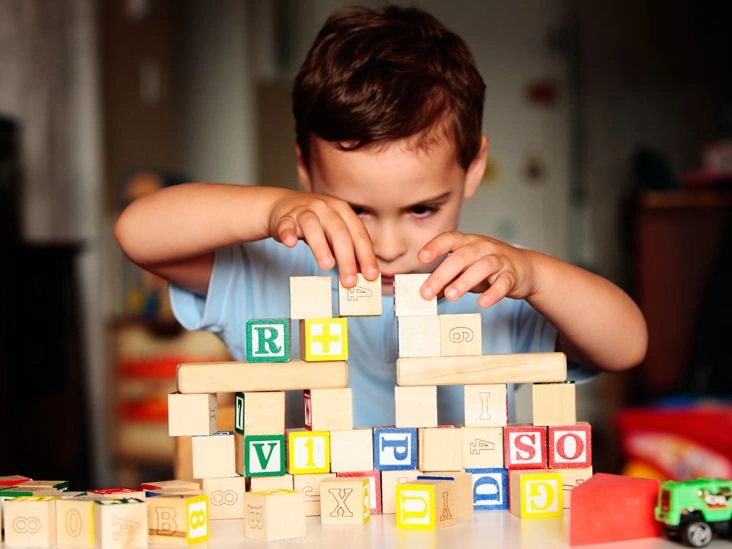
If your child has a developmental expressive language disorder (DELD), they may struggle to recall vocabulary or craft complex sentences. For instance, a 5-year-old with DELD might use brief, three-word utterances. When posed a question, they may be unable to locate the appropriate words to respond.

DELD typically affects expressive language only and does not impair your child’s ability to read, listen, or produce sounds, unless other learning issues are present.
The causes of DELD
The origins of DELD are not well understood. It generally isn’t linked to a child’s intellectual capacity. In many cases, no clear cause is identified. The condition can be hereditary or run in families. Very rarely, it may follow brain injury or severe malnutrition. Other conditions, such as autism spectrum disorder and hearing loss, can accompany some language problems and may exacerbate symptoms. Damage to the central nervous system can increase the risk of a language disorder known as aphasia.
The symptoms of DELD
DELD may present by itself or alongside other language challenges. Signs typically center on vocabulary difficulties and problems with word retrieval. For example, your child might be unable to remember words they have recently learned. Their vocabulary may be smaller than peers of the same age. Your child may have trouble producing long sentences, omit words, or use words in the wrong sequence. They may also mix up verb tenses; for example, saying “I jump” instead of “I jumped.”
Children with DELD often rely on filler sounds such as “uh” and “um” when they can’t think of the right expression. They also frequently repeat phrases or portions of questions while formulating an answer.
Receptive-expressive language disorder
If your child shows the symptoms above and also struggles to comprehend what you say, they may have receptive-expressive language disorder (RELD). In such cases, your child can have difficulty understanding information, organizing thoughts, and following directions.
Understanding developmental milestones
Some children experience delays in language that resolve over time. With DELD, however, a child might acquire some language skills but not others. Knowing typical language milestones can help you determine whether a visit to your child’s doctor is warranted.
Your child’s pediatrician may refer you to a speech therapist, psychologist, or child development specialist. They will typically gather a family medical history to see if language or speech issues occur among relatives.
| When to see a doctor about your child’s language development | |
| 15 months old | Your child is not saying any words. |
| 2 years old | Your child’s vocabulary is limited to fewer than 25 words. |
| 3 years old | Your child is still speaking in two-word sentences. |
| 4 years old | Your child often repeats your questions or does not speak in full sentences. |
A speech-language pathologist is commonly recommended. These professionals evaluate and treat people who have trouble expressing language. During an evaluation, your child will take standard tests for expressive language disorder. A hearing test may also be ordered to exclude hearing loss as the source of language problems. Additional assessments for other learning disabilities may be needed.
Treating expressive language disorder
Treatment options for DELD include language therapy and counseling.
Language therapy
To build language skills, children need to be able to:
- receive information
- comprehend information
- remember information
Speech therapy aims to assess and strengthen these abilities while expanding your child’s vocabulary. A speech therapist might use repetition of words, picture cues, customized reading materials, and other strategies to foster communicative growth.

Counseling
Children who struggle to express themselves can become frustrated and socially withdrawn. They may get into conflicts because they can’t find the right words during disagreements. Counseling can teach coping strategies for managing frustration related to communication difficulties.
Recovering from DELD
The prognosis for children with DELD is most favorable when the disorder occurs without other conditions, such as hearing loss, brain injury, or additional learning disabilities. With targeted language therapy, most children with DELD can learn to express themselves effectively. Counseling can also support social adjustment and prevent low self-esteem. Early intervention is important to reduce the emotional and social challenges that can arise from the disorder.
Q:
My first child had trouble communicating with us and began speaking later than typical. I’m worried the same delay will affect my second child, who is now 15 months old. Is there anything I can do to prevent her from having similar language difficulties?
A:
Your concern about your daughter’s speech development is understandable. Without knowing your first child’s exact diagnosis, it’s hard to estimate the likelihood of a similar delay. For most DELD cases, the full cause remains unknown, although genetics likely contribute. If you notice she is not meeting verbal or social milestones, I strongly recommend discussing your worries with her pediatrician at the 15-month (or 18-month) checkup so a thorough assessment can be completed.



















Leave a Reply
You must be logged in to post a comment.