
When citrus season arrives and the produce aisle overflows with different varieties, it’s easy to feel overwhelmed by the choices.
Each variety has its own traits, so if you’re after a particular taste, mouthfeel, or peel, it helps to know how they differ.
This article outlines the main distinctions and commonalities between two well-loved citrus types — tangerines and clementines.

Very closely related
Tangerines and clementines are both hybrids derived from the small mandarin orange. They form the second-largest commercial group of citrus after sweet oranges, which include larger cultivars like navel and blood oranges (1).
They share many mandarin traits, including a smaller size compared with navels, few or no seeds, a sweet taste, and a thin, soft rind that peels easily (2).
Because tangerines and clementines look so similar, they’re often mistaken for one another or assumed to be identical.
Tangerines
Tangerines (Citrus tangerina) are believed to originate from Southeast Asia (3).
The name comes from their historical shipment through the port of Tangier in Morocco.
In the U.S., tangerines are frequently referred to as mandarins. While every tangerine is a mandarin, not every mandarin qualifies as a tangerine.
They grow in warm climates worldwide and tend to tolerate cool conditions a bit better than larger sweet orange varieties. In stores, they’re typically available from November to April.
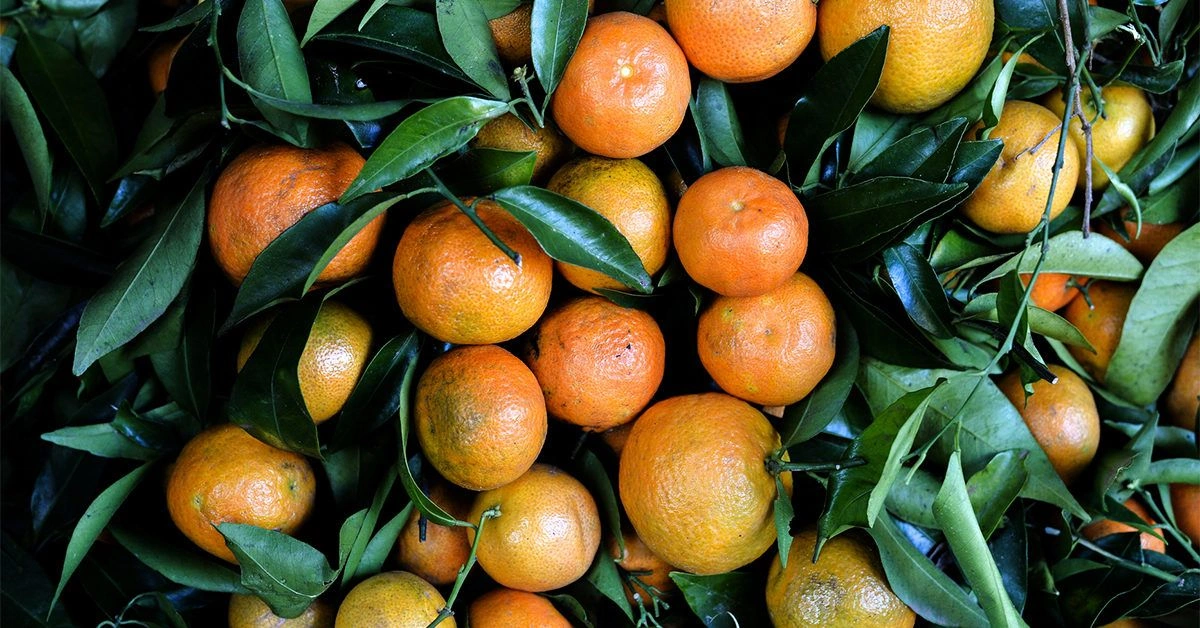
Tangerines are sweeter than navel oranges but retain a hint of tartness. Their skin is a deeper reddish-orange, soft and slightly pebbled, and it peels very easily.
Clementines
The clementine (Citrus clementina) is another mandarin cultivar. Like tangerines, it’s sweet and has a skin that’s simple to remove (2).
You can tell it apart from a tangerine by its marginally smaller size, brighter orange hue, and smoother, glossier skin. The rind is thinner, making it even easier to peel than a tangerine.
Clementines are often a bit more oval than tangerines, frequently showing a flattened area at the top and bottom.
They’re commonly sold in packages under brand names such as “Halos” or “Cuties,” though those labels are marketing terms rather than true varietal names.
Like tangerines, clementines are more cold-tolerant than larger oranges and are generally found from November through April (2).
Summary: Tangerines and clementines are both types of mandarins prized for their sweetness and soft, easy-to-peel rinds. Between the two, clementines are sweeter and the easiest to peel.
Nearly identical nutritionally
Given their close relationship, it’s unsurprising that tangerines and clementines have very similar nutrition profiles. Like other citrus, they provide carbohydrates with minimal protein and fat.
Here are the primary nutrients in an average-sized (75-gram) fruit of each type (4, 5):
| Tangerine | Clementine | |
|---|---|---|
| Calories | 40 | 40 |
| Protein | 1 gram | 1 gram |
| Fat | less than 1 gram | less than 1 gram |
| Carbs | 10 grams | 9 grams |
| Fiber | 1 gram | 1 gram |
| Vitamin C | 20 mg, 34% of the Daily Value (DV) | 36 mg, 60% of the DV |
Despite their modest size, both tangerines and clementines are rich in vitamin C, a vital nutrient that supports immune health by enhancing white blood cell activity (6).
Vitamin C also plays roles across the body, including collagen production for healthy skin, joints, and bones, and aiding iron metabolism (6).
Although both fruits supply vitamin C, clementines deliver more per fruit. Eating two clementines can provide over 100% of your daily vitamin C needs (5).
Beyond vitamin C, both contain carotenoid pigments (3, 6).
These orange and yellow plant pigments serve as provitamin A precursors, meaning they can be converted into vitamin A in the body. They also act as antioxidants to shield cells and DNA from oxidative stress (3, 6, 7).
The main carotenoid in mandarins is beta-cryptoxanthin, with smaller amounts of alpha- and beta-carotene. You’ll get more carotenoids by eating the whole fruit rather than drinking mandarin juice (3, 6, 8).
Summary: Tangerines and clementines deliver nearly the same calories, macronutrients, and fiber. Both supply provitamin A carotenoids, while clementines contain notably more vitamin C.
Both provide many health benefits
Beyond flavor, adding more tangerines and clementines to your meals can offer meaningful health advantages.
Research suggests beta-cryptoxanthin, prominent in both fruits, is more readily absorbed than other carotenoids like beta-carotene (9).
As a provitamin A, beta-cryptoxanthin effectively raises vitamin A levels, which are important for immune health, vision, and cell growth and differentiation (9, 10).
Both tangerines and clementines are also rich in flavonoid phytochemicals such as naringin and hesperidin (3).
Studies indicate these flavonoids, when derived from citrus, can lower inflammation markers, enhance arterial blood flow, support bone density, and reduce asthma risk (3, 6).
Also, roughly 65–70% of the fiber in both fruits is soluble fiber, which benefits digestion and may help lower cholesterol (3, 6).
Summary: Consuming either fruit can help raise vitamin A status and provide flavonoids and soluble fiber that support cardiovascular, digestive, and bone health.
How to enjoy tangerines and clementines
The simplest way to enjoy tangerines and clementines is to take one (or several) on-the-go. They travel well, don’t need refrigeration, and their soft, easy-to-peel rinds make them ideal for both adults and kids.
They’re also excellent in salads. Combine the segments with leafy greens, toasted almonds or sunflower seeds, and a bit of goat cheese for a sweet-savory mix.
If you have a surplus from a home tree, consider juicing them. You’ll lose some fiber and a bit of the beta-cryptoxanthin, but you’ll still get a generous amount of vitamin C and flavonoids.
The outer zest and the white pith beneath it aren’t commonly eaten, but they’re usable. Just wash the fruit well before using the peel.
Citrus rinds contain essential oils, flavonoids, and other antioxidant compounds. You can zest the peel to flavor dishes or pair it with herbs while cooking (11).
Try drying the peels and adding a piece to tea for a gentle orange note and fragrant aroma.
The white pith under the peel is rich in pectin, which is useful for jams and jellies (11).
To make tangerine or clementine marmalade:
- Slice 3 whole fruits very thinly, then chop coarsely.
- Place the fruit in a saucepan with 3 tablespoons (45 mL) water and 1/2 cup (32 grams) sugar.
- Simmer for 30–40 minutes until the fruit softens and darkens slightly.
- When thickened, transfer to a jar and refrigerate.
As it cools, natural pectin will help the mixture set into a marmalade-like consistency.
One practical tip for both fruits: eat them soon after purchase. Their delicate skins make them more perishable than larger oranges.
Mandarins can start to develop off-flavors within about 3 weeks after harvest, and more noticeably by 6 weeks, so it’s best to consume them fairly quickly. Refrigeration can prolong freshness by a week or two (2, 12).
Summary: Both fruits make a convenient, tasty snack or salad addition. Rather than discarding peels, dry some for tea or spices. If you have extras, juice them or prepare marmalade.
The bottom line
Tangerines and clementines are closely related members of the mandarin family.
These small citrus fruits are loaded with compounds that may lower heart disease risk, support bone health, and benefit digestion.
Clementines are a touch smaller, sweeter, and easier to peel than tangerines, but both make a sweet, nutritious snack.
Enjoy them throughout the winter as a convenient, peelable snack, tossed into salads, or transformed into homemade marmalade. For more on their nutrient content, see clementine nutrition.






















Leave a Reply
You must be logged in to post a comment.