

Named for their distinctive green-rimmed shells, green-lipped mussels — also called New Zealand mussels — are shellfish indigenous to New Zealand.
They’ve been promoted for their medicinal qualities and have grown in popularity as dietary supplements.
The mussels are rich in several anti-inflammatory compounds that are marketed for treating inflammatory disorders, including asthma and arthritis.
This article covers what you need to know about green-lipped mussel supplements, including possible benefits, available forms, and safety considerations.
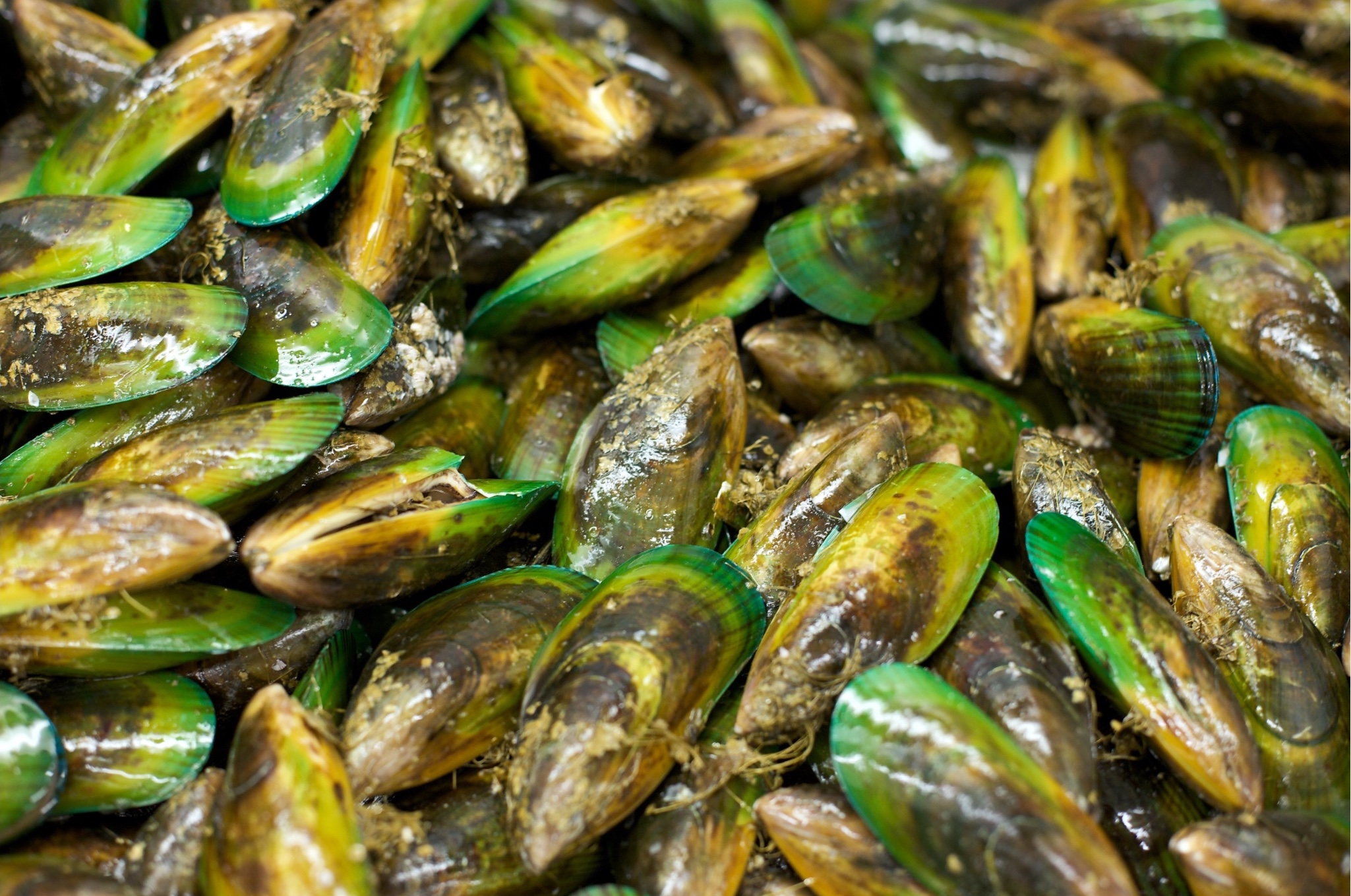
Green-lipped mussels are nutrient-dense
The green-lipped mussel has long been part of the traditional diet of New Zealand’s Māori communities.
Interest in its health-promoting potential began in the early 1970s after observations that coastal Māori populations had lower rates of arthritis compared with people living inland (1).
Subsequent work showed the mussels are a rich source of anti-inflammatory omega-3 fatty acids, notably eicosapentaenoic acid (EPA) and docosahexaenoic acid (DHA) (2, 3, 4).
Researchers have also isolated other fatty acids from the mussels that may exert anti-inflammatory effects by blocking enzymes and proteins responsible for inflammation and pain (5, 6, 7).
Green-lipped mussels also contain chondroitin sulfate, a component of connective tissues such as joints and cartilage that may reduce inflammation through similar mechanisms (8).
Beyond these anti-inflammatory substances, the mussels provide zinc and are excellent sources of iron, selenium, and several B vitamins (9).
Summary: Green-lipped mussels supply anti-inflammatory compounds like omega-3s and chondroitin sulfate, along with key vitamins and minerals.
Impact on inflammation
Extracts from green-lipped mussels have been evaluated for several inflammatory conditions, particularly asthma and types of arthritis.
Asthma
Asthma is a chronic inflammatory disease of the airways that can make breathing difficult.
By helping to reduce airway inflammation, green-lipped mussel extracts might benefit people with asthma.
In one crossover trial, participants with asthma received either 400 mg of a green-lipped mussel extract or a placebo daily for 3 weeks, then switched to the other treatment for another 3 weeks (10).
The extract produced significant decreases in airway inflammation and asthma symptoms compared with placebo.
Another 8-week trial found that a similar 400 mg daily mussel extract reduced the frequency of asthma symptoms and airway inflammation versus placebo (11).
Although these findings are encouraging, further research is required.
Arthritis
Arthritis causes painful swelling and stiffness in one or more joints and is driven by chronic inflammation.
The most common varieties are osteoarthritis (OA) and rheumatoid arthritis (RA).
Because of its anti-inflammatory profile, green-lipped mussel extract has been proposed to lessen joint inflammation and ease arthritis symptoms.
However, one review found limited evidence supporting green-lipped mussel extract for RA or OA, particularly when compared with other nutritional supplements such as glucosamine and chondroitin, which have stronger evidence (12, 13).
Conversely, a review of four randomized trials reported improvements in joint pain and stiffness among people with OA taking green-lipped mussel extract (14).
Still, these results can’t be conclusively attributed to the extract because participants in those trials were also using pain-relief medications.
Those studies were also of low quality and subject to biases that may have skewed outcomes.
More recent trials have produced mixed results or suffered from methodological weaknesses (15, 16).
Consequently, evidence for the effectiveness of green-lipped mussels in easing arthritis symptoms remains limited.
Summary: Current evidence is sparse or inconsistent and does not firmly support green-lipped mussel supplements for asthma or arthritis.
Other possible benefits
Beyond asthma and arthritis, green-lipped mussel extracts have been explored for potential advantages in athletes and in children with certain behavioral disorders.
Muscle soreness
Delayed onset muscle soreness (DOMS) refers to muscle pain and stiffness that typically appears 24–48 hours after unfamiliar or intense exercise and can persist for several days (17).
One contributor to DOMS is exercise-induced muscle damage that triggers an inflammatory response (18).
While commercial green-lipped mussel extracts failed to improve DOMS in well-trained athletes, an 11-week course of 400 mg daily reduced pain in less-trained individuals (19, 20).
ADHD
Attention deficit hyperactivity disorder (ADHD) is a common pediatric condition that impairs attention and task organization (21).
The origins of ADHD are not fully understood, but genetic factors are believed to play a major role (22).
Emerging evidence also links ADHD with inflammatory processes (23).
One trial in children aged 6–14 with ADHD symptoms reported meaningful improvements in attention and learning after 8 weeks — but not 14 weeks — of a commercial extract providing 150–200 mg of green-lipped mussel (24).
Because this is the sole study to date assessing the extract’s impact on ADHD, additional trials are required.
Summary: Green-lipped mussel extracts might help with other inflammatory issues like DOMS and ADHD symptoms in children, but more research is needed to confirm these effects.
Forms of supplements
Green-lipped mussel supplements are available as oils or powders and can be purchased online or from health food retailers.
Less commonly, topical gels and creams claim to relieve joint pain and muscle soreness when applied to the skin.
Most clinical studies evaluating anti-inflammatory effects have used oil extracts.
Interestingly, some research suggests EPA may be absorbed better from powdered products than from oil preparations (25).
If you decide to try a green-lipped mussel product, choose one manufactured using processes that preserve the mussel’s natural nutrient profile.
Freeze-drying is one such method: it removes water at low temperatures, helping to maintain product stability and nutrient integrity.
Also prefer reputable manufacturers that use third-party testing to confirm product quality and safety.
Summary: Green-lipped mussel supplements come in powders, capsules, oils, creams, and gels. Regardless of format, pick products made in ways that preserve their nutrients.
Safety and adverse effects
Because green-lipped mussels are shellfish, avoid these supplements if you have a shellfish allergy or intolerance.
Pregnant or breastfeeding people should also avoid them due to limited safety data (1).
Outside those groups, a few adverse effects have been associated with green-lipped mussel supplements.
Early reports described liver inflammation linked to a brand of products contaminated with toxins produced by the mussel (1).
Other side effects reported include fluid retention, nausea, and gastrointestinal upset (1).
More recent studies, however, have not found serious adverse events tied to mussel-containing supplements (15, 16).
Finally, green-lipped mussel products might interact with or amplify the effects of certain medications, such as anticoagulants and anti-inflammatory drugs like NSAIDs.
Keep these precautions in mind, and consult your healthcare provider if you’re uncertain whether a green-lipped mussel supplement is appropriate for you.
Summary: Some adverse reactions have been reported with green-lipped mussel supplements; consider these risks before use.
The takeaway
Green-lipped mussels, native to New Zealand, have long been eaten by the Māori people.
They’re sold as supplements because they contain various anti-inflammatory nutrients, including omega-3 fatty acids and chondroitin sulfate, along with several vitamins and minerals.
However, evidence supporting the use of green-lipped mussel supplements for inflammatory conditions such as asthma, arthritis, DOMS, or ADHD in children is limited and inconsistent.
If you’re considering a green-lipped mussel supplement, choose one made with nutrient-preserving methods like freeze-drying and discuss potential risks and interactions with your healthcare provider.






















Leave a Reply
You must be logged in to post a comment.