

The safflower plant (Carthamus tinctorius L.) belongs to the Asteraceae family, commonly known as the sunflower family.
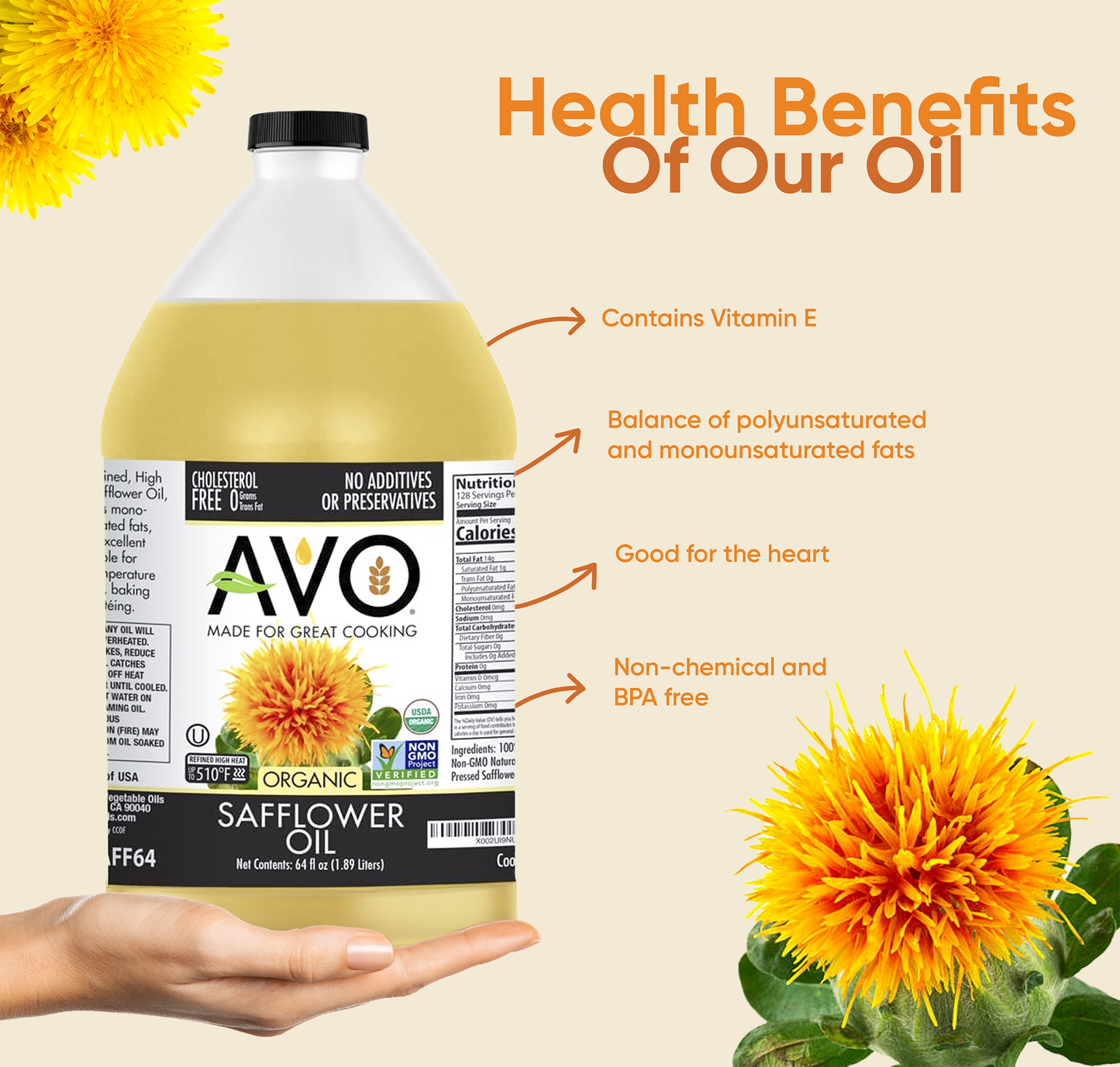
This thistle-like species originates from regions such as China, India, Iran and Egypt, but it’s grown worldwide — including in North America — mainly for its oil and sometimes as livestock feed (1).
Safflower oil is extracted from the seeds of the safflower plant.
There are two primary forms of safflower oil available: high-linoleic and high-oleic. The high-linoleic version is abundant in polyunsaturated fats, whereas the high-oleic type is richer in monounsaturated fats (2).
The high-oleic variety is more commonly found on store shelves. It’s favored as a heat-stable cooking oil, particularly for frying foods like french fries and chips (2).
This preference stems from safflower oil’s relatively high smoke point — about 450°F (232°C). In fact, its smoke point exceeds that of many commonly used oils, including canola oil (3).
The smoke point is the temperature at which a fat begins to produce smoke, releasing noxious vapors and potentially damaging compounds known as free radicals (4).
Generally, fats with higher smoke points are better suited for sautéing and frying.
Like most oils, safflower oil isn’t a significant source of vitamins and minerals, though it does provide a good amount of vitamin E.
Nutrition facts for 1 tablespoon (14 grams) of safflower oil are as follows (5):
- Calories: 124
- Fat: 14 grams
- Protein: 0 grams
- Carbs: 0 grams
- Vitamin E: 32% of the daily value (DV)
As shown, safflower oil is almost entirely fat and provides little beyond vitamin E.
The oil is primarily made up of oleic and linoleic acids. These two unsaturated fatty acids comprise about 90% of safflower oil, while saturated fats such as palmitic and stearic acids account for the remaining roughly 10% (6).
Research indicates that conventional safflower oil typically contains (6):
- 6–8% palmitic acid
- 2–3% stearic acid
- 71–75% linoleic acid
- 16–20% oleic acid
That said, the proportions of linoleic and oleic acids in safflower seeds can vary significantly. Some cultivars are extremely high in linoleic acid (up to about 89%), while others are predominantly oleic (as much as 91%) (6).
Summary: Safflower oil is derived from safflower seeds. It’s rich in unsaturated fats and commonly used for high-heat cooking like frying.
Does safflower oil offer any health advantages?
As noted earlier, safflower oil is mainly fat and — apart from vitamin E — is not a notable source of other vitamins or minerals.
It’s relatively high in vitamin E, a fat-soluble antioxidant that supports immune function.
However, many everyday foods — such as avocados, sunflower seeds, almonds, and spinach — also supply vitamin E, so deficiencies are uncommon in people with balanced diets (7).
Compared with better-studied oils like olive oil, safflower oil has less robust evidence backing health claims.
Some research suggests that the omega-6 fatty acid linoleic acid — the dominant component in standard safflower oil — may be detrimental when eaten in excess (8).
A 2020 review proposed that very high intakes of linoleic acid could negatively affect the brain by fostering neuroinflammation (8).
Although some studies have found that linoleic acid–rich oils like standard safflower oil can help lower cholesterol and potentially reduce heart disease risk, researchers caution that effects on other health outcomes are uncertain and that current linoleic acid consumption is likely excessive (9).
While the body requires small amounts of linoleic acid, typical intakes in many populations far exceed those minimal needs.
Intake of omega-6 linoleic acid has increased dramatically over past decades, altering the omega-6:omega-3 balance from an estimated 4:1 to around 20:1 in many diets (8).
Both omega-3 and omega-6 fatty acids are essential, but omega-3s (such as EPA and DHA) tend to be anti-inflammatory, whereas omega-6s like linoleic acid are relatively more pro-inflammatory (10).
This growing disparity between omega-6 and omega-3 intake patterns has been associated with a variety of conditions, including inflammatory and autoimmune disorders and cardiovascular disease (11).
High-oleic safflower oil contains much less linoleic acid and therefore may not pose the same concerns as the standard linoleic-rich version. To qualify as high-oleic, safflower oil must contain at least 70% oleic acid (9, 12).
Some evidence indicates that oils high in oleic acid can be a reasonable substitute for fats that contain trans fats or large amounts of saturated fat. While more study is needed, swapping in high-oleic safflower oil for fats high in saturated fat (like coconut oil, palm oil, or butter) might lower heart disease risk (9, 12, 13).
Decades of research support increasing intake of unsaturated fats from plant sources and reducing saturated fat from animal products like butter to promote heart health. Currently, no convincing evidence shows safflower oil is superior to well-studied oils such as olive oil in promoting cardiovascular benefits (14, 15).
High-oleic safflower oil might be a preferable option compared with the standard form, but evidence for specific health advantages remains limited. If you choose safflower oil, check labels to confirm it’s the high-oleic variety.
Also note that safflower oil is frequently used in fried snack foods like chips and french fries, which are best eaten sparingly.
Summary: Swapping some saturated fats for unsaturated fats may benefit heart health, but safflower oil hasn’t been shown to be better than oils like olive oil. Some researchers warn that very high omega-6 intakes from sources such as conventional safflower oil might raise risks for certain health issues. Look for high-oleic safflower oil if you buy it, as it may avoid some of these concerns.
Other applications of safflower oil
Beyond cooking, safflower oil is used in cosmetics, including moisturizers. Applied to the skin, it can act as a natural emollient for dryness.
Research also indicates safflower oil may aid wound care due to antibacterial and antifungal actions (16).
However, don’t use safflower oil to manage serious skin injuries — seek appropriate medical attention instead.
Summary: Safflower oil has moisturizing and antimicrobial qualities that make it useful in natural skincare.
Final thoughts
Safflower oil is a plant-based fat commonly employed for high-heat cooking like frying.
While modest consumption of safflower oil is unlikely to harm health, diets that are low in omega-3s and high in omega-6–rich oils (including some safflower oil varieties) can disrupt the omega-6:omega-3 balance, potentially affecting overall health.
There’s limited evidence that safflower oil confers specific health benefits or outperforms options such as olive oil.
If you use safflower oil, do so in moderation and favor well-established sources of healthy fats — for example, olive oil, avocados, and nuts — as part of a balanced eating pattern.






















Leave a Reply
You must be logged in to post a comment.