
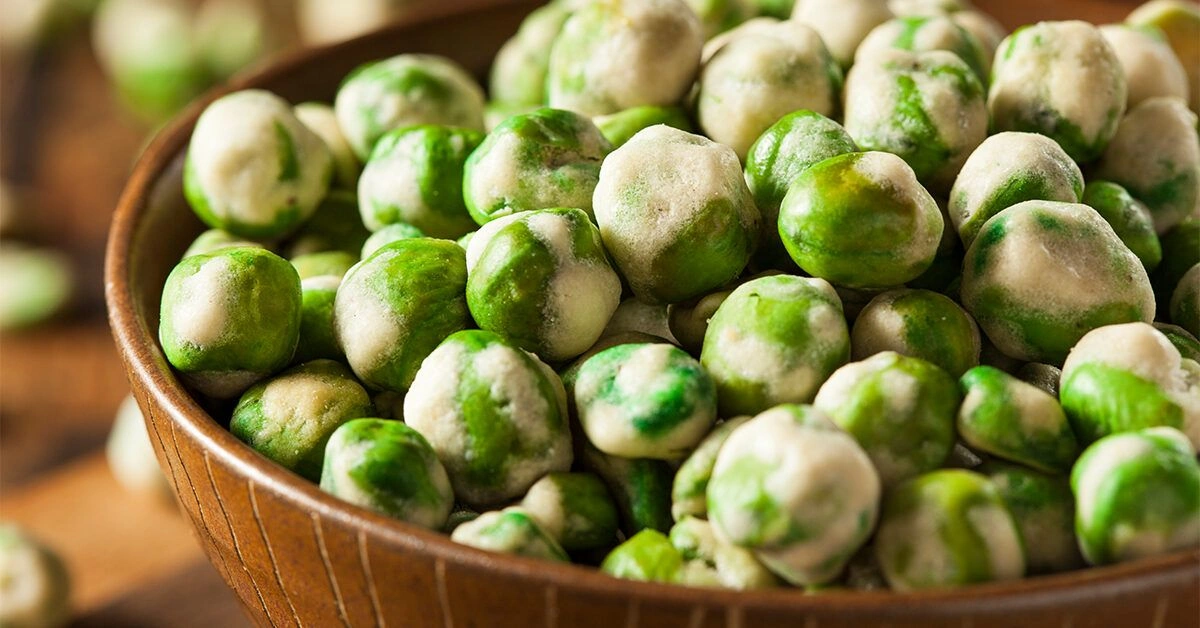
Wasabi peas are prized for their crunchy bite and sharp heat. They’re a well-liked snack in Japan and have gained fans worldwide.
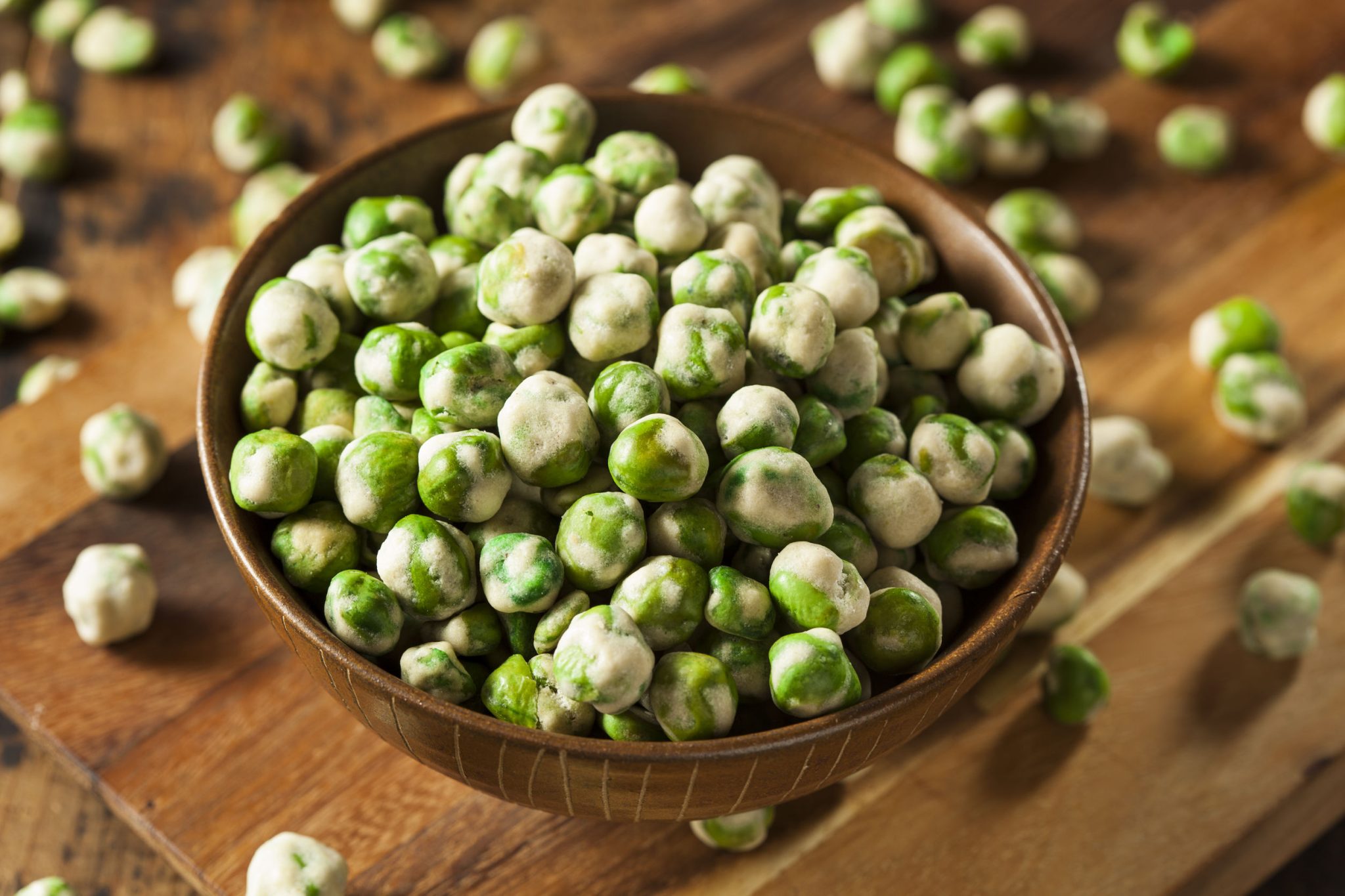
These snacks are made from dried, roasted green peas coated in a blend of oil, salt, sugar, and wasabi — a potent, pungent paste.
Despite their rising popularity, many wonder whether this zesty treat is nutritious and if it can fit into a balanced eating plan.
This piece examines the nutritional profile of wasabi peas and outlines their possible advantages and drawbacks.
Nutrients in wasabi beas
Wasabi peas supply modest amounts of protein and fiber per serving. They also offer several essential micronutrients, such as manganese, thiamin, copper, and vitamin K.
A 1-ounce (28-gram) portion of wasabi peas contains the following nutrients (1):
- Calories:121
- Carbs: 17.5 grams
- Sugar:4 grams
- Protein:4 grams
- Fat:4 grams
- Fiber:1 gram
- Manganese:15% of the Daily Value (DV)
- Thiamin:14% of the DV
- Copper: 14% of the DV
- Vitamin K: 12% of the DV
- Folate:10% of the DV
- Niacin: 9% of the DV
- Vitamin B6: 9% of the DV
- Zinc:8% of the DV
- Sodium:4% of the DV
Wasabi peas are especially notable for their manganese content, a mineral that serves antioxidant functions and helps protect cells from oxidative stress (2).
They also supply thiamin, a B-vitamin essential for energy production, growth, and overall development (3).
Additionally, a serving provides roughly 14% of the recommended DV for copper, a mineral involved in forming connective tissue and certain brain neurotransmitters (4).
That said, wasabi peas are fairly high in carbohydrates, with nearly 18 grams per ounce (1).
Some store-bought versions can also contain substantial amounts of sodium or added sugars, although this varies by brand and the coating recipe.
Summary: One serving of wasabi peas delivers useful nutrients such as protein, fiber, manganese, thiamin, and copper. They also tend to be relatively high in carbs and, depending on the brand, may contain appreciable added sugar or salt.
Health benefits of wasabi peas
Because of their nutrient mix, wasabi peas may offer several potential health perks.
Supports digestive health
Wasabi peas contribute a modest amount of fiber per serving, with about 1 gram in a single ounce (28 grams) (1).
Fiber travels through the gut slowly and adds bulk to stools, helping to keep bowel movements regular (5, 6).
Research indicates fiber can raise stool frequency and improve consistency in people who struggle with constipation (7).
Boosting fiber intake may also lower the risk of several other digestive conditions, including hemorrhoids, diverticulitis, and colorectal cancer (5).
Wasabi peas can help increase your fiber intake toward daily targets. According to current Dietary Guidelines for Americans, recommended fiber ranges from 22–34 grams per day, depending on age and sex at birth (8).
Rich in antioxidants
Green peas are a solid source of antioxidants, compounds that help neutralize damaging free radicals (9, 10).
Specifically, green peas contain antioxidant molecules such as (11, 12):
- ellagic acid
- beta-sitosterol
- p-coumaric acid
- naringenin
- quercetin
- luteolin
- apigenin
Beyond reducing oxidative stress, antioxidants can lower inflammation and offer protection against long-term diseases like heart disease, diabetes, and neurodegenerative conditions such as Alzheimer’s (13, 14).
Some laboratory studies also indicate certain pea-derived compounds may have anticancer activity and could slow cancer cell growth, although more research in humans is required (12).
May help stabilize blood sugar levels
Wasabi peas provide both protein and fiber, nutrients that can help moderate blood sugar responses.
Fiber slows carbohydrate absorption into the bloodstream, reducing post-meal blood sugar spikes and drops (15).
Meanwhile, protein can enhance insulin sensitivity and lower insulin resistance, which supports blood sugar regulation (16).
Wasabi peas also contain meaningful amounts of manganese, a mineral that has been associated with reduced risk of diabetes and prediabetes in some studies (17, 18).
However, remember that some commercial varieties are high in added sugars and refined carbs, which can undermine the benefits of fiber and protein on blood sugar control (19).
Check the nutrition facts and ingredient list, or consider preparing homemade wasabi peas to limit added sugars and maximize benefits.
Summary: Wasabi peas contain antioxidants and nutrients that may support digestion and blood sugar stability. Still, certain products may be high in added sugars and could drive blood sugar spikes.
Potential downsides of wasabi peas
While wasabi peas can fit into a balanced diet for many people, there are some drawbacks to be aware of.
Their spiciness can trigger acid reflux or heartburn in sensitive individuals (20).
Some people are allergic to green peas and should avoid wasabi peas entirely (21, 22).
Certain commercial recipes may include wheat flour, so those on a gluten-free regimen should read labels carefully and choose certified gluten-free options.
Peas also contain antinutrients, which can hinder the absorption of some nutrients (23).
However, because wasabi peas are cooked and processed before eating, the levels of antinutrients are substantially reduced (23).
Although peas are naturally starchy, some commercial wasabi peas may be very high in carbs and contain considerable added sugar depending on the coating (24).
High intake of added sugars can contribute to chronic conditions, such as heart disease, type 2 diabetes, and liver issues (19, 25).
Some brands are also high in sodium, which may raise blood pressure in susceptible people (26).
Finally, wasabi peas are energy-dense, with roughly 121 calories per ounce (28 grams) (1).
For that reason, moderating portion sizes is wise, especially if you’re managing weight goals.
Consider choosing products lower in sodium, carbs, and added sugars, or make your own at home to better control ingredients.
Summary: Wasabi peas may not be suitable for everyone — people with pea allergies, reflux, high blood pressure, or weight concerns should limit or avoid them. Cooking reduces antinutrients, but some commercial varieties can be high in carbs, salt, and added sugars.
How to eat wasabi peas
Wasabi peas are commonly sold at supermarkets and through online stores.
You can also prepare homemade wasabi peas using items like dried peas, rice vinegar, dijon mustard, and grated wasabi or wasabi powder.
Enjoy them straight from the bag or use them to add a fiery crunch to various dishes.
For instance, they make a lively addition to DIY trail mix and pair well with nuts, seeds, or dried fruit.
Sprinkled over salads, stir-fries, or soups, they introduce a pleasant crunch and heat.
Alternatively, crush them and use as a crunchy crust for chicken or pork, either by themselves or mixed with breadcrumbs, almonds, olive oil, soy sauce, or seasonings.
Summary: Wasabi peas are versatile: snack on them plain or add them to trail mixes, salads, stir-fries, and soups. Crushed, they also serve as a flavorful coating for meats.
Frequently asked questions
Are wasabi peas a healthy snack?
Wasabi peas offer useful nutrients like protein and fiber and can be part of a balanced diet.
That said, they’re relatively calorie-dense, and certain products contain high levels of added sugars and sodium. Enjoy them in moderation.
Are wasabi peas actually peas?
Yes — wasabi peas start with dried green peas that are coated in oil and seasonings such as wasabi, sugar, and salt.
Where can I buy wasabi peas?
They’re widely available at grocery stores and online. You can also make your own using grated wasabi, rice vinegar, dried peas, and dijon mustard.
The bottom line
Wasabi peas are a popular snack made from roasted green peas coated with wasabi, salt, sugar, and oil.
They provide some protein and fiber per serving, contain antioxidants, and may support blood sugar balance and digestive health.
They’re also adaptable in recipes and can be eaten as-is or used to add a spicy crunch to dishes.
Read labels to pick brands lower in sodium and added sugars, or prepare them at home to get the most health benefits.
Just one thing
Try this: Swap wasabi peas for croutons on salads. They also work great with tofu, soba noodles, and veggies in a spicy stir-fry!




















Leave a Reply
You must be logged in to post a comment.