
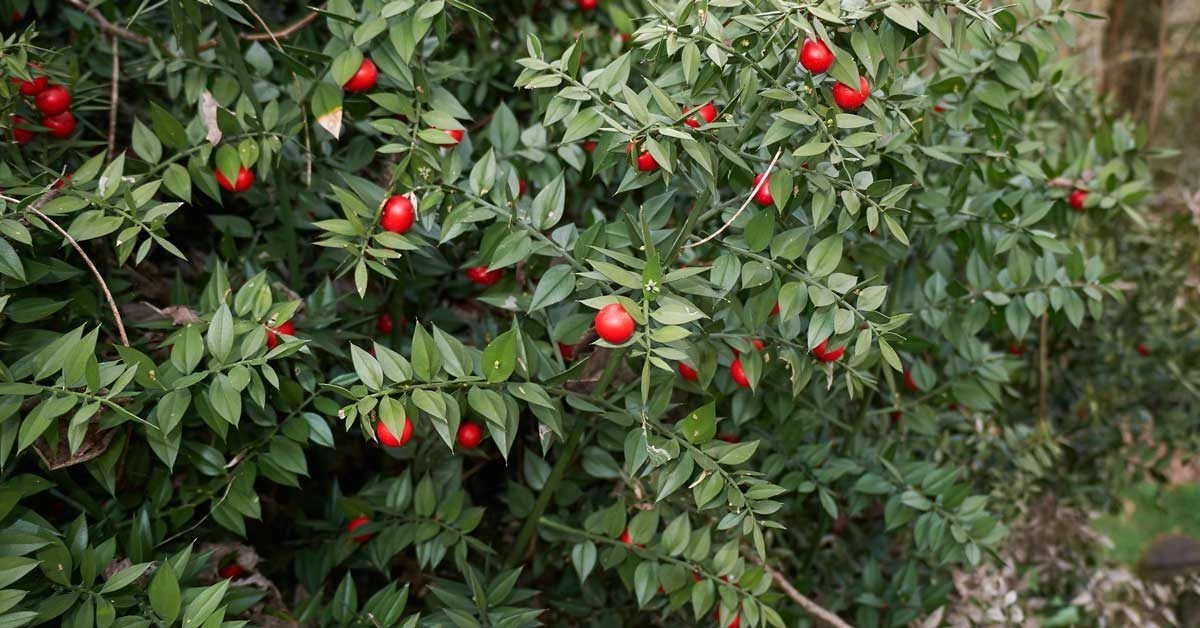
Butcher’s broom is a European shrub commonly used in traditional herbal remedies. Possible advantages include enhanced circulation, but it may not be appropriate for everyone.
Butcher’s broom (Ruscus aculeatus) is a compact evergreen shrub.
Native to Western Europe, it’s known for its sturdy branches. In the past, butchers bundled its twigs to clean their chopping blocks — giving the plant its common name.
Moreover, butcher’s broom has been employed in folk medicine for millennia.
The root and rootstock are valued medicinally because they harbor several active constituents, such as flavonoids and other compounds (1).

These constituents likely underlie claims that butcher’s broom delivers various health effects, including supporting blood flow and easing hemorrhoid symptoms.
This article reviews the potential benefits and adverse effects of butcher’s broom.
Potential Benefits
Butcher’s broom and its bioactive ingredients are linked to a number of possible health advantages.
May Lessen Inflammation
Inflammation is the body’s normal response to injury and infection.
Nevertheless, persistent inflammation can be harmful and raise the risk of certain illnesses (2).
Butcher’s broom contains substances like ruscogenin that may help suppress inflammatory pathways and mitigate inflammation-related damage.
For example, in vitro studies found that ruscogenin decreased inflammatory markers and inhibited production of an enzyme that contributes to cartilage degradation in osteoarthritis (3, 4).
An animal experiment reported that ruscogenin lowered inflammatory markers linked to diabetes and helped repair damage from that inflammation (5).
However, evidence from human trials is scarce. Additional clinical research is necessary to confirm these effects.
May Improve Poor Circulation
Butcher’s broom may help with disorders that impair blood flow.
For instance, it may be useful for chronic venous insufficiency (CVI), a painful condition where leg veins have difficulty returning blood to the heart (6).
Several active constituents in butcher’s broom cause veins to constrict, aiding in venous return (7).
Research shows butcher’s broom can significantly reduce tightness and swelling around the lower legs and ankles in adults with CVI (8).
Furthermore, a review of 20 studies reported that a preparation containing butcher’s broom reduced pain, cramping and swelling in adults with CVI (9).
May Ease Symptoms of Orthostatic Hypotension
Orthostatic hypotension (OH) — a rapid fall in blood pressure when standing — is a common issue among older people (10).
Typical OH symptoms include lightheadedness, dizziness, weakness and nausea.
Normally, reflexes narrow blood vessels in the lower body to counteract this effect, but these reflexes can weaken with age, contributing to OH.
Because butcher’s broom promotes venous constriction, it might prevent mild cases of OH (11).
Yet, human studies specifically examining butcher’s broom for OH are lacking. More trials are required before recommendations can be made.
May Lower Hemorrhoid Risk
Hemorrhoids are a frequent problem, particularly in older adults.
To prevent or treat hemorrhoids, some people try natural remedies like butcher’s broom.
In alternative medicine, butcher’s broom is used for hemorrhoids and other vascular issues because it appears to reduce swelling and promote venous tightening (12).
In one trial, 69% of participants taking a product containing butcher’s broom considered it effective for hemorrhoids, noting decreases in pain, swelling and other symptoms (13).
However, only a limited number of studies have assessed butcher’s broom for hemorrhoids, so further research is needed.
Summary: Butcher’s broom may help with conditions such as CVI, OH, hemorrhoids and persistent inflammation. Remember that additional human research is necessary.
Side Effects
Although human research is limited, butcher’s broom appears generally well tolerated with few reported adverse effects (8).
Rarely, it can cause stomach upset, nausea, diarrhea or vomiting (1, 14).
There is a single reported case of a woman with diabetes developing diabetic ketoacidosis after using butcher’s broom, though causality is uncertain (14).
Butcher’s broom contains saponins, plant compounds that can act as antinutrients, so it may reduce absorption of minerals like zinc and iron (15).
It’s not advised for children or for pregnant or breastfeeding women due to insufficient safety data in these groups.
Those on kidney or blood pressure medications should consult their physician before using butcher’s broom, since interactions are possible.
If you have concerns about butcher’s broom and any medications you take, check with your healthcare provider first.
Summary: Butcher’s broom seems safe for most people, but consult your doctor if you take certain medications or have specific health conditions.
Dosage Recommendations
There is no official standardized dose for butcher’s broom.
Nevertheless, the following amounts have been used in studies (1):
- Dried root: 1.5–3 grams daily
- Tablets or capsules: 200 mg (4:1 concentrate) 2–3 times daily
- Liquid extracts and tinctures: 3–6 ml per day of a 1:2 herb-to-liquid extract or 7.5–15 ml per day of a 1:5 herb-to-liquid tincture
Many clinical trials use supplements combining butcher’s broom with hesperidin methyl chalcone and ascorbic acid.
These capsules frequently contain 150 mg of dried extract and are taken 2–3 times daily.
Follow the dosing instructions provided with your specific supplement.
Summary: Because there’s no official dosage, the ranges above are based on research studies.
The Bottom Line
Butcher’s broom is an herbal option that may ease symptoms of CVI, OH, hemorrhoids and chronic inflammation.
It appears relatively safe with minimal side effects.
Still, consult your doctor before using it, especially if you take kidney or blood pressure medications. Appropriate dosing may vary depending on the condition.










Leave a Reply
You must be logged in to post a comment.