

Both procedures are employed to address heavy menstrual bleeding and other uterine issues. Endometrial ablation is a less invasive operation that destroys the uterine lining, while a hysterectomy entails removing the entire uterus.
More extensive surgeries such as hysterectomies generally involve longer recuperation times and a greater chance of complications.
However, research indicates that some people who undergo endometrial ablation later require additional treatment.
Put simply, a hysterectomy may be more likely to fully eliminate symptoms, whereas endometrial ablation often reduces issues such as heavy bleeding.
What is the purpose of endometrial ablation and hysterectomy?
Both procedures address heavy or abnormal menstrual bleeding and related conditions like anemia, though their aims differ slightly.
Endometrial ablation lowers menstrual blood loss and can sometimes stop bleeding altogether, while a hysterectomy permanently ends menstrual periods.
A hysterectomy may also be recommended for people with fibroids, gynecologic cancers, or enduring pelvic pain.
How is endometrial ablation and hysterectomy performed?
There are multiple types of hysterectomy, from removing only the uterus to also taking out other reproductive organs such as the cervix and ovaries.
Hysterectomies can be done in various ways: via an incision in the abdomen, through the vagina, or using minimally invasive techniques like laparoscopy and robotic assistance to limit scarring and blood loss.
Vaginal hysterectomies are the least invasive approach and typically take around an hour; general anesthesia may not always be necessary.
Endometrial ablation is even less invasive than a vaginal hysterectomy and usually takes about 30 minutes.
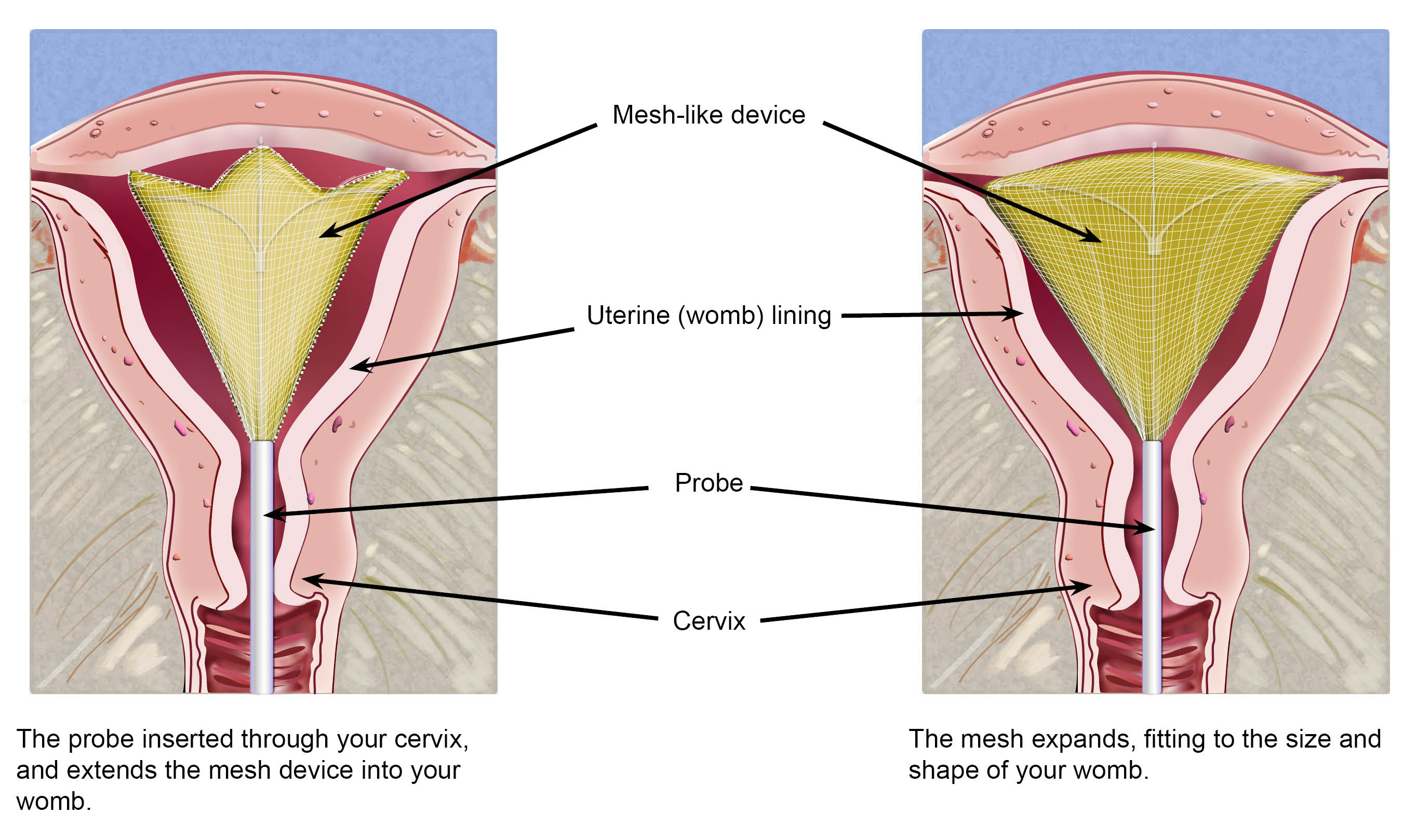
A wand-like instrument that delivers heat, cold, or another form of energy is inserted through the vagina to reach and destroy the uterine lining.
An anesthetic is used, and depending on the method you may be awake or under general anesthesia during the procedure.
What’s the recovery process for endometrial ablation and hysterectomy?
Because a hysterectomy is more extensive, recovery is considerably longer.
Typically you’ll stay in hospital for at least one night, often a couple of days. Full recovery can range from about 3 to 6 weeks, depending on the surgical approach used.
During recovery you will be advised to avoid heavy lifting and sexual activity. You may also experience bloating, cramping, and brownish discharge.
After an endometrial ablation you generally do not need an overnight hospital stay and should recover within a few days.
Similar to hysterectomy, endometrial ablation can produce side effects such as nausea and increased urinary frequency. Cramping and light bleeding are also common.
What benefits are associated with endometrial ablation and hysterectomy?
Each procedure has advantages and disadvantages.
Older studies from 2008 found that both endometrial ablation and hysterectomy can control unwanted vaginal bleeding for at least 48 months.
Nevertheless, hysterectomy was superior at eliminating heavy or abnormal bleeding, while some people required further surgery after endometrial ablation.
Another trial reported higher satisfaction and improved quality of life following hysterectomy.
Endometrial ablation remains an option because it is a less invasive treatment with a shorter downtime.
What risks are associated with endometrial ablation and hysterectomy?
That same earlier research found that complications are more frequent after hysterectomy due to its invasiveness. These can include infection, bleeding, pelvic pain, and urinary incontinence.
However, at a 6-month follow-up those who had endometrial ablation were more likely to report ongoing pain and fatigue. Other possible complications include vaginal discharge and increased menstrual pain.
Less commonly, damage to pelvic organs or the uterus itself can happen. There may also be a elevated risk of ectopic pregnancy or preterm birth following endometrial ablation.
Another drawback of endometrial ablation is the potential need for additional procedures to fully treat the problem, which might include a repeat ablation or ultimately a hysterectomy.
A 2011 study reported that nearly 20% of people underwent a hysterectomy within 5 years after having endometrial ablation.
The bottom line
Both endometrial ablation and hysterectomy can be effective for uterine conditions such as heavy bleeding.
They differ in how invasive they are: hysterectomy is a more complex operation with a longer hospital stay and recuperation period.
Endometrial ablation may not always provide a permanent cure, and some people later need further surgical treatment.
Your clinician will review the risks and benefits of each option and guide you toward the most appropriate choice.























Leave a Reply
You must be logged in to post a comment.