

Overview
During the first year, infants reach numerous developmental milestones. These include mastering bottle-holding, rolling over, crawling, sitting up, and ultimately walking unassisted.
If you’ve read parenting books or have older children, you might expect a baby’s first steps to occur around 10 to 12 months. So when a child isn’t walking by 14 months, it’s natural to feel concerned.
Keep in mind that infants progress at different rates. A child not walking at 14 months doesn’t automatically signal a problem.
Should you worry if your baby isn’t walking?
Feeling worried if your baby hasn’t started walking by 14 months is understandable. You hope your child meets milestones and don’t want them to lag behind peers. However, a baby who isn’t walking at 14 months typically does not have a serious issue. Some infants walk before 12 months, while others take until 16 or 17 months.
Look at the overall picture to gauge whether there’s reason for concern. For instance, even if your 14-month-old isn’t walking, they may be standing independently, pulling up on furniture, and bouncing while upright.
Those actions indicate motor skills are developing, so first steps may be near. Keep monitoring progress, and consult your pediatrician if your child still isn’t walking by 18 months.
Talk to your doctor sooner if you’re worried the motor skills aren’t forming correctly. This would be a concern if a 14-month-old cannot stand, pull up, or bounce.
Also remember that babies born prematurely may reach walking milestones later than full-term infants. If your child was premature, use their adjusted age (calculated from the expected due date) when checking developmental markers.
For example, if you have a 14-month-old who was born three months early, their adjusted age is 11 months. In that situation, it may be typical for them to need an extra two to three months to master balance and walking. Most likely, they will catch up.
How do babies learn to walk?
Walking develops gradually as infants grow and their leg muscles strengthen. Newborns have weak legs that cannot support their body weight. Many babies start scooting or crawling around seven months and also begin bouncing while held upright. This bouncing helps build leg strength in preparation for walking.
By about eight to nine months, many infants pull themselves up on furniture. Some even move their feet while holding onto something, as though preparing to take steps.
Walking requires balance and confidence. Beyond standing independently, babies must learn to coordinate steps without falling — a skill that takes time to refine.
Because leg strength and coordination develop at different rates, it’s normal for some children to walk earlier than others. A number of babies take their first steps as early as nine or ten months.

How to help your baby walk
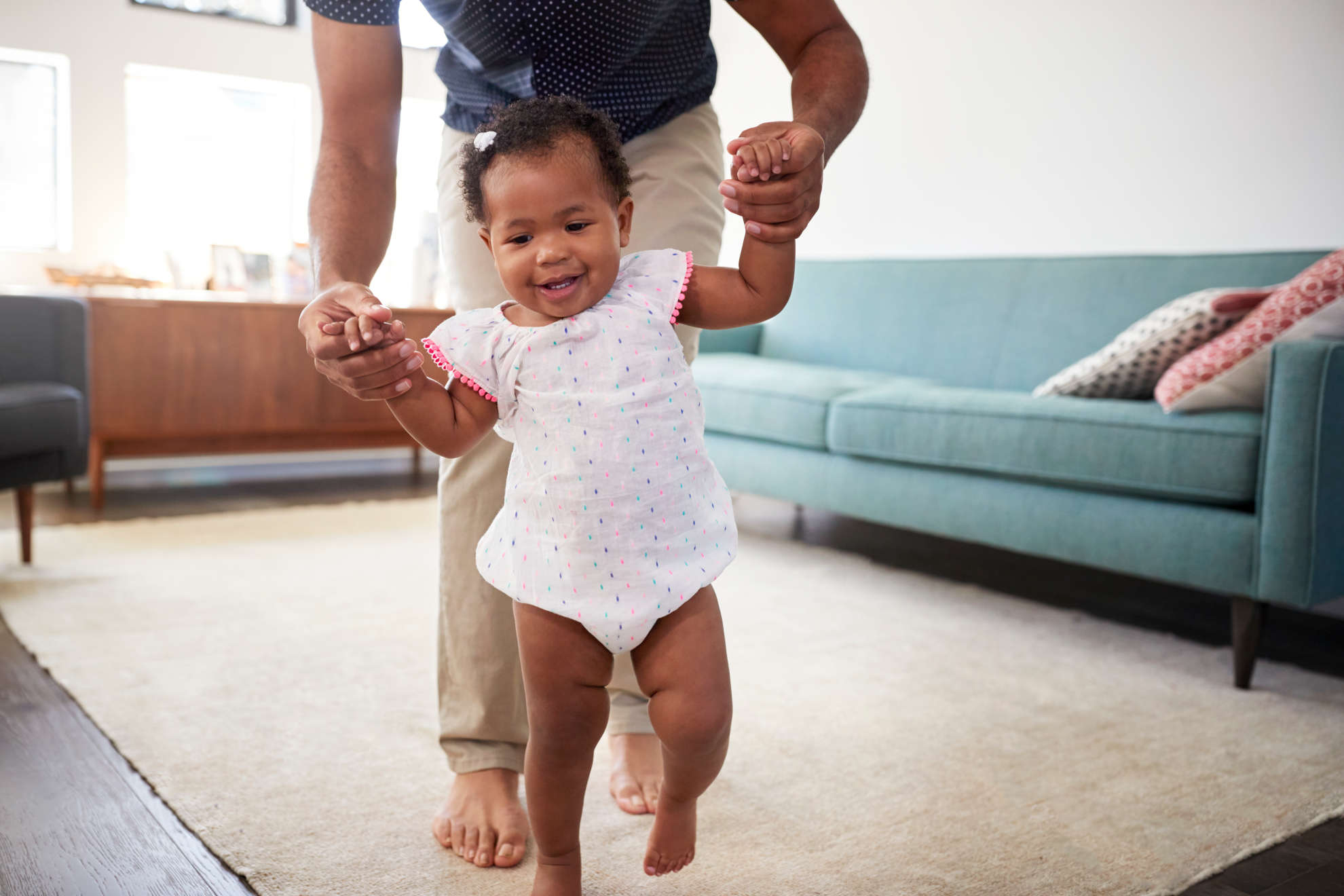
Some infants who aren’t walking by 14 months simply need more practice. Caregivers can sit on the floor and hold the baby’s hands while they stand, gently guiding them across the room. This helps babies learn to lift their legs, move forward, strengthen leg muscles, and improve balance.
Although you may instinctively pick up your baby frequently, more floor time gives them chances to become mobile and learn to walk independently. Encourage scooting, crawling, and pulling up often.
Baby walkers are sometimes used to teach walking, but they’re not a safe option. Walkers can surprisingly delay walking and have been associated with injuries. A push toy can be a safer alternative, but always supervise to prevent tipping.
Some parents think shoes will speed up walking. In reality, shoes may make early steps harder. Shoes are useful outdoors, but many babies walk sooner when barefoot indoors.
While helping your child learn to walk, make the home safer by removing trip-prone rugs, installing gates near stairs, and taking away furniture with sharp corners.
When to see a doctor
While delayed walking alone isn’t usually a reason to panic, it’s reasonable to talk with your pediatrician if your child isn’t walking by 18 months — or sooner if you suspect an issue. Delays can sometimes stem from foot or leg conditions like developmental hip dysplasia or rickets, or from disorders that affect muscle tone such as cerebral palsy or muscular dystrophy. Consult your doctor if your baby appears to limp or if the legs look weak or asymmetrical.
Remember that each child is unique, so avoid comparing your baby’s timeline with others or becoming overly anxious if they haven’t walked by 14 months. Some children simply take longer to learn to walk — but they typically don’t fall far behind.























Leave a Reply
You must be logged in to post a comment.