
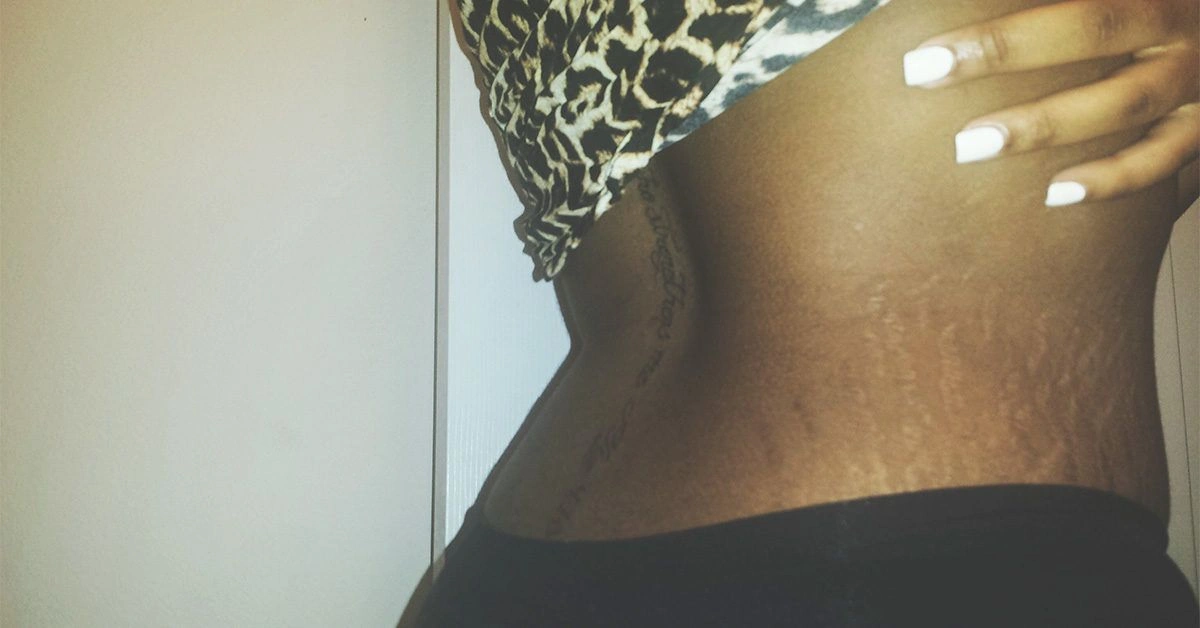
Laser stretch mark removal involves treating striae (stretch marks) using laser resurfacing. The method works by eliminating the outermost skin layer to help rebuild the surface skin’s structure.
During the session, concentrated light beams stimulate new tissue growth. While it can’t fully erase stretch marks, laser resurfacing can make striae appear smoother and less noticeable.
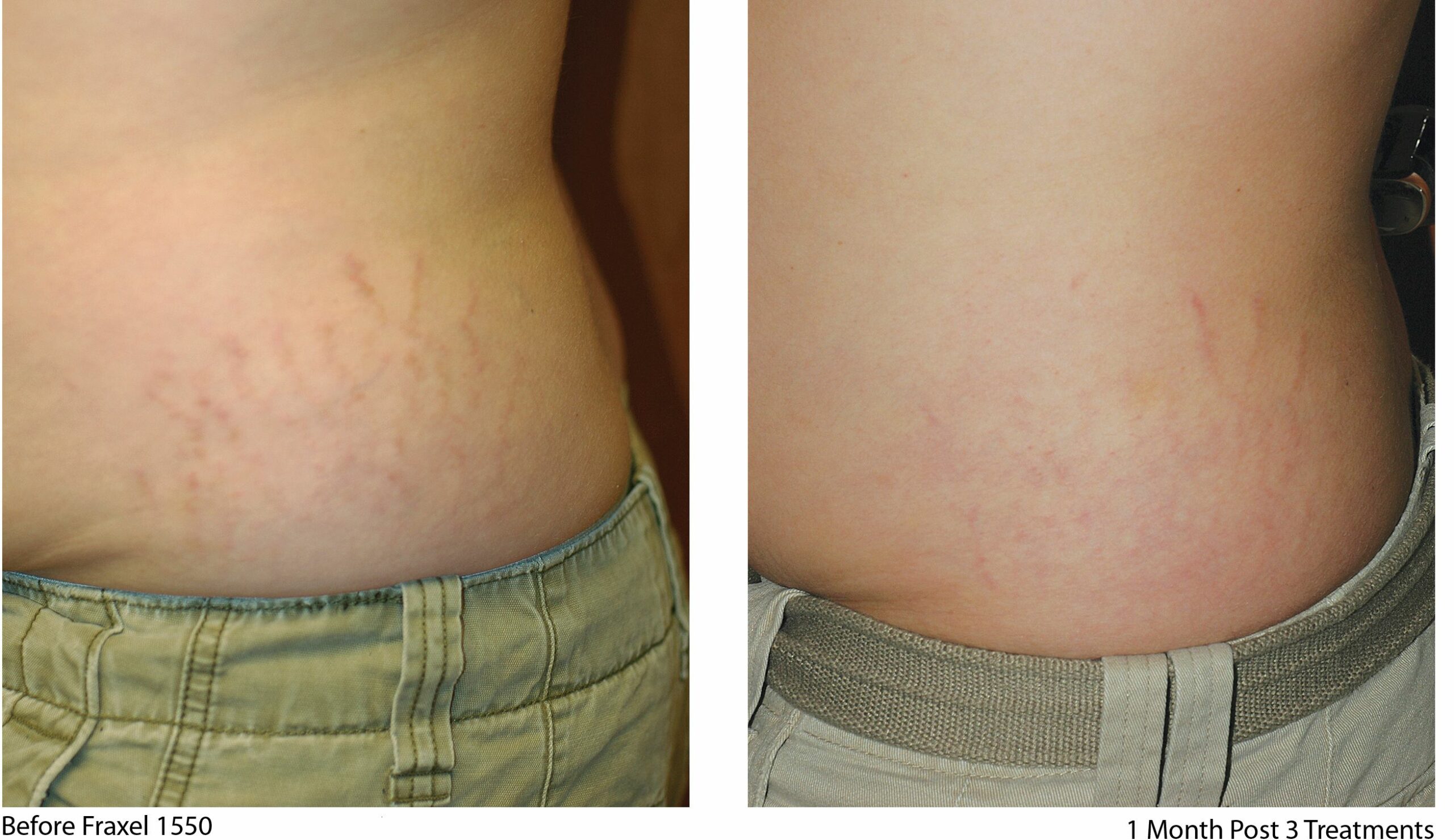
There are two main laser types used for skin resurfacing: ablative and non-ablative. Ablative lasers (CO2, Erbium YAG) address stretch marks by vaporizing the upper skin layer. The skin that regrows tends to have a smoother texture and improved appearance.
Non-ablative lasers (Alexandrite, Fraxel) leave the top skin layer intact. Instead, they target deeper layers of the skin to encourage collagen production from within.
How much does laser stretch mark removal cost?
Per the American Board of Cosmetic Surgery (ABCS), prices for skin resurfacing treatments vary widely, ranging from $500 to $8,900.
On average, each ablative laser session costs about $2,681. Non-ablative laser sessions average roughly $1,410 each, according to the American Society for Aesthetic Plastic Surgery (ASAPS).
There can be additional expenses beyond the provider’s fee. Your overall outlay may include:
- anesthesia
- consultation fees
- laboratory charges
- office or facility fees
- post-procedure pain medication (if required)
The good news is that the procedures themselves are relatively brief. Ablative laser sessions may last about 90 minutes, while non-ablative treatments can be completed in as little as 30 minutes.
What’s the time cost for laser stretch mark removal? | Recovery time
Laser treatment is classed as a noninvasive procedure, meaning there are no surgical cuts. This leads to faster recovery compared with conventional surgery. Still, you should plan to rest on the day of treatment at minimum.
Depending on the laser type, a single treatment typically takes between 30 and 90 minutes. This does not include paperwork or pre-procedure preparation time.
Your skin may appear slightly pink or red following treatment. This is common and usually fades within a few weeks. Ablative lasers tend to be most effective for striae but carry more side effects due to their aggressiveness. Side effects can include raw-feeling skin and mild discomfort. Treated areas may scab before revealing new skin around the stretch marks.
Depending on the size of the treatment area and the laser used, some patients take a few days off work after the procedure.
Full results can take several months to become apparent, especially with non-ablative lasers, according to the ABCS.
Is it covered by insurance?
Laser and other stretch mark removal techniques are considered cosmetic (aesthetic) procedures. Coverage may exist in rare situations where treatment is medically necessary (for example, to address pain), but routine laser removal of stretch marks is not covered by medical insurance.
Are there any ways to reduce costs?
Because insurance typically doesn’t cover laser stretch mark removal, costs can add up. However, there are strategies to help lower out-of-pocket expenses.
Ask your provider about financing options and promotional discounts. Many clinics offer interest-free payment plans for cosmetic procedures. Some spas provide reduced rates for package deals or multiple sessions. Offers vary by provider, so it pays to compare options.
Manufacturer rebates are another possibility that can offset a portion of the price. Check with your provider to see if any current rebate programs are available.
How long does it last?
Generally, the ABCS notes that skin resurfacing results can “last for years.” That said, longevity depends on how well you maintain and protect your skin.
Sometimes a single ablative laser session is sufficient for certain stretch marks. Non-ablative treatments are gentler and typically require more sessions. The ASAPS estimates that most patients will need between one and six non-ablative treatments on average.
Each follow-up session usually costs similar to the initial treatment unless your provider offers multi-session discounts. Sessions are generally spaced three to four weeks apart.
After full healing and completion of all sessions, results may endure for years, according to the American Society of Plastic Surgeons.
Laser treatments vs. microdermabrasion vs. surgery vs. microneedling
Laser resurfacing is one of several options for treating stretch marks. Surgery is the most invasive but can offer the most permanent changes. Below is a comparison of laser treatments with microdermabrasion, surgical removal, and microneedling.
| Laser treatments | Microdermabrasion | Surgical removal | Microneedling | |
| Procedure type | noninvasive | noninvasive | invasive (surgical) | noninvasive |
| Total expected cost | varies by laser type: on average, ablative sessions cost $2,681 and non-ablative $1,410 per treatment | $139 per session, per the American Society for Aesthetic Plastic Surgery | depends on area treated; for instance, a tummy tuck may cost about $5,339 plus hospital and anesthesia fees | $100 to $700 per session |
| Number of treatments needed | ablative lasers may be used once or more depending on goals; non-ablative treatments can require up to six sessions spaced three to four weeks apart | multiple sessions, often monthly | one procedure | typically four to six sessions on average |
| Expected results | noticeable changes after several weeks as new skin regenerates | immediate improvements may be seen, but results are short-lived | intended to be permanent | some immediate improvement, but not dramatic |
| Covered by insurance? | no | no | no | no |
| Recovery time | about 10–14 days, depending on size of treated area | no significant downtime | typically two to four weeks | no significant downtime |
Make the most of your investment in your skin
Whether you opt for an ablative or non-ablative laser, you can manage costs and optimize outcomes by planning ahead and discussing options with your provider.
To maximize the benefit from laser resurfacing, know what results are realistic and follow post-treatment care directions to the letter.
Adhering to your clinician’s aftercare guidelines reduces the risk of complications such as infection, hyperpigmentation, and scarring. Allow your skin to heal fully before resuming strenuous activities.
Finally, regardless of how long it has been since treatment, apply sunscreen to the treated area daily. Regular sun protection helps prevent age spots, premature wrinkles, and skin cancer, and it also stops any remaining stretch marks from darkening and becoming more obvious.















Leave a Reply
You must be logged in to post a comment.